
Crater Lake and Kind Folks
Route
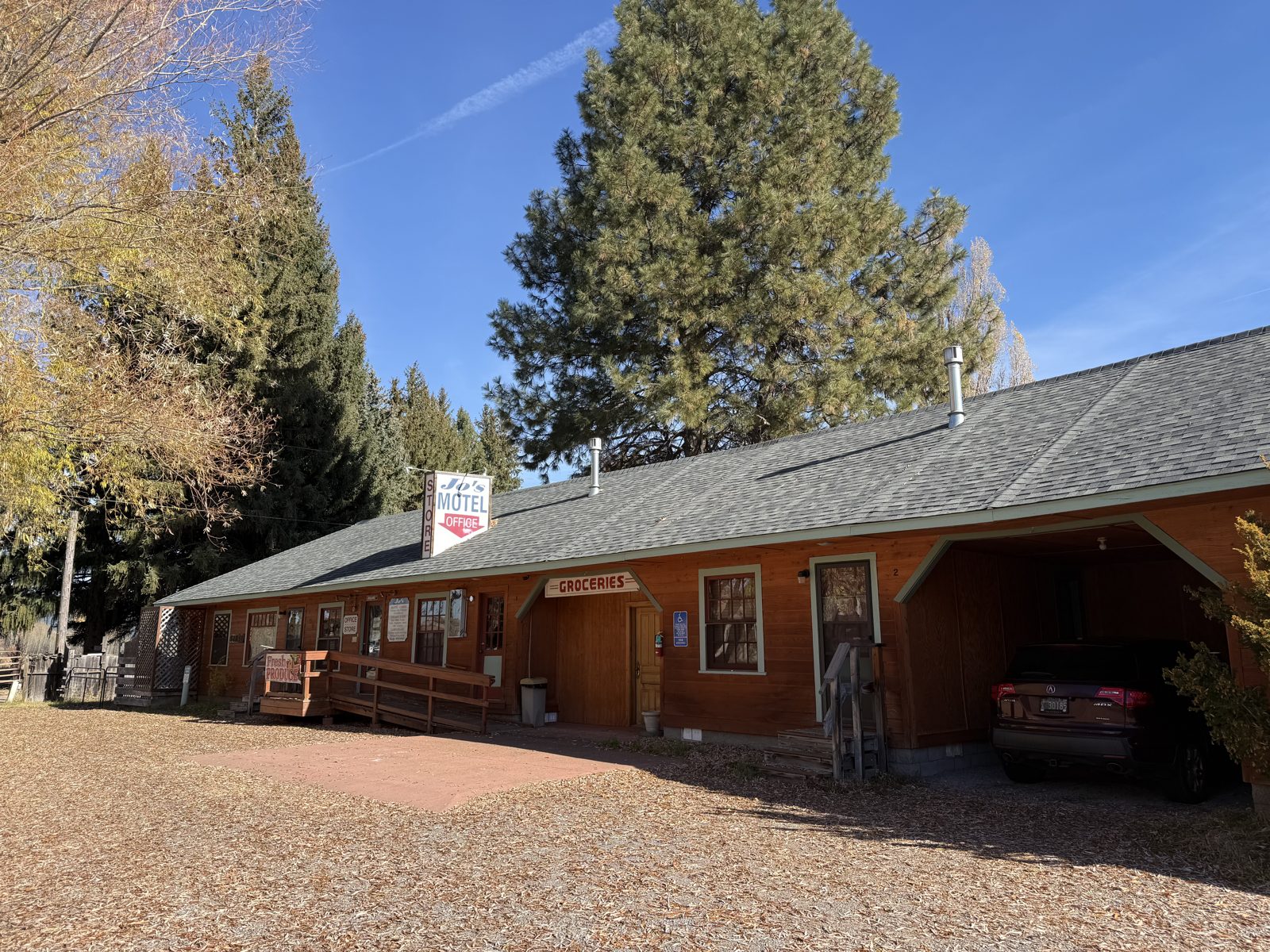
Saturday, November 7th. I'm a firm believer that everything happens for a reason, and our motel in Fort Klamath was meant to be. It's a little row of wooden rooms, all attached, and each one has its own carport you can back into, which is so cute. Inside, it's all wood paneling, with a dragonfly stained-glass lamp, a gas fireplace/stove, and a TV the size of my laptop that only plays DVDs. It's very 1970s. The bed was hard, but the stack of old comforters had me sweating, and when we woke up, it was 20 degrees outside. I was very glad we didn't camp.
The owners, a husband and wife, also run an organic grocery out of the office. There's Maple Hill yogurt, butter, and milk, grass-fed steaks, ginger snap cookies, and organic coffee. When I checked in, she asked whether I wanted French roast or Sumatra for the morning, ground the Sumatra fresh, and packed a single serving in a little plastic cup, the kind you get ketchup in, with a serving of half-and-half to go with it. I never would have expected all that on a strip south of Crater Lake, but as she explained it, nobody else is going to bring good food out here, so they do it themselves. There are solar panels out back, too.
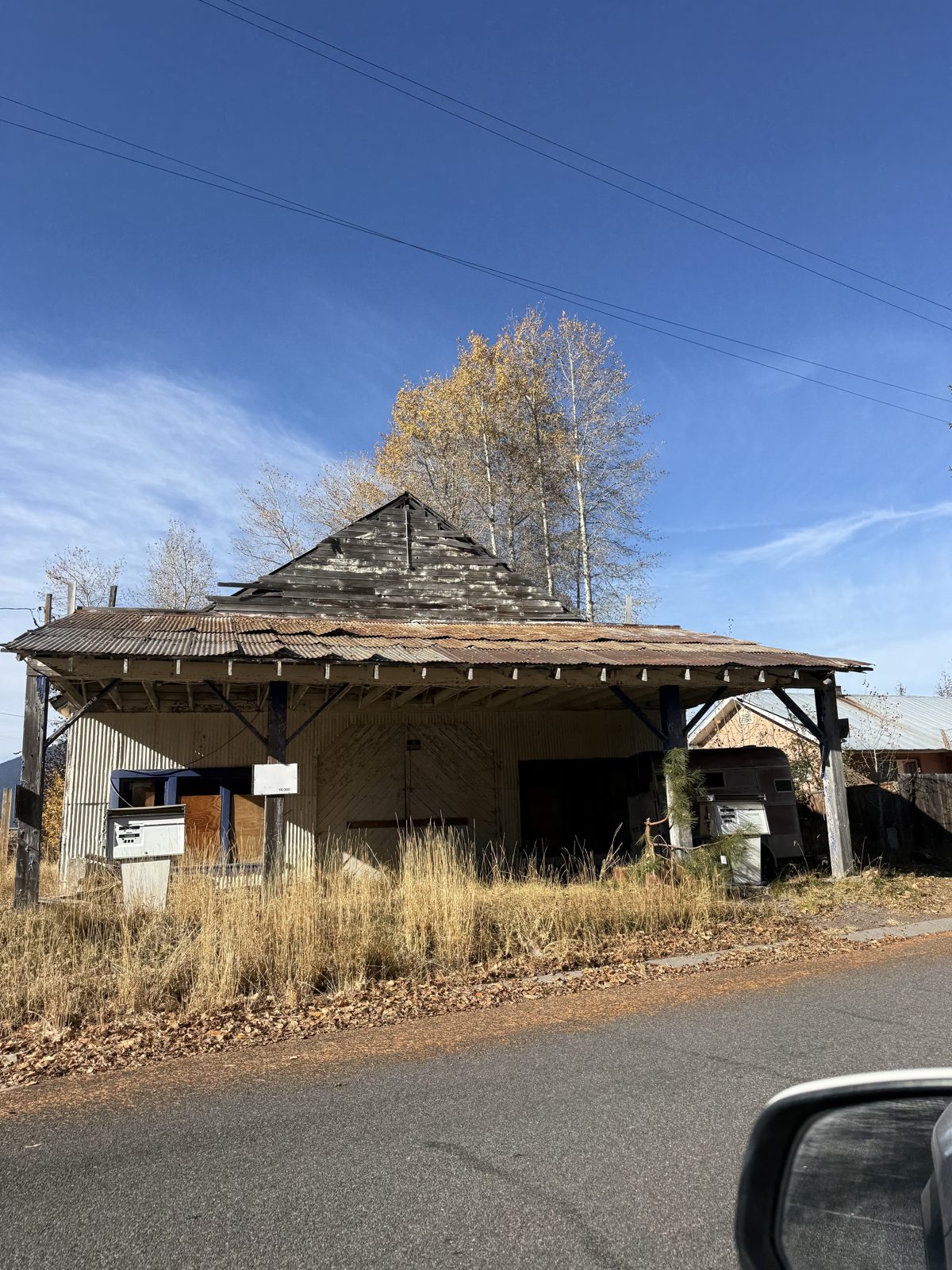
On our morning walk, the little strip was empty. Across the road, there's a boarded-up old ceramics studio, a few broken-down cars, and a gas station from the '40s or '50s with analog pumps, overgrown with weeds. There are run-down buildings and some nice homes, and people are just living and getting by with what they have. It isn't sketchy. It's their home, and they don't have a lot, but they're so kind. A guy in a cowboy hat gave us a big wave from his pickup as he drove by. The Army built Fort Klamath in 1863, and in 1873, after the Modoc War, it hanged the Modoc leader Kintpuash, known as Captain Jack, along with three other Modoc men. Their graves are still there.
Steinbeck had his own unpromising Oregon town in 1960, where a scarred service-station man rounded up two new tires and saved his trip. "And if ever my faith in the essential saintliness of humans becomes tattered," he wrote, "I shall think of that evil-looking man." I'll think of Fort Klamath.
We took a slow morning, which we both needed after all those hours in the truck, then headed north to the lake with a piece of smoked salmon jerky for second breakfast. The Wood River Valley is cattle country, black cattle on dry, burnt-gold grass with mountains all around, and Rhea was ready to go out the window after every one of them. A red-tailed hawk sat on a power pole by the road, looking for his own breakfast. They hunt from poles and fence posts along the highway, watching the open ground below. We also found raccoon prints all over the windshield. They didn't get into anything, which is why we close up the bed of the truck every night.
It's a wild swing out here: 20 degrees at dawn and 60 by midday. With so little moisture in the air, the sun heats things up fast once it's on you.
Driving up 62, crews had trimmed the underbrush and dead lower branches and stacked them in piles to burn. These forests are meant to burn. Ponderosa forests evolved with frequent low ground fires, as often as every 5 to 25 years, and the old trees grow thick bark and drop their lower limbs, so the flames rarely reach the crowns. When too much fuel builds up, a fire jumps from crown to crown, burns hotter than anything can survive, and you lose the whole forest. Glad to see them clearing it.
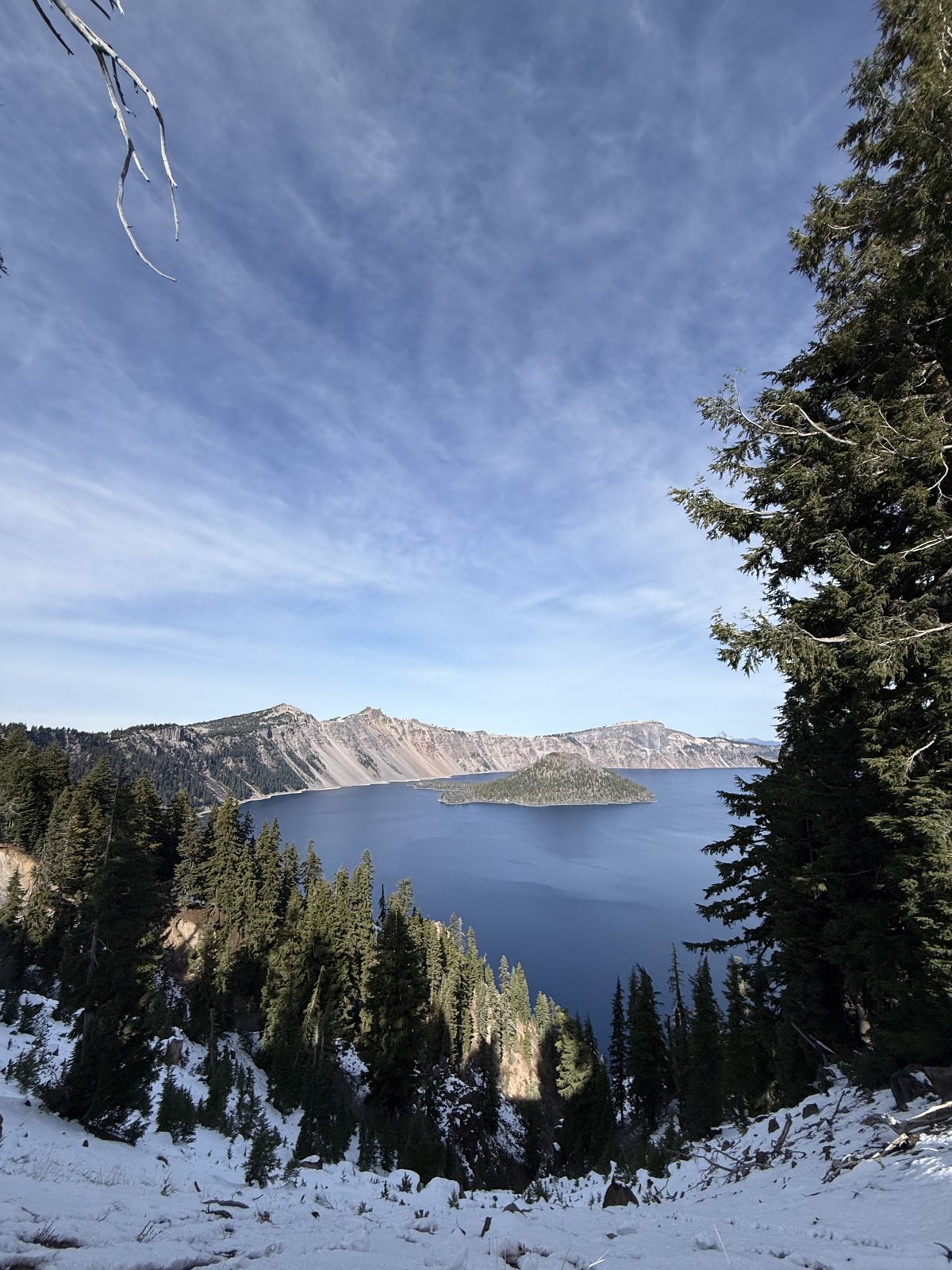
Crater Lake really does feel like another planet. It fills the caldera left when Mount Mazama erupted and collapsed about 7,700 years ago, and at 1,943 feet, it's the deepest lake in the United States. No river or stream feeds it, only rain and snow, and the water is so clear and so blue. I'd heard only 2% of the bottom has been explored. That figure comes from the 1980s, when a one-person submarine called Deep Rover got eyes on about 2% of the lake floor. It found moss growing 85 to 460 feet down, and deeper still, yellow-gold mats of bacteria feeding on iron carried up by warm water from vents in the floor.
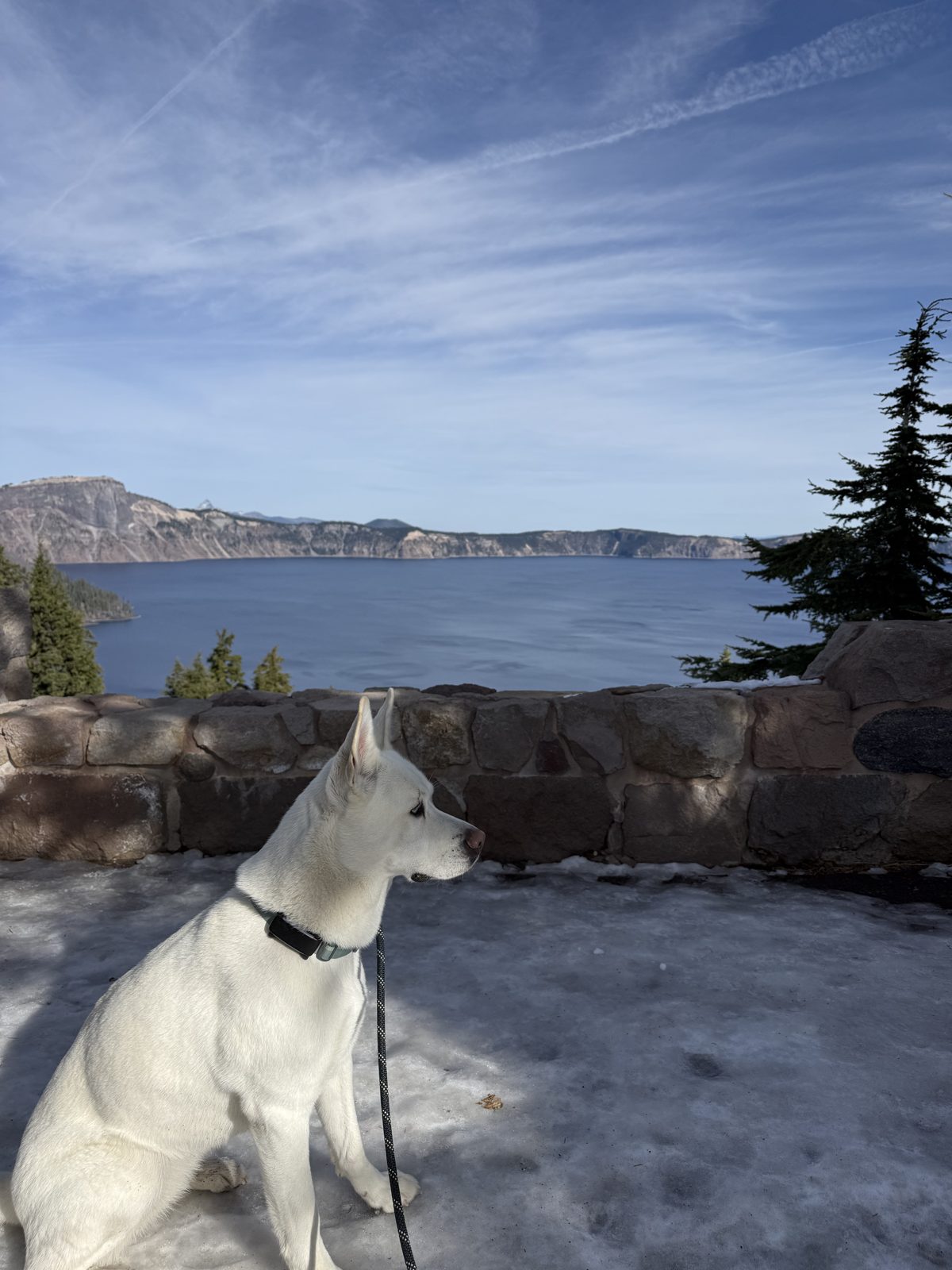
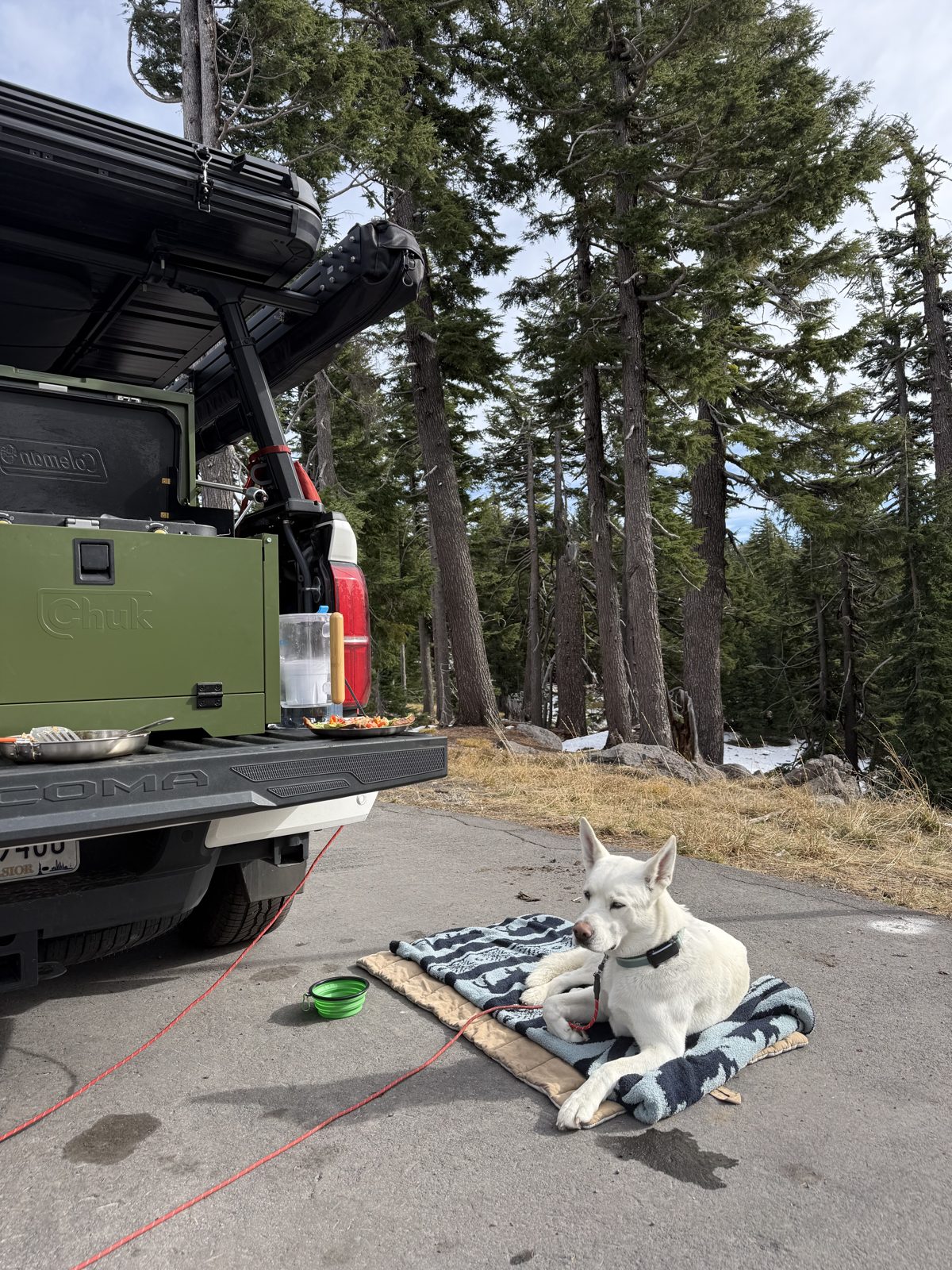
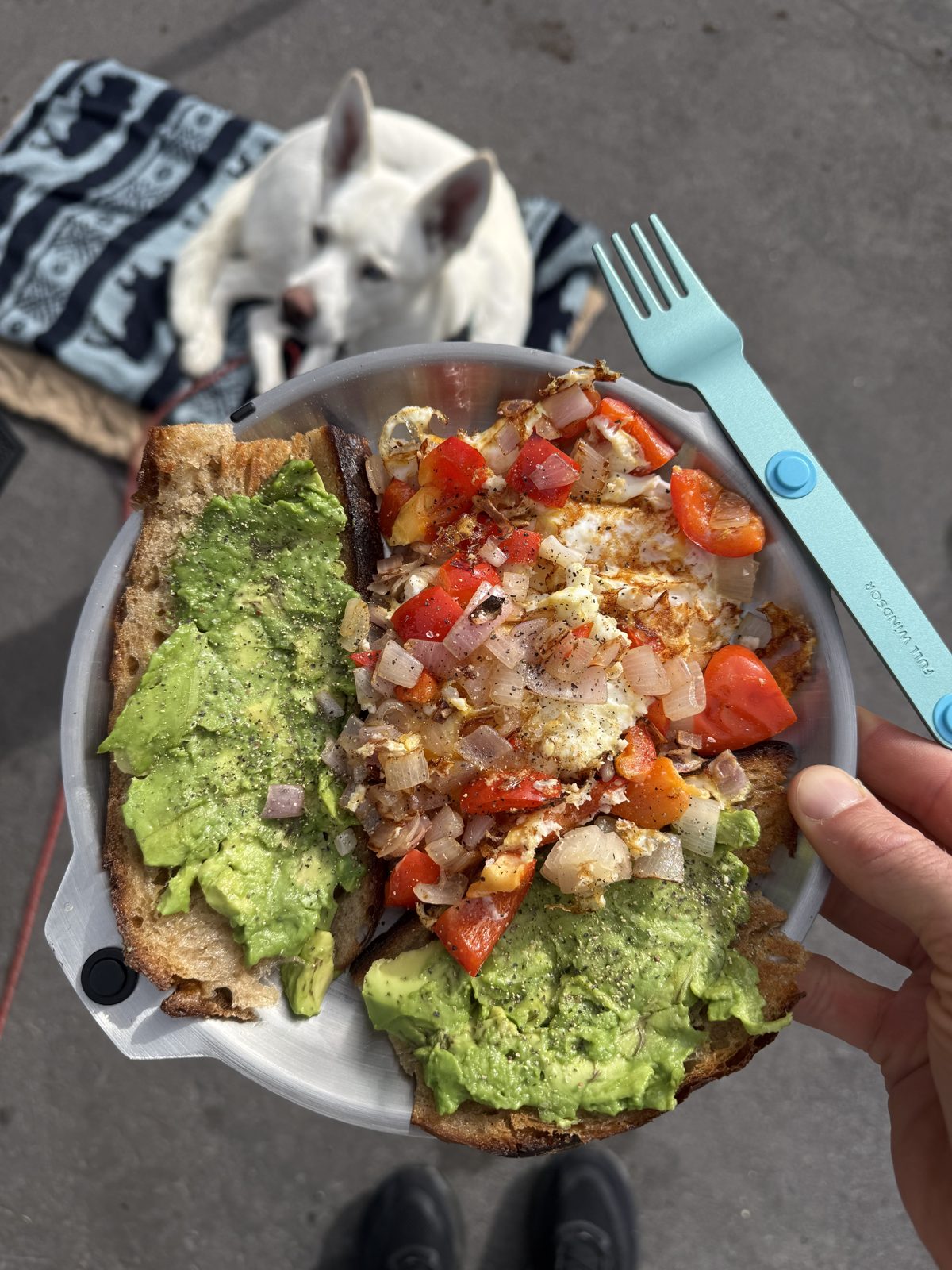
The Rim Drive closes for the season on November 1, so we walked the stretch by Rim Village, at about 7,100 feet, and took our pictures. Then I set Rhea's bed out in the sun next to the truck and cooked second breakfast for real: eggs and veggies and avocado toast. I haven't made that in a while, and I was starving. Rhea had some toast and licked the plate, and then we both took a little nap.
While we sat by the truck, two cars pulled up with six or seven people, and they asked if they could pet Rhea. They went slow and sweet with her. When I told them we'd driven from New York, they were blown away, and when I told them we're only about halfway, they were even more excited for us. One woman said she loved the truck setup.
As we came down Crater Lake Highway, the pines got bigger. I thought they might be Jeffrey pines, but those don't reach this far north. They're ponderosa and sugar pines, some along 62 more than 300 years old. It was 65 and dry, and the air smelled like the mountains of inland California, all dry pine and cedar. Ponderosa bark smells like vanilla or butterscotch when the sun warms it.
We hadn't been on an interstate in a while, so I-5 north to Roseburg was a shock, and Rhea didn't love it. We could see the sky darkening to the west with the rain coming in from the coast, so the plan was a motel for the night. Everyone in Oregon seems to burn their yard debris in the dry season, and we smelled little fires the whole way.
I needed some social time, so we stopped at Two Shy Brewing in Roseburg first. I had a beer and an elk burger, and I got Rhea an elk patty for dinner and another for breakfast. On the way out, a guy came over to compliment the rig. He's got an older Tacoma with over 300,000 miles on it, set up with a tent and an awning, and he's big into overlanding. You spend a ton of money on this stuff, but the people are so kind, and it's a fun community to be part of.
Rhea
Rhea and I had a good snuggle in that motel bed, and she curled up next to me by the fire in the morning.
With half a pill of Trazodone in the morning, she's a new dog in the truck. She's a little sluggish and not quite her bouncy self, but she's calm, and that's what we need right now. This isn't the rest of her life. She'll get real breaks in Sebastopol and in LA.
At the rim, she gave the group a little woof and then warmed right up to them. She's getting so much better with new people. At Two Shy, she sat at my feet the whole time, and everyone wanted to pet her. She devoured her elk patty.
Comments and suggestions
No notes yet. Be the first.