
Dunes to a Mile High
Route
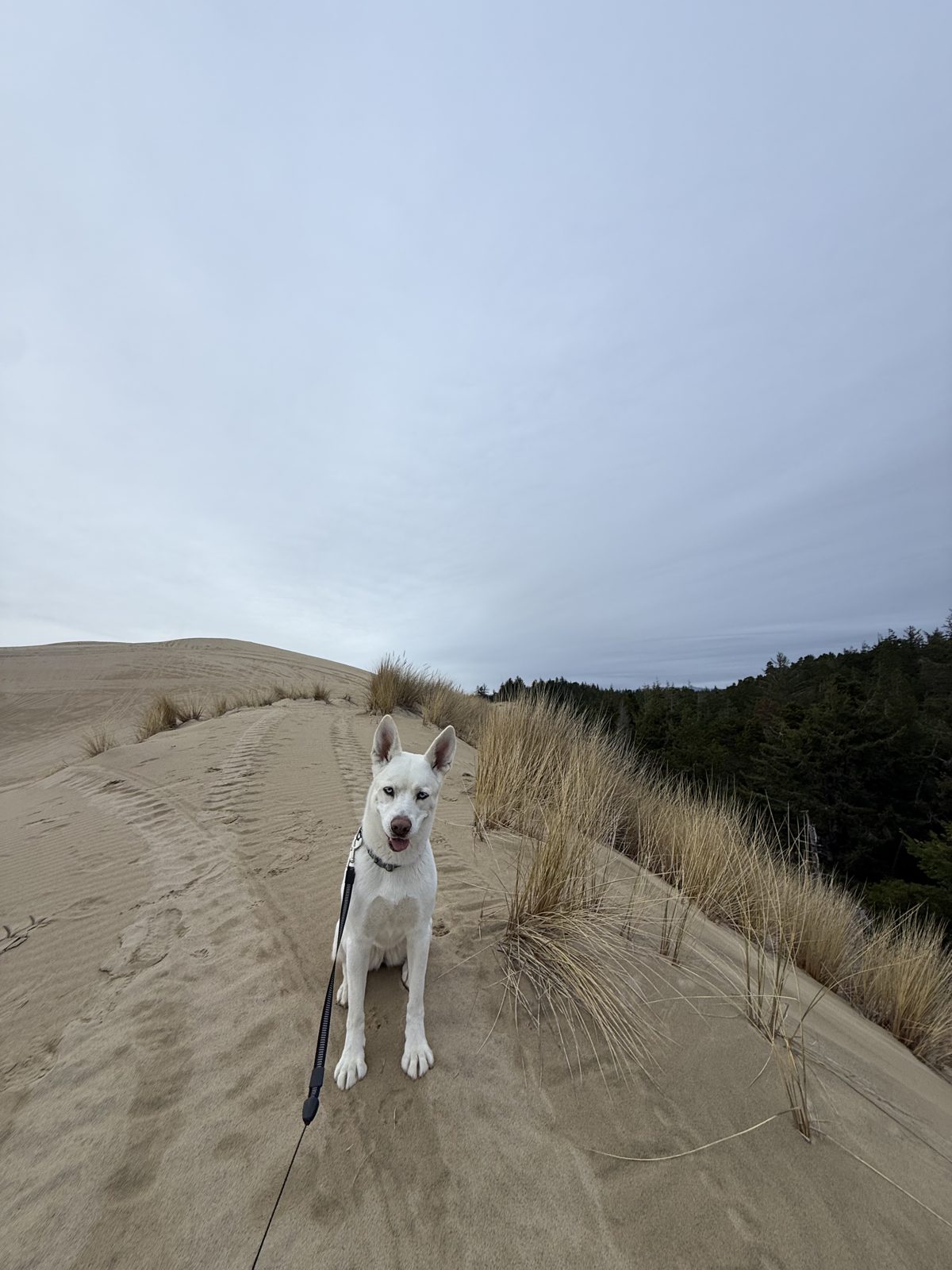
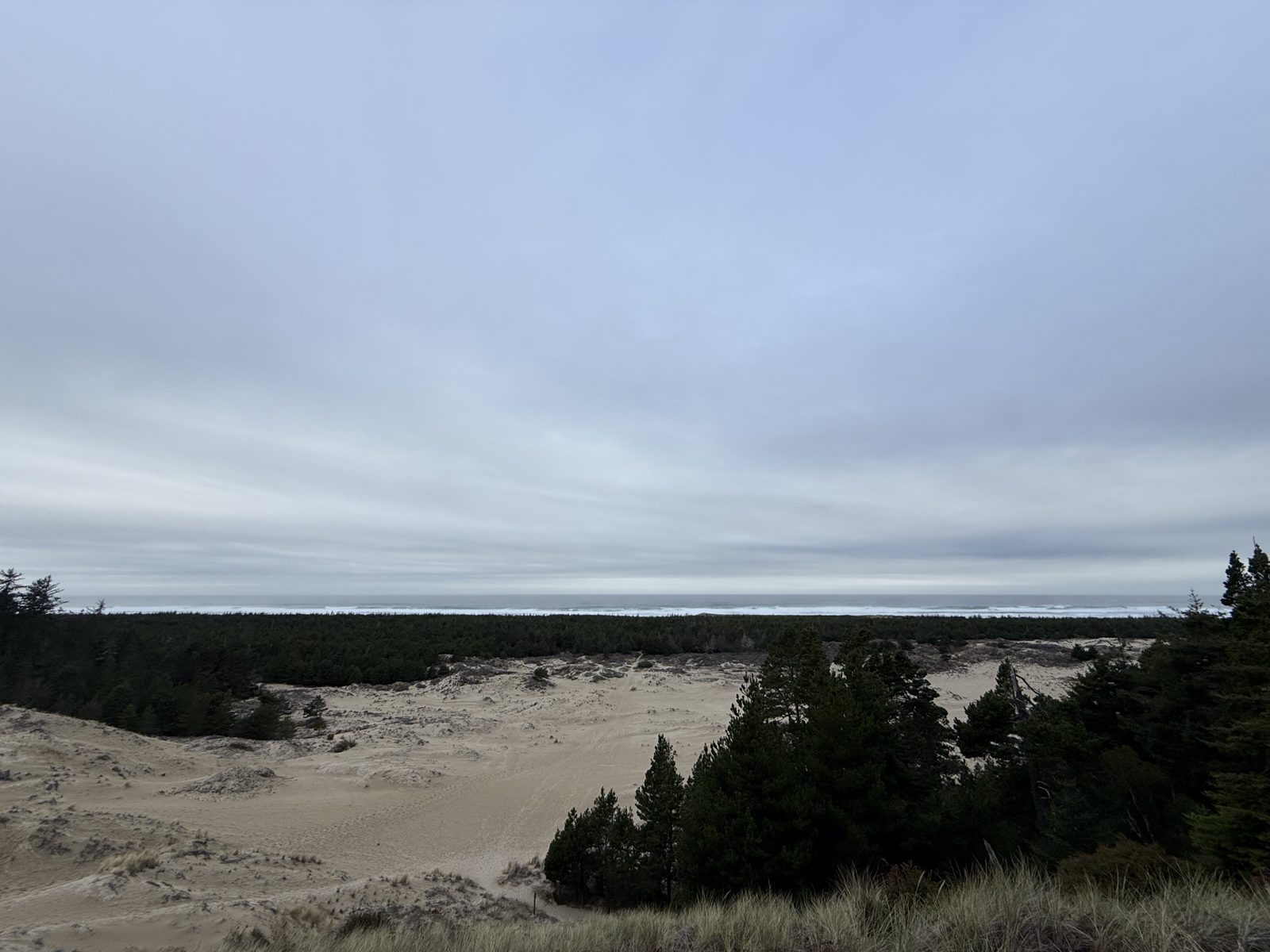
Friday, November 6th. If you keep following the camp loops at the dunes, they lead to a whole off-road area, where big campers park right at the base of the sand and people ride dune buggies, ATVs, and dirt bikes. We walked up into the dunes for the views and to stretch Rhea's legs before the long drive, then stopped at one more overlook heading south on 101. These dunes are massive, like the Walking Dunes out in Napeague, on steroids, and they run about 40 miles down the coast. Some of it is open to 4-wheelers, while some of it is closed and left alone, which feels like a good balance. Frank Herbert came to Florence in 1957 to write about the dunes swallowing the town, and the trip helped inspire Dune.
Then we turned inland, up the Umpqua River on Route 38. Out here, the towns sit at the river mouths, where the ports and the industry are, and once you head upriver, there's nothing but forest and water. We passed a sign for some rapids, and there wasn't a ripple in sight. I'm sure it's a different river in the spring, when the snowmelt comes down from the mountains.
It's the off-season, and there weren't many of us on the road. The logging trucks were back with their second trailers, and now the fuel tankers tow one too, basically double the payload on every run. One fully loaded logging truck rode my bumper while I was doing 60 in a 55. If I slammed on the brakes, there's no way he was stopping. They have a schedule to keep, and I get it, but man.
Once you're over the Coast Range, it's a different world. It was sunny and 69 degrees, and everything was dry. It's the dry season inland, and the oaks along the North Umpqua looked burnt, not by fire but by thirst, with crinkled leaves that crackle underfoot. Moss and lichen still cling to their trunks, so the moisture must return in winter. Roseburg gets about 34 inches of rain a year, compared with about 59 on the coast at North Bend, and almost none of it falls in summer. Cattle and sheep grazed the pastures, and the blackberries made it this far inland too.
I kept seeing signs for fish hatcheries, here and back on the Olympic Peninsula, and I figured they were for salmon. Oregon runs 33 hatcheries that turn out about 40 million fish a year. Sasquatch has followed us into Oregon too.
Heading east on 138, we drove through an old wildfire burn. Most of the trees are still standing, black and bare, the skeletons of the forest that was there, but the ground underneath is bright with yellows and greens. The Archie Creek Fire burned about 131,500 acres along the North Umpqua in September 2020 and destroyed 109 homes, the largest wildfire on record in Douglas County. It even took out Rock Creek, one of Oregon's oldest hatcheries, burning almost everything there that wasn't concrete. Forests out here need fire, and you can see the new one already coming up.
Then we climbed into the Umpqua National Forest, nothing but tall pines for miles, with moss still hanging from the tops of the trees. We started the morning quite literally at sea level, and around 4:30, I passed a sign for 5,000 feet. I knew we were headed up to Crater Lake, but I didn't realize we'd climb a mile in a day. No wonder the trees changed. I'd guessed the bigger pines were Jeffrey pines, but those don't grow this far north. Up here it's mostly lodgepole pine, packed so tight that the park calls it "dog's hair forest."
We passed Diamond Lake at golden hour, with a snow-capped peak on either side, Mount Bailey to the west and Mount Thielsen to the east. Thielsen's needle summit is called the lightning rod of the Cascades, and the strikes have melted its top rock into a glassy crust called fulgurite. The light was hitting the pines, there were only a couple of other cars on the road, and it was spectacular.
I was listening to Armchair Expert, and Dax Shepard and his guests were talking about the little connections we make with complete strangers. That's been one of the best parts of this trip. Get away from the city, and people wave, and when you wave back, their whole demeanor changes. Plenty of guys who look like hardos turn out to be sweethearts once we get talking about dogs. Smile, wave, take a real interest, and people will surprise you.
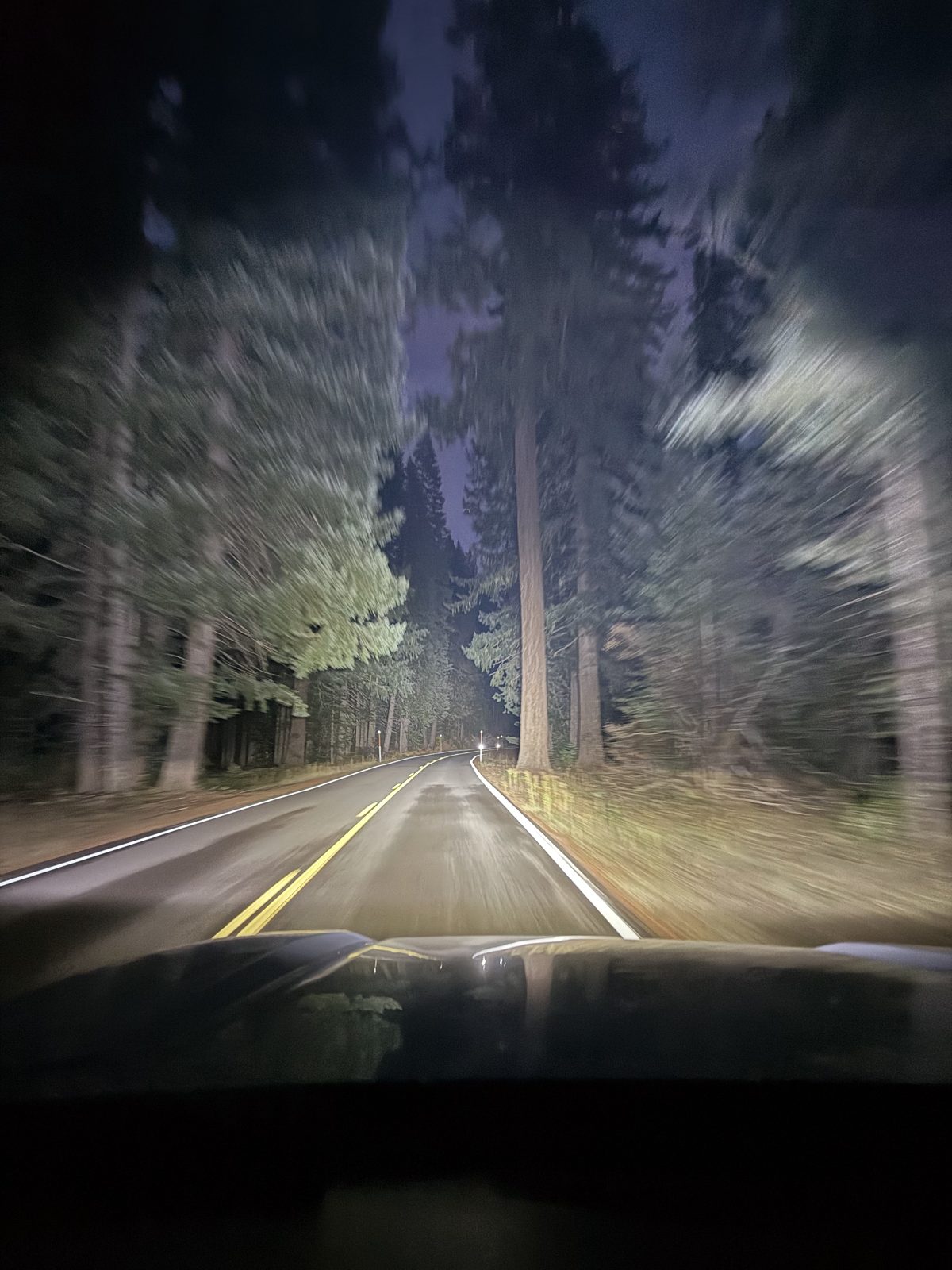
The lodge at Union Creek was on winter hours, and the woman there was closing up at 5. The computers were already shut down, so she couldn't give us a room, and every campground nearby was closed for the season. That's on me. Should have booked it. So we drove on up Route 62 past the park in the dark, with the temperature in the high 30s and 20-foot snow poles lining the road for the plows. Park headquarters at Crater Lake averages about 41 feet of snow a year. I called a handful of places, and the only one that picked up was a little roadside motel in Fort Klamath, 35 minutes on. The light bar let me hold the speed limit in the pitch black, and you do not want an elk stepping out in front of the truck. We backed into our own carport, lit the gas stove, and called it a night.
Rhea
Today was a hard one for Rhea. Anything over 30 miles an hour and she shook uncontrollably, even with a big dose of her homeopathics in the morning. It's fear, not her stomach, because it comes on in an instant. It was a gorgeous day, and we should have been loving it, but it broke my heart to watch her.
So I gave her half a trazodone, and about 40 minutes later, she was a different dog. She had her head out the window, scanning the pastures for cattle, with her tail curled up over her back, which is how you know she's happy. Huskies are built to run, pull sleds, and chase rabbits, not to ride in the back seat all day. On the long driving days between here and LA, it's half a pill in the morning, and then we'll reassess.
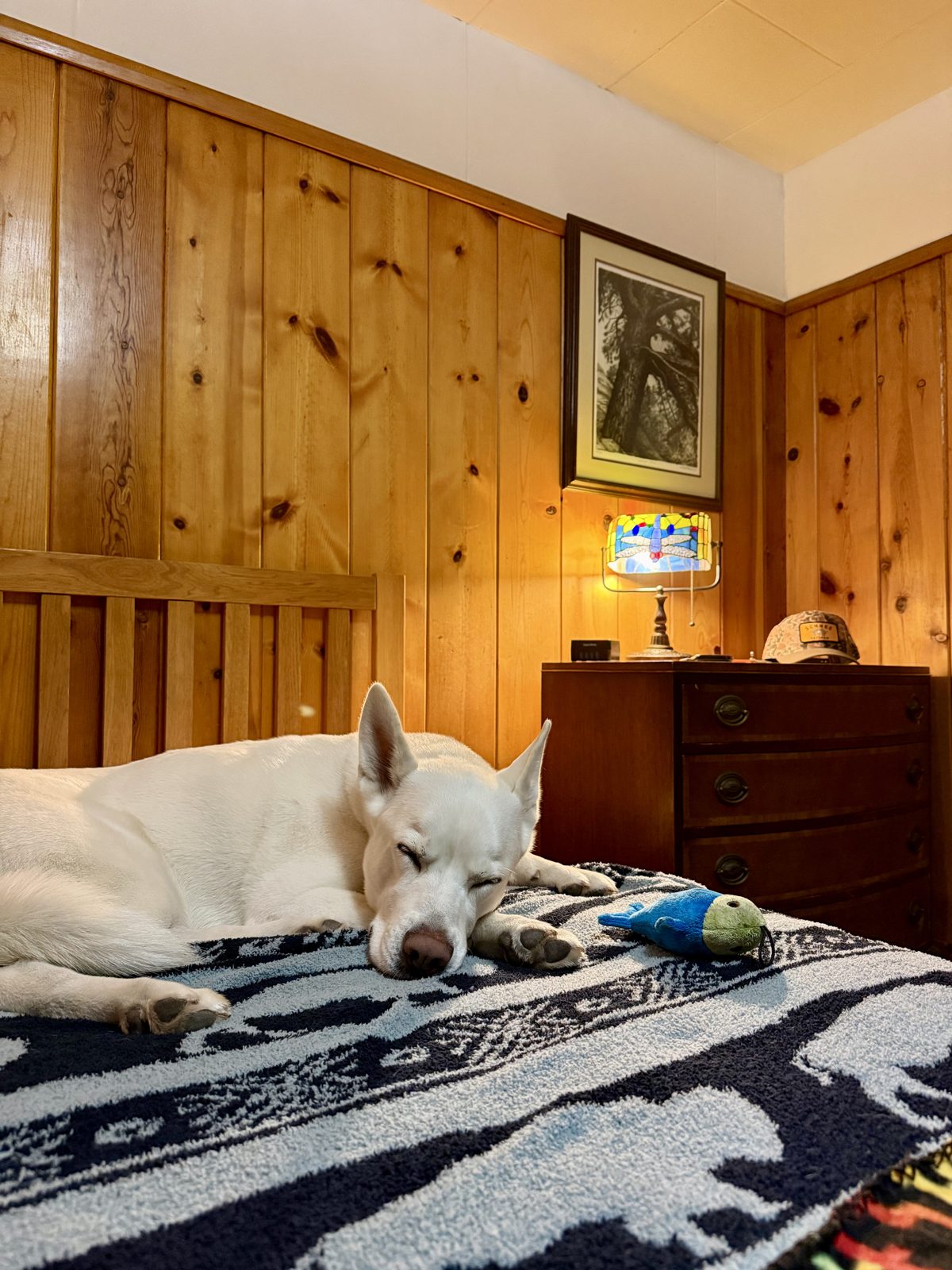
By late afternoon, she was lying quietly in the back, no more panting, and she was a champ on the last dark stretch to the motel. We have a new dog.
Comments and suggestions
No notes yet. Be the first.