
Haystack Rock and a Golden Fog
Route
Thursday, November 5th. We had such a good night in Seaside. Our little roadside motel didn't have a kitchenette, but I could back the truck right up to the door, and the room had a king bed. Rhea claimed most of it, and I slept in what amounted to a twin. In the morning, we took it slow with breakfast, a walk around town, and some emails, and then I got a hot shower and a long-overdue beard trim and shave. I'd been feeling a little low yesterday, and there's nothing like a bed, a hot shower, and a shave to bring a man back.
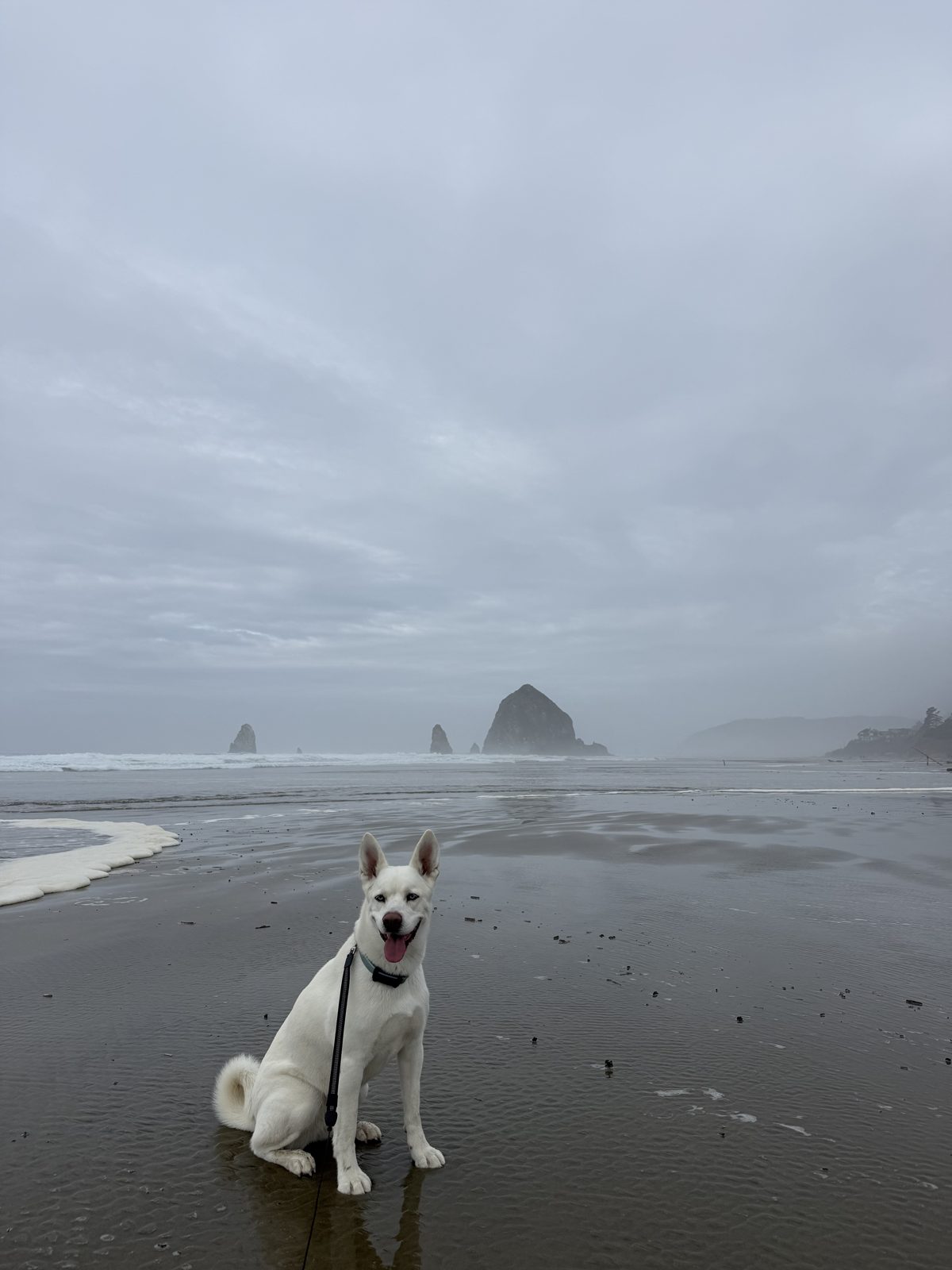
When we pulled up to Haystack Rock in Cannon Beach, the fog was so thick we could barely see it. Haystack Rock rises 235 feet, a basalt sea stack left from lava that flowed down an ancient Columbia River drainage some 15 to 17 million years ago. The tide was low, so the beach stretched out wide and flat, with super fine sand. I took a call from the truck, and then we walked the beach toward the rock barefoot. The Pacific numbed my toes in minutes, but I needed that grounding. By the time we headed back, the fog had lifted enough for some good shots of the sea stacks and of Rhea. The town takes its name from a small iron cannon off the Navy schooner Shark, which wrecked on the Columbia River bar in 1846; the cannon washed ashore nearby and now sits in the town's history museum. And just up the coast, Indian Beach stood in for La Push in the first Twilight movie, so it felt like the vampires followed us here.
Heading south on 101, the Oregon coast reminds me a lot of Big Sur. There are sheer drop-offs on one side and rock faces on the other, covered in wire mesh to keep the rocks off the cars, and the coastline is endless, with waves breaking hard enough to fling spray high into the air. The spray makes it over the hills and keeps coating the windshield with salt.
When 101 loops inland, the fog disappears almost instantly. Just over the hills, it was sunny and in the low 60s, with moss still hanging from the pines and ferns underneath. It felt like spring. Around Tillamook, the valleys are dairy country, with cows grazing on green pasture. Tillamook County has more cattle than people, about 38,000 head to 27,000 residents, and in 1909, ten local cheese factories banded together into the farmer-owned co-op that still makes Tillamook cheese.
The coast towns are quiet this time of year. People are out, but none of the restaurants or motels are full. I like getting the local version of these places, but I also feel like I'm missing them at full tilt, and it would be fun to come back and drive this coast in the summer. Steinbeck came down the Oregon coast in late October 1960, two weeks earlier in the year than us, so he saw it the off-season way too. I'm grateful to be doing it on his schedule.
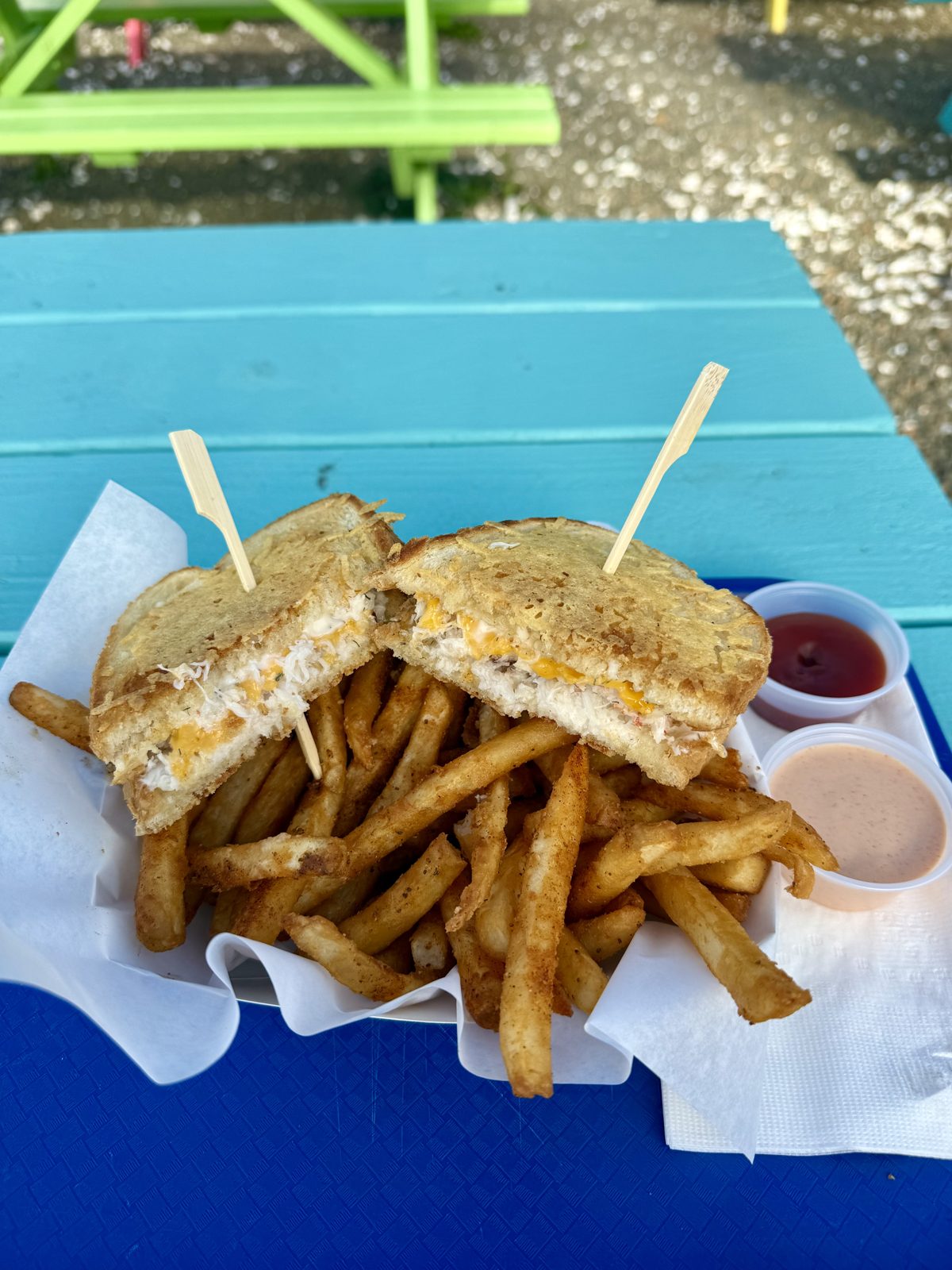
In Lincoln City, we pulled over at Barnacle Bill's, which has been smoking wild Chinook over alder since 1949, and I grabbed some smoked salmon and smoked rockfish jerky, big pieces for $3 apiece. They don't do hot food, so the woman at the counter sent us toward a fish and chips spot at the south end of town. We ended up across the street from it at Crabby Daddy's instead, a little seafood shack. I've gotten in the habit of asking what the locals get, and here the answer was the Dungeness crab melt, basically a tuna melt made with Dungeness crab, with a side of melted butter for dipping. It was ridiculously good. The fries were homemade and seasoned, way better than yesterday's frozen ones, and they came with fry sauce, the staple of mayo and ketchup.
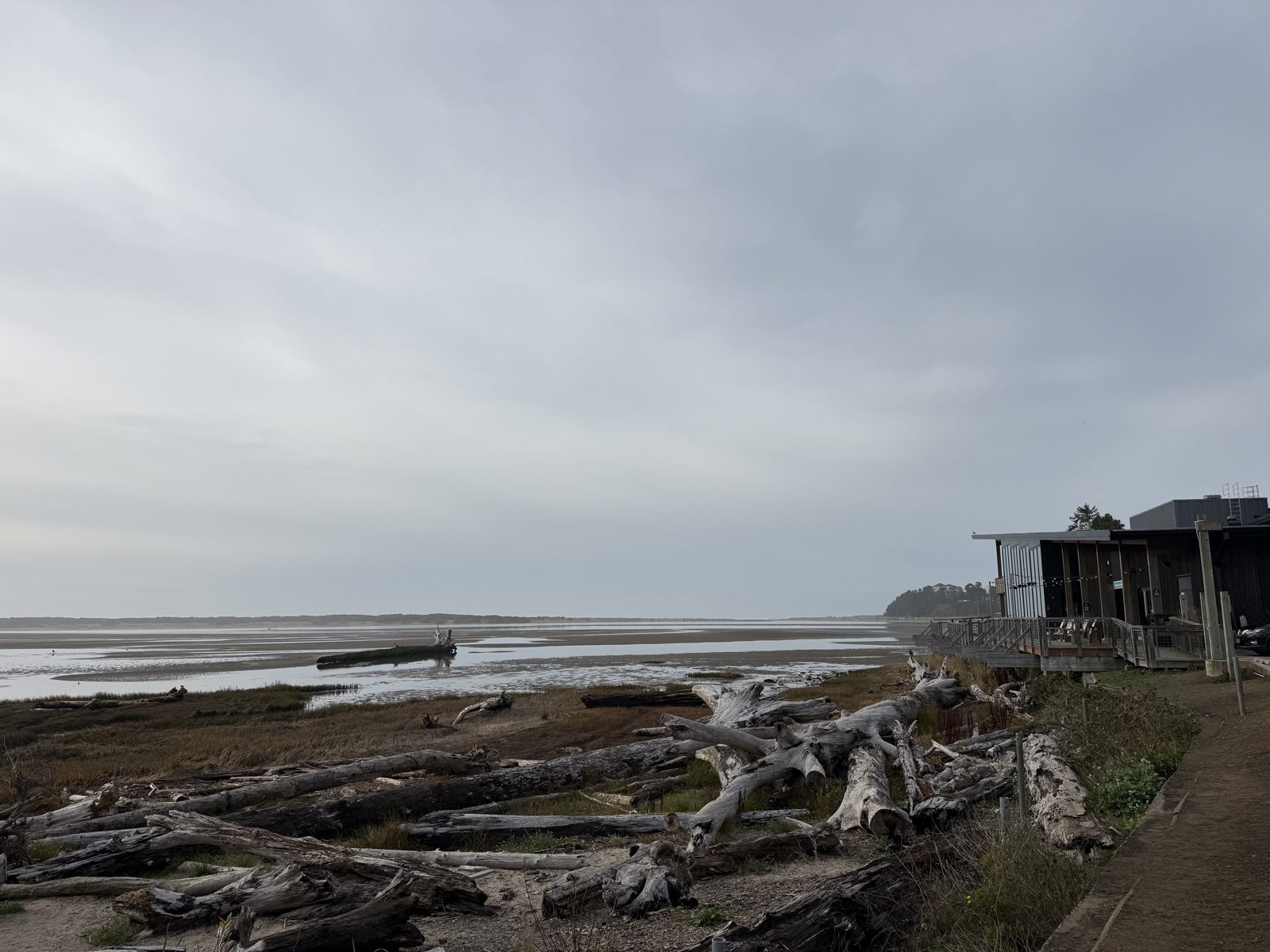
A block up, Pelican Brewing sits right on Siletz Bay, overlooking the mudflats, in a big new wooden building with fires going. Six-packs of IPA were $6.99 to go, happy-hour beers were $5, and it was tempting to post up on the deck rather than drive on to a dark campsite. Rhea got her walk first. Fat, ripe blackberries still lined the little side street by the water, so I ate a few. They've followed us down the whole coast.
South of Lincoln City, 101 runs almost dead straight along the water, rarely more than 100 feet from the shore, up and over the dunes and the cliffs. We drove the rest of the afternoon in a mist that wasn't quite fog and wasn't quite sea spray, and the truck is now caked in salt. The trees along the road look like cedars with their short needles, but they're shore pines, the coastal variety of the lodgepole pine, which can take the wind, the salt spray, and the poor sand of the dunes. The Oregon coast is like Big Sur stretched for eternity. I can see why people love Oregon so much.
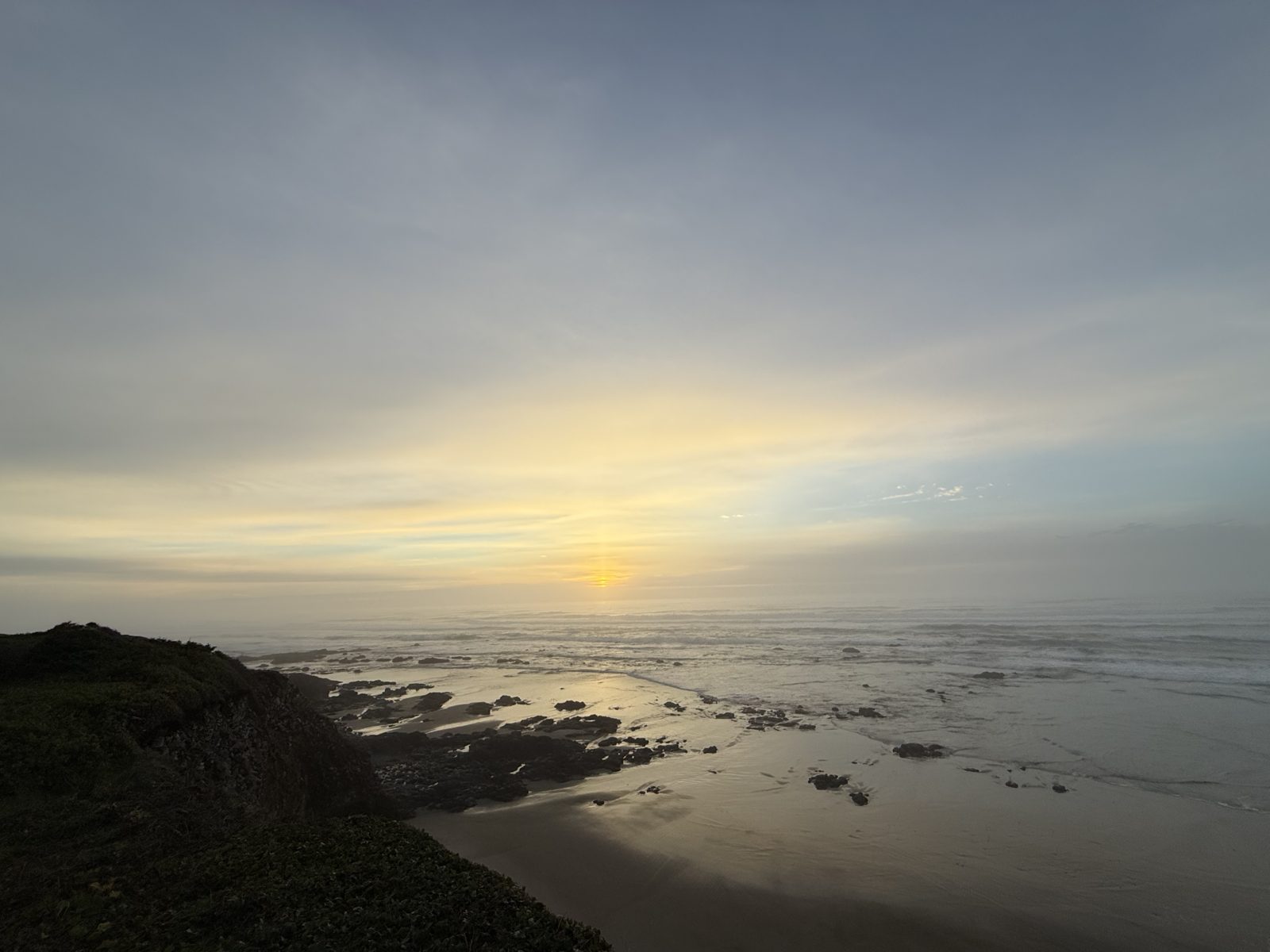
About 30 minutes before sunset, the whole fog turned golden yellow and orange, and it felt like we were driving through the sunset itself. Out over the ocean, there was no line between the water and the sky, just one soft yellow wash, like a watercolor. Everything was still and calm.
We passed through Yachats (YAH-hots) and a few other tiny towns. They're like Montauk shrunk down to a couple of blocks and taken back a decade, all mom-and-pop shops and summer stores, right on the coast.
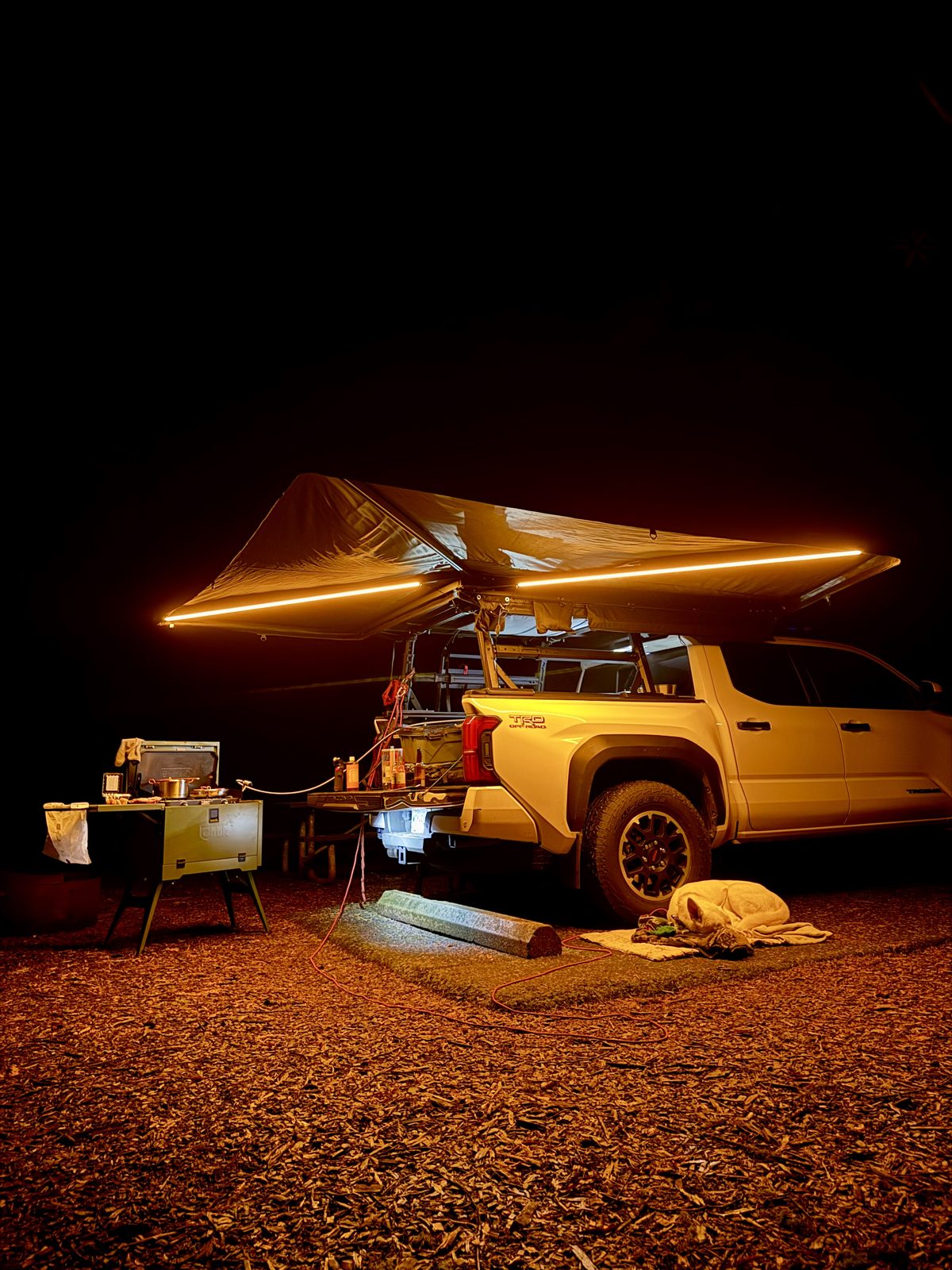
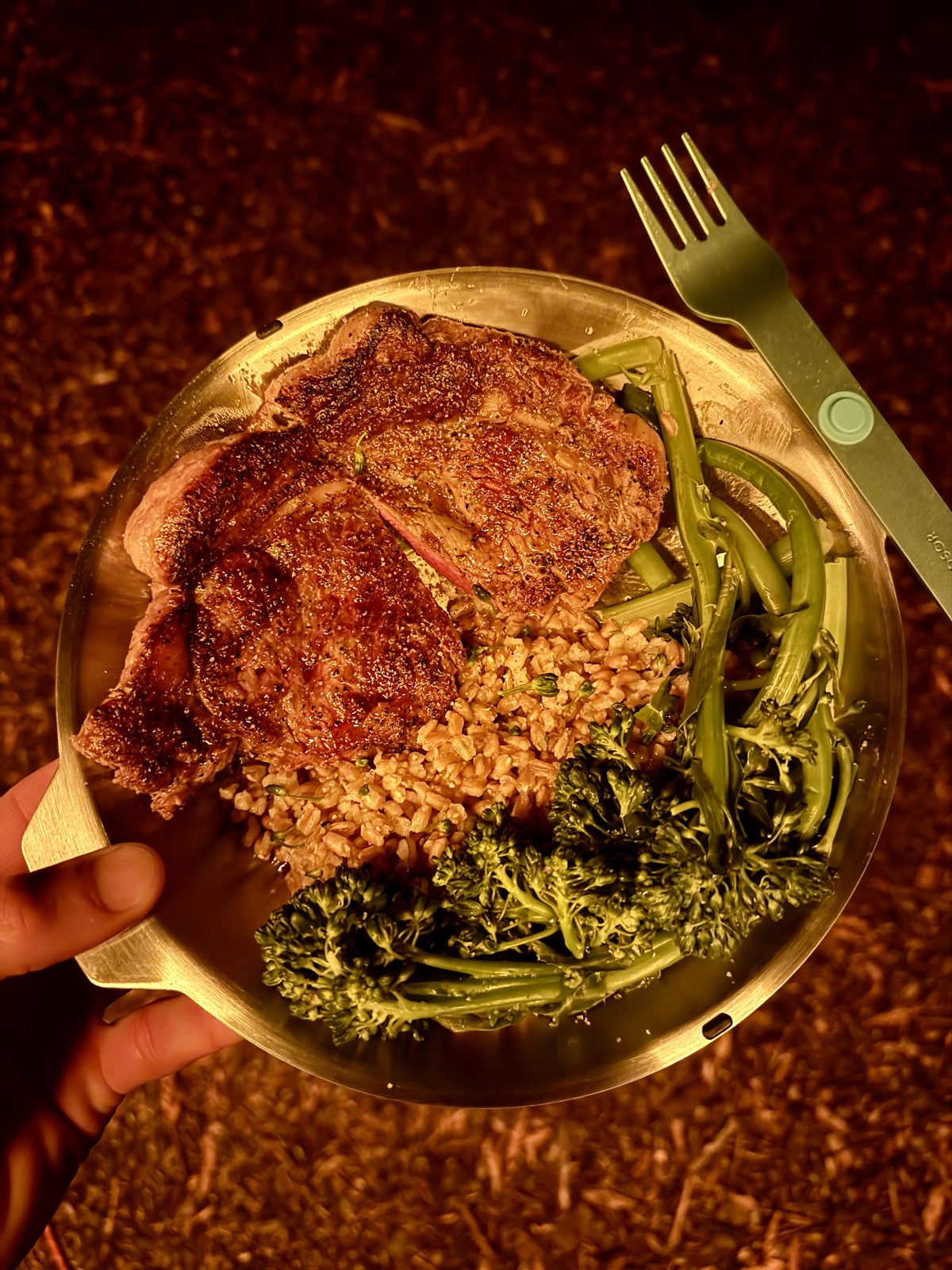
We camped by the Oregon Dunes, south of Florence. The campground is beautifully kept, with paved pads under the trees and a soft blanket of needles over everything. We set up shop, popped the tent, and I cooked some farro, broccoli, and a nice steak for dinner. We could hear the waves breaking through the trees all night. It rocked us both right to sleep.
Rhea
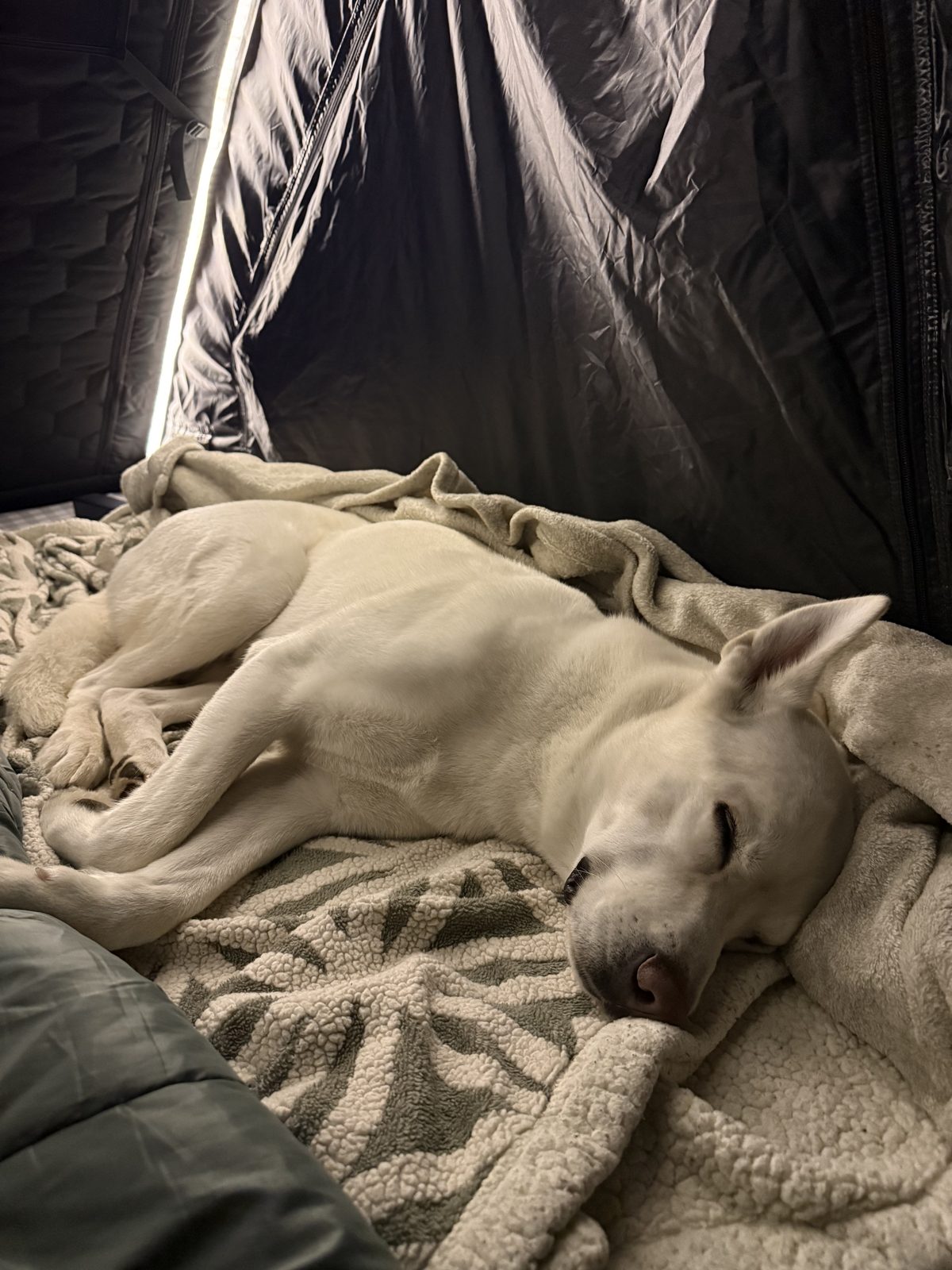
Rhea earned that king bed. She was wiped out after our long day on the road, ate a huge dinner, and passed right out.
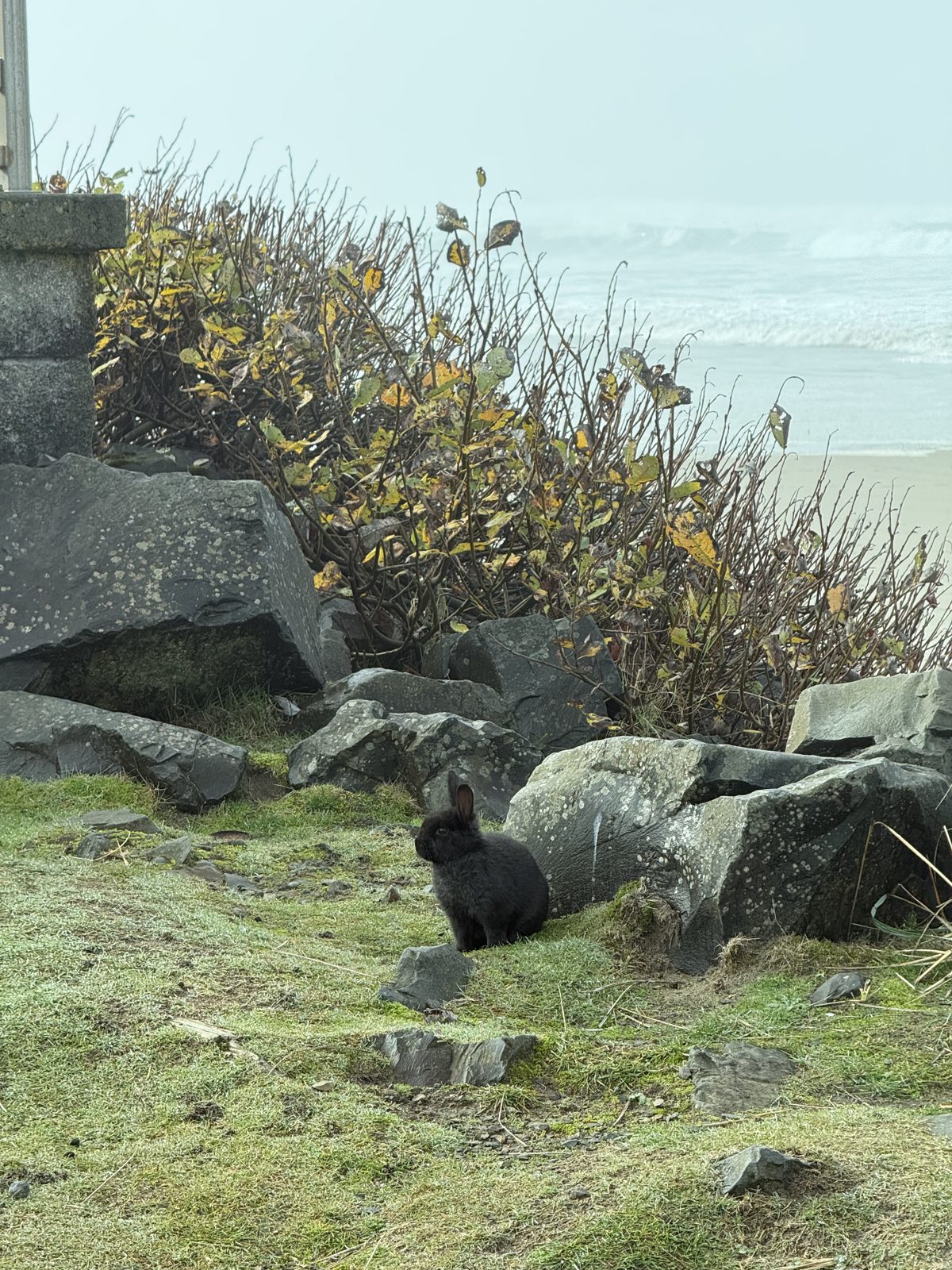
At Cannon Beach, she ran back and forth on her long lead, nose down, until she found the bunnies. These aren't the cottontails we have on Long Island. Cannon Beach has thousands of feral rabbits, descended from pets people released. They hang out by their holes and walk right up to people, who clearly feed them. While I was on my call, Rhea nearly went out the truck window after them, and on the beach she got within a few feet a couple of times. If she'd been off the lead, it would have been a bloodbath.
With four hours of driving ahead, I kept her calming supplements coming, and we broke the day into short legs with walks in between. She was a trooper, and at camp she slept straight through the night, waves and all.
Comments and suggestions
No notes yet. Be the first.