
Mossy Giants and Fried Oysters
Route
Wednesday, November 4th. We had the Hoh Rain Forest campground nearly to ourselves, and it was a still, quiet night. Every so often, we could hear the wind moving through the treetops off in the distance, and the stars came out through the branches overhead. It was a little spooky being out there alone under all those gangly, moss-covered limbs. I woke up every couple of hours, which is just my body making sure everything's okay in a new place, but we were totally fine.
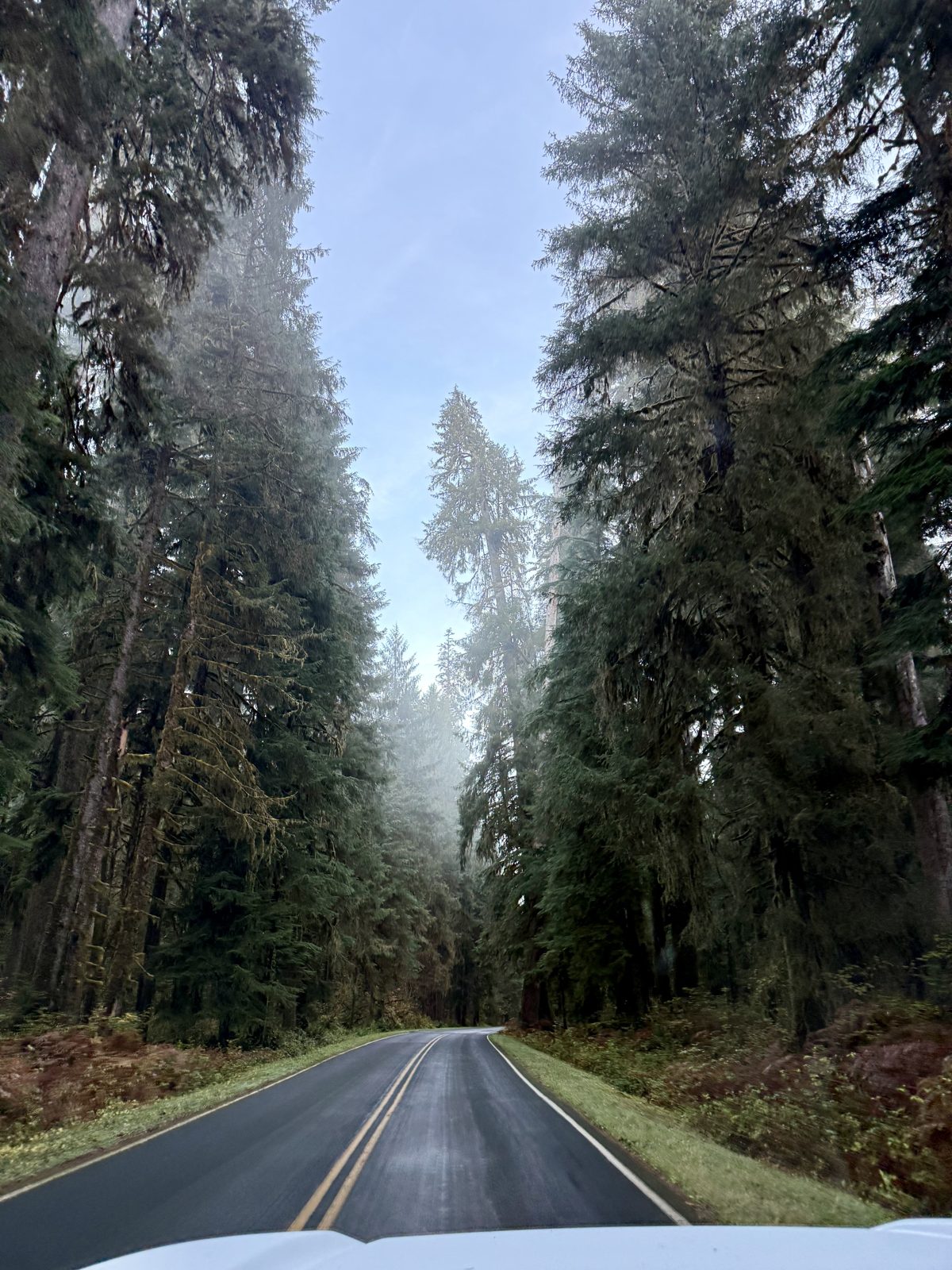
The morning came up clear and blue. We packed up fast and ate breakfast on the road, because I wanted to drive deeper into the rainforest while the light was good. Even with a dry sky, everything here stays wet, and a thin layer of mist hung just above the treetops and over the open meadows.
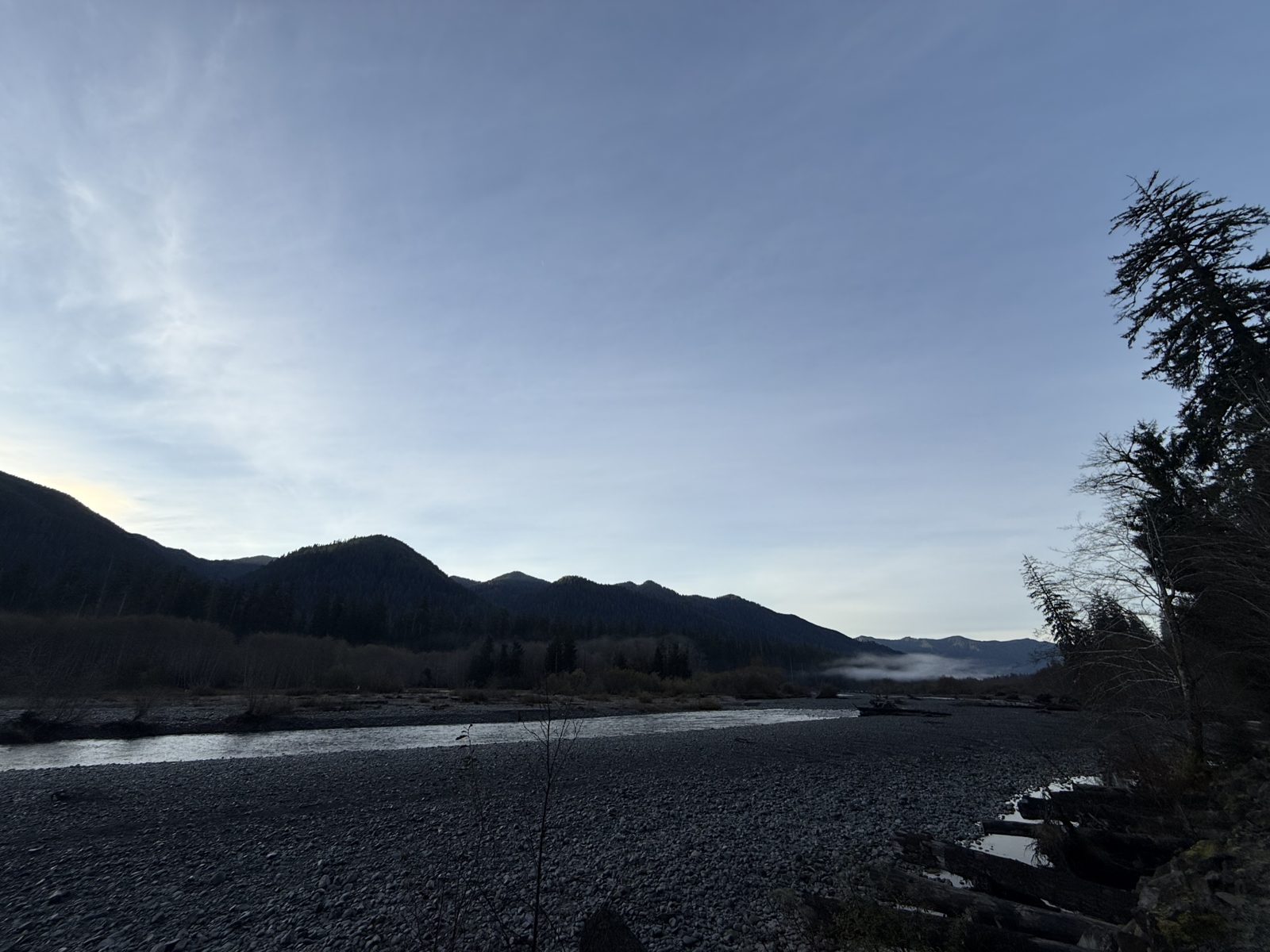
The Hoh River runs beside the road through a huge, stony riverbed, and this morning it was only a thin channel down the middle. The Hoh runs highest in the fall and winter rains, so it won't stay that way for long.
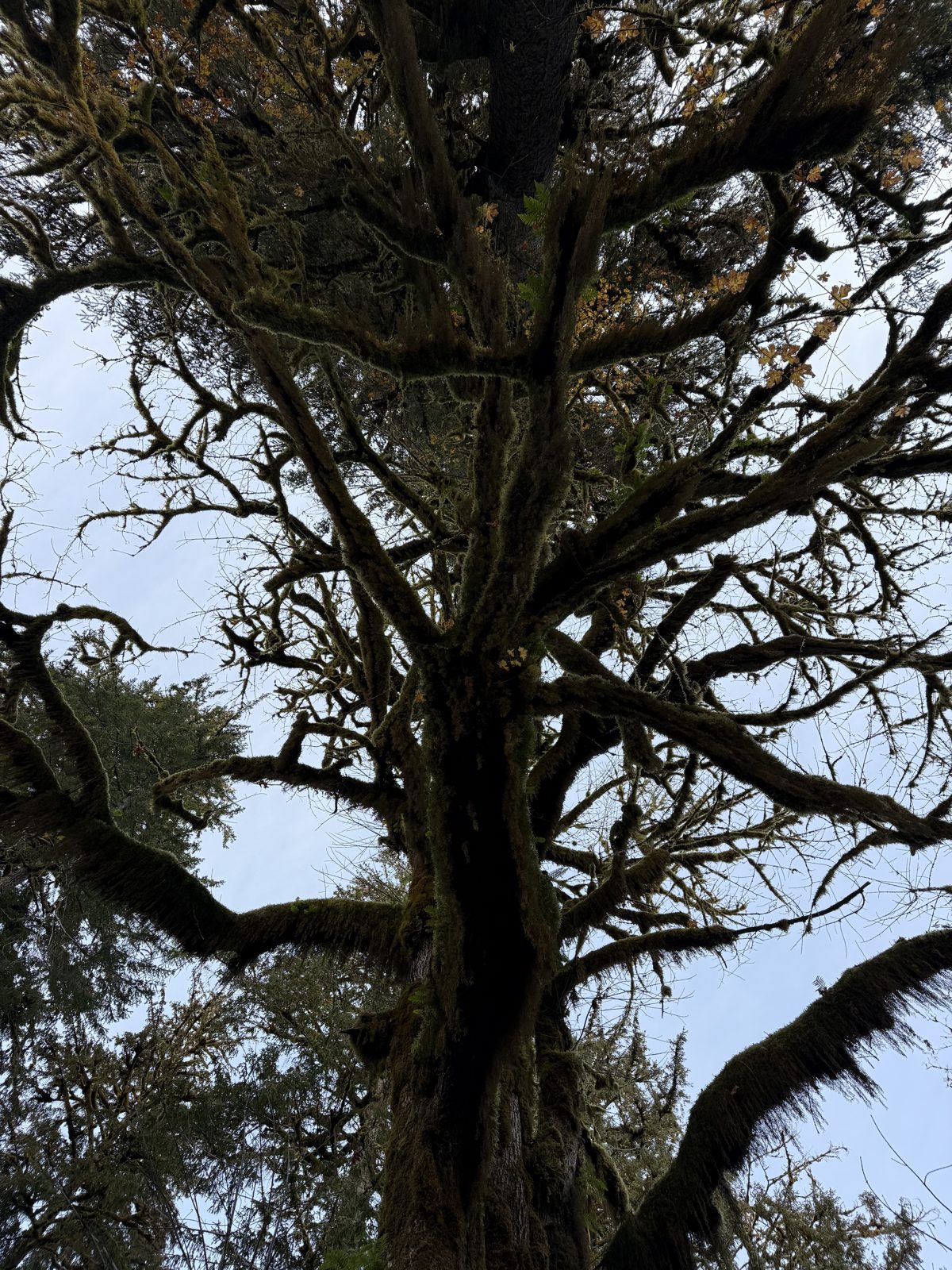
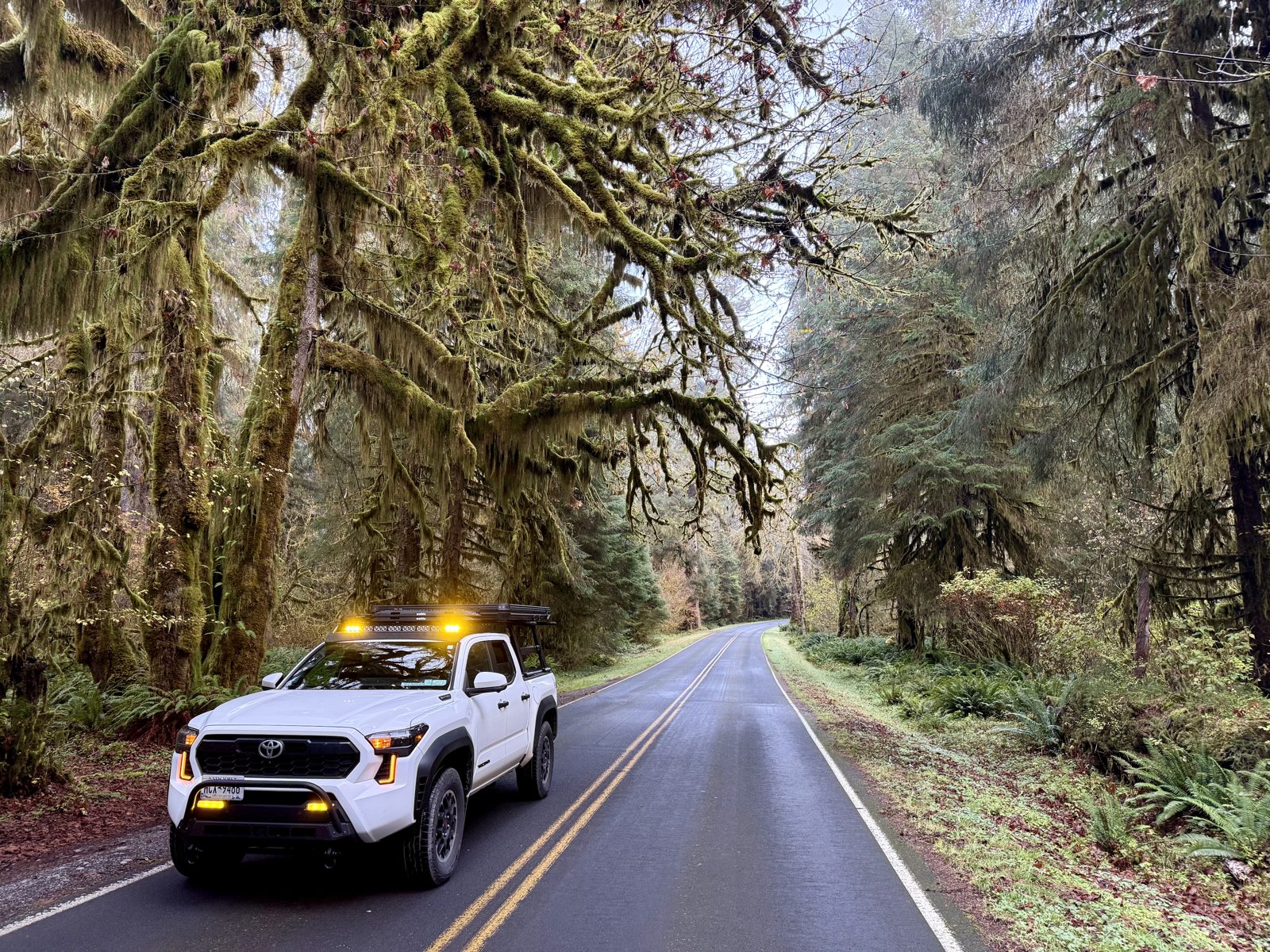
The trees along the road are Sitka spruce and western hemlock, some over 200 feet tall and more than 500 years old. Their tops are green, but the lower limbs died off long ago without any light, and now they're caked in thick, wavy moss. This isn't the light dusting of moss you see in South Carolina. It looks like someone waters it every day with a garden hose. The Hoh gets about 140 inches of rain a year, and the moss isn't feeding on the trees; it uses them as a perch and drinks straight from the rain and fog. Dr. Seuss has nothing on this place.
Driving among these giants, I thought of The Overstory, Richard Powers' novel about trees and the underground fungal networks that let them share water and nutrients across a whole forest.
By early afternoon, we'd made it south to Hoquiam, on Grays Harbor, where we napped in a church parking lot and I got a little work done. A century ago, Grays Harbor was the lumber capital of the world, and in 1924 it became the first port anywhere to ship a billion board feet of lumber by water. It's a lot quieter now.
Logging trucks were everywhere on 101 again. A loaded truck tows a second two-axle trailer stacked just as high, eight more tires on the road. Once they drop their load, the drivers lift that trailer onto the back of the truck and carry it home piggyback. It must save a ton of wear on the tires. Timber is still a big industry up here, even if it isn't the giant it once was.
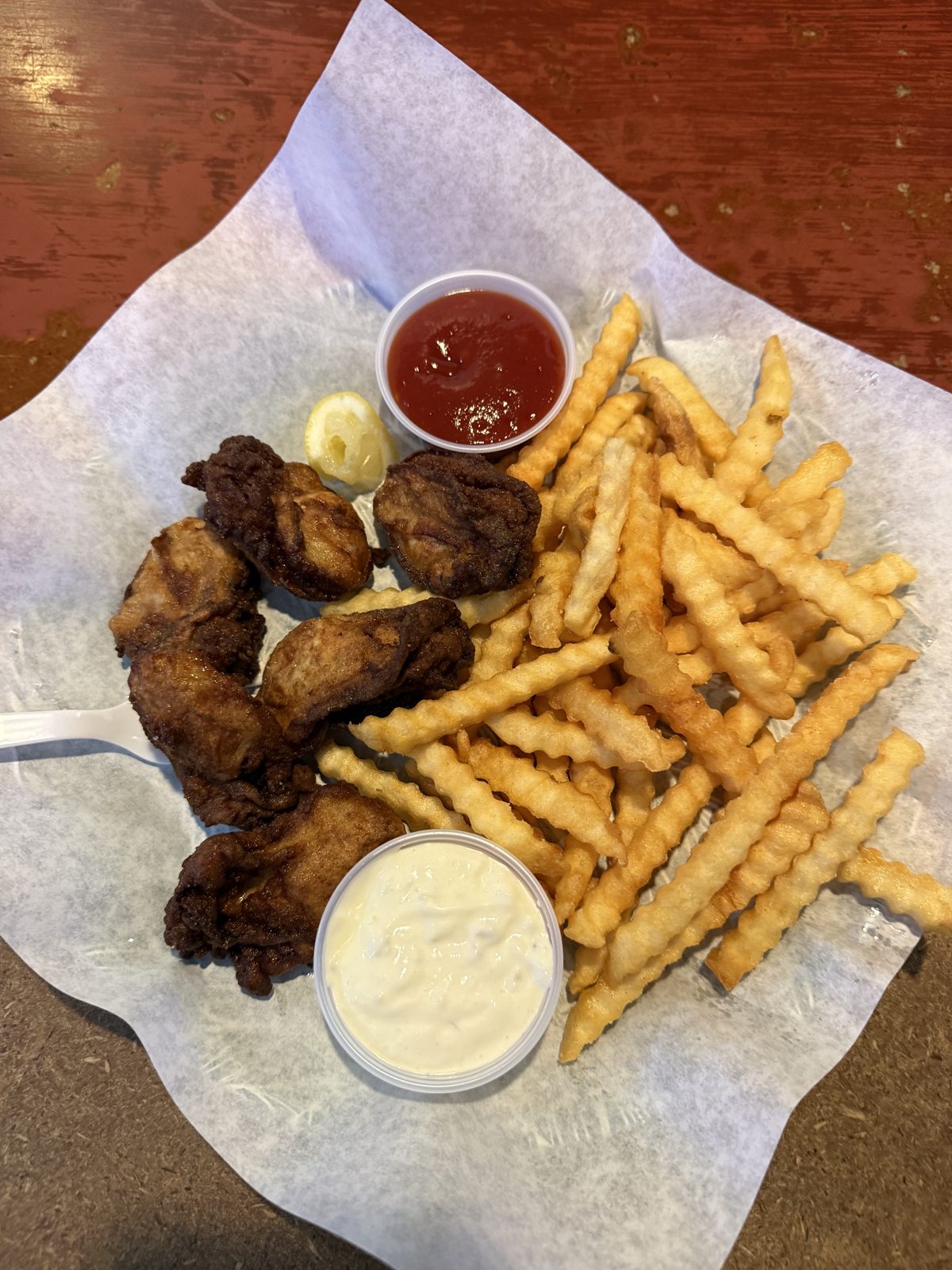
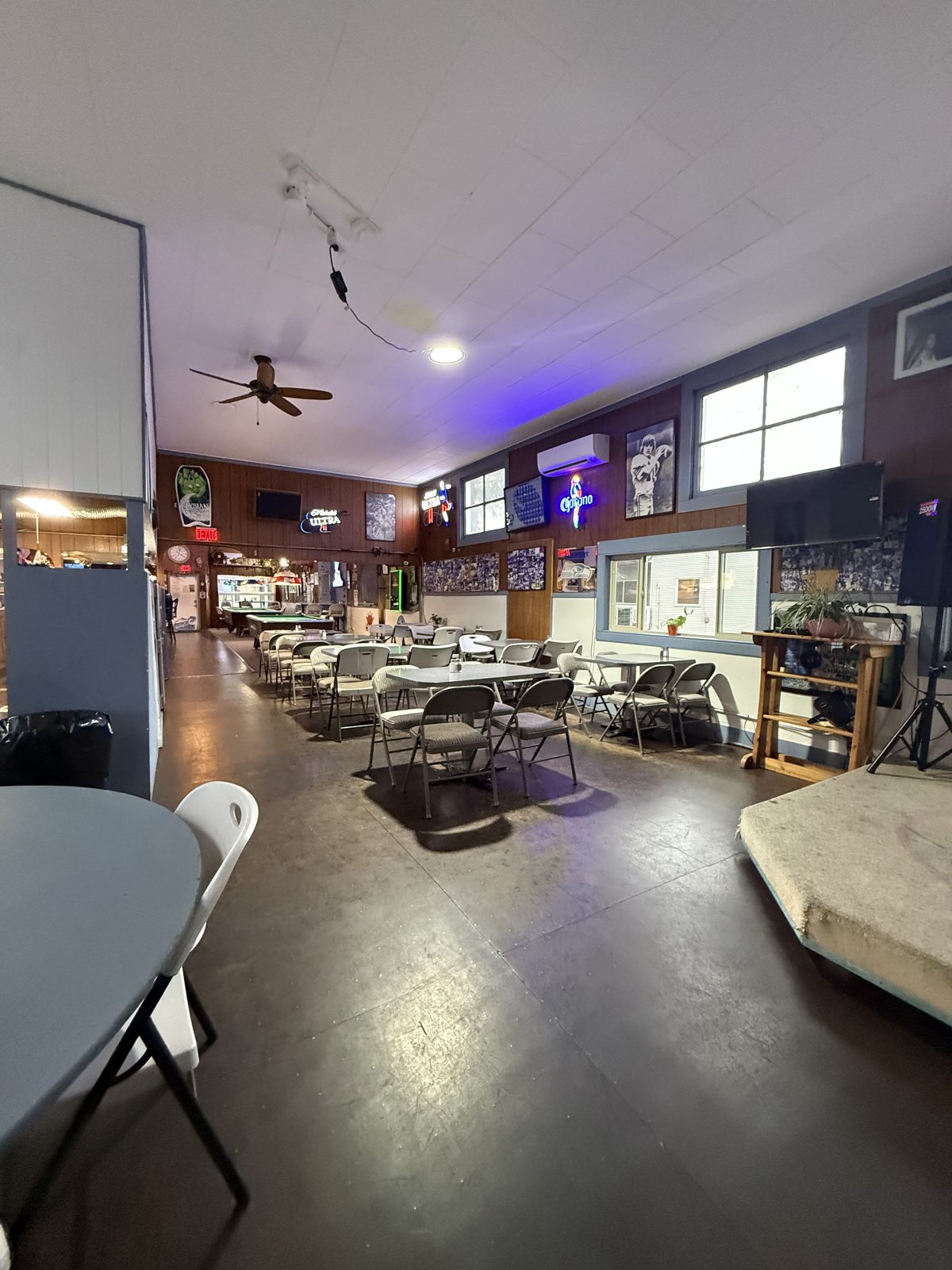
I was starving by the time we reached South Bend, on Willapa Bay, and we stumbled across the Chester Club and Oyster Bar, a cash-only tavern on the Willapa River. It's our second tiny-town dive bar of the trip, with one or two windows, folding tables and chairs, and a stage in the back for karaoke, though calling it a stage is generous. There's no kitchen. The one bartender does the cooking too, with the deep fryer right up front. At 3:30 on a Wednesday, it was two couples and me. I ordered six fried oysters. She hand-breaded a bunch of big and juicy ones, very lightly, and dropped them in the fryer. The fries came straight from a frozen bag, but the oysters were bomb, all for $16.50. South Bend calls itself the Oyster Capital of the World, and back in the Gold Rush, schooners carried Willapa Bay's native oysters south to San Francisco by the shipload.
A guy came in right off his shift, laid a few bills down, and she brought over his usual tall boy of Busch. When the couples went to pay, she chatted with each of them for a good five minutes first. Everybody knows everybody, and the regulars are what keep a place like this alive. It's a lot like our winters on the East End, when the people at the bar really know you.
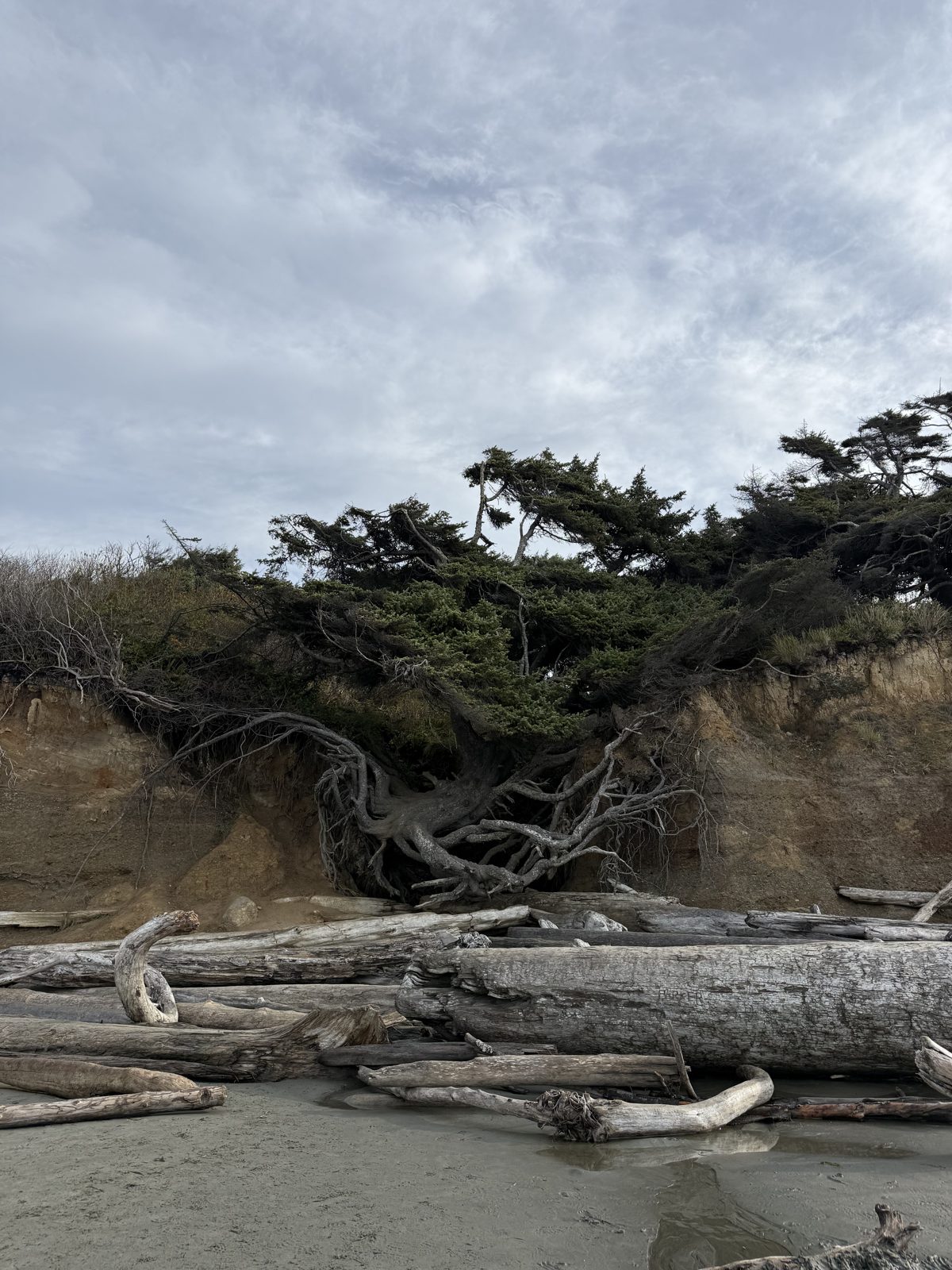
South of town, the tide was out, and the mudflats at the river mouths stretched for what looked like a mile or more. More than half of Willapa Bay turns to mudflat at low tide, with a typical swing of about nine feet. Coming from the North Cascades and the dry hills out east, it's wild to finish Washington in these low, wet marshes. The state really has it all.
We crossed into Oregon just before 5pm, over the Columbia River at Astoria. The Astoria-Megler Bridge opened in 1966 to replace the ferry, and at 4.1 miles, it's the longest continuous truss bridge in North America. Freighters sat at anchor off the town, waiting for a berth upriver. It was wet and dreary, and the sunset came through as a strange golden gray. The plan was one more night of camping in Washington at Long Beach, but it had rained all afternoon, and I wasn't about to camp in that. So Rhea and I got a little roadside motel in Seaside, right up the road from Cannon Beach for the morning.
Rhea
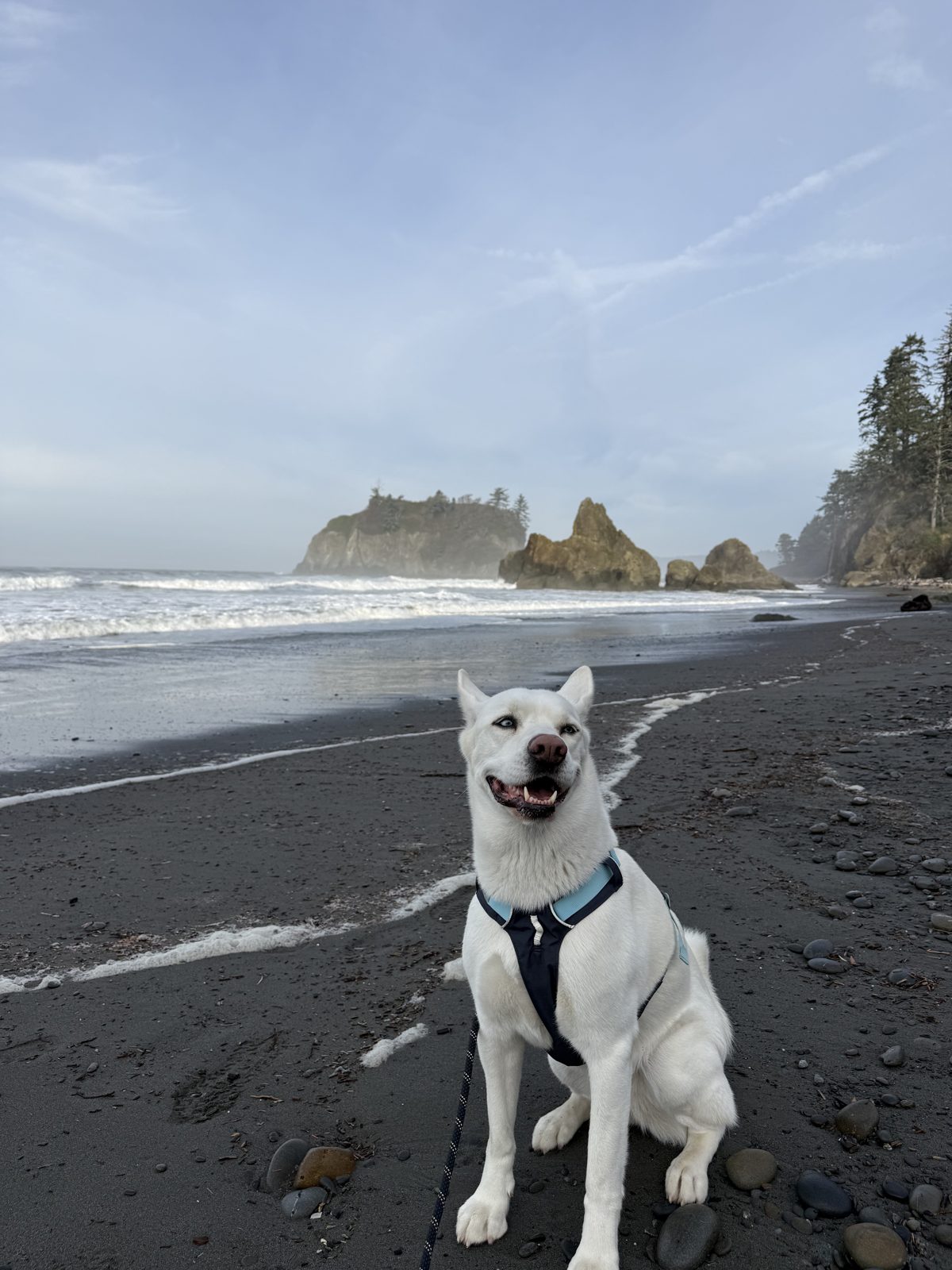
Rhea was my little protector at the Hoh. She'd doze off on her mat and wake up at the slightest sound, and while I packed up dinner, put away the awning, and turned off the lights, she sat at my feet watching the dark in front of the truck. Once we were up in the tent, it was warm enough that I had my arm out of my sleeping bag, and she tucked her head into my armpit, curled up in a little ball, and let me cuddle her. When I woke up, she was on her back with her head in the same spot.
As soon as I started packing up in the morning, she started booping me with her nose to get going. She ate her whole breakfast, another Applegate chicken sausage, same as dinner. Dogs are simple creatures. They want to be with you, they want to be loved by you, and they want to protect you.
The road was harder on her. She shook a lot in the morning, even with her calming supplements, so I gave her a dose ahead of time in Hoquiam. By the last 20 minutes into Seaside, she'd had enough of the truck.
Comments and suggestions
No notes yet. Be the first.