
Lake Crescent and a Long Night Drive
Route
Monday, November 2nd. We slept so well in Port Townsend. A breeze came and went through the night, so I shut the windward hatch on the tent, and neither of us stirred until morning. We both needed that.
Our morning walk took us along the beach out to the Point Wilson lighthouse, where the light flashes white and red right next to a tall spinning radar tower. Big tankers were moving way out in the distance, so I'm guessing that tower keeps an eye on all the shipping traffic. On the way out, a wildlife photographer with a big pack cut through the dunes and asked if I'd seen any deer. I told him we were from New York and had only gotten in last night, but we saw three of them walk right down Main Street last night. He's out here hunting for them, and they just seem to follow us around.
Then we headed west toward Olympic, and massive western red cedars started lining the highway. They're cousins of the arborvitae we plant as hedges along property lines back home. It's wild to see the giant, wild version of a tree we've turned into a nursery staple on the East Coast.
Along Discovery Bay, we got our first real taste of Pacific Northwest fog, so thick we couldn't see the tops of the trees. Every time we crested a hill, the Olympics teased us with a glimpse of snowy peaks and a little blue sky, and then we dropped right back into the fog. We are headed to a rainforest, after all.
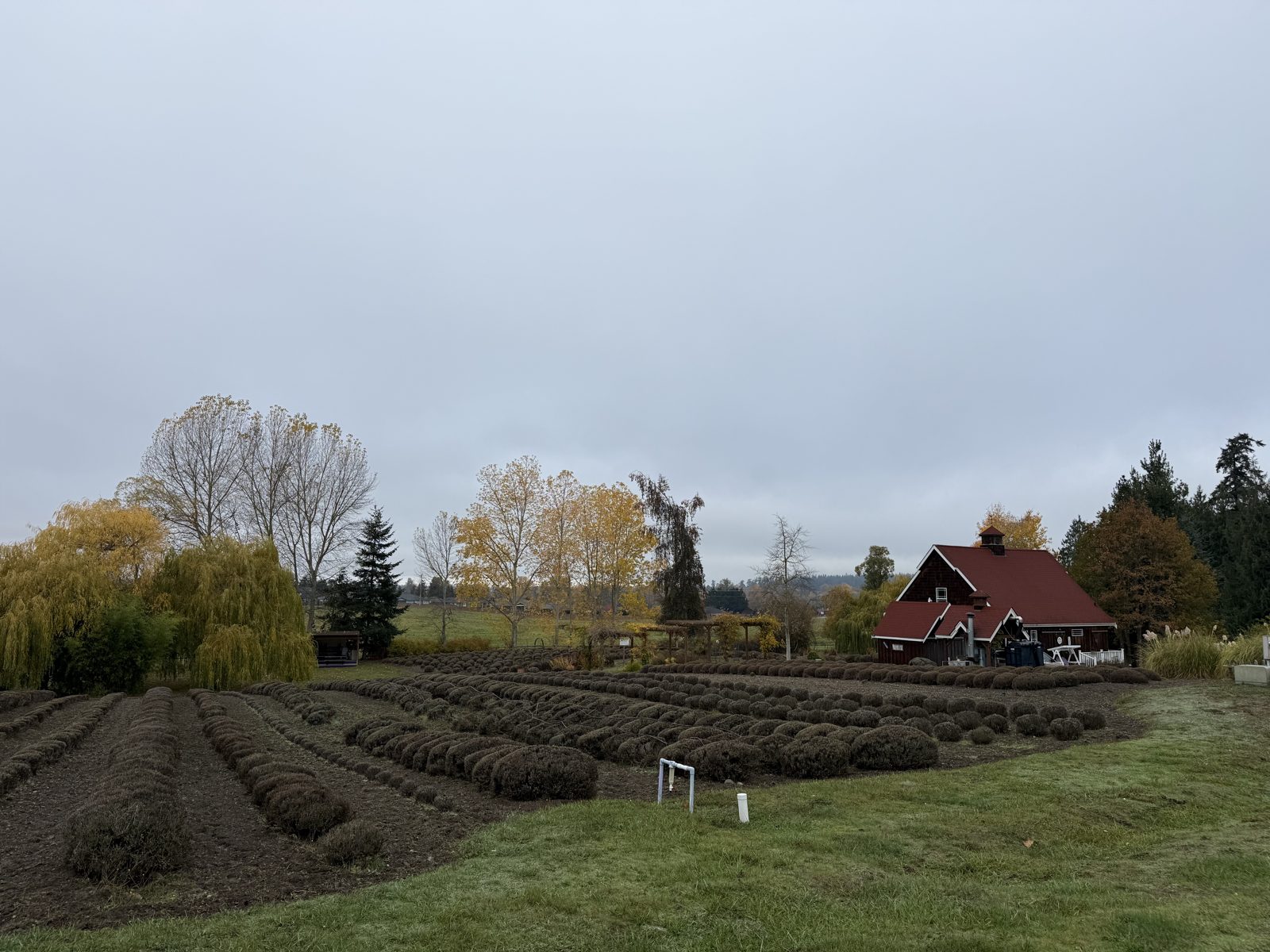
We detoured to see the lavender farms in Sequim, but the fields were bare, already cut back for the season. Wild blackberries lined the highway instead, their leaves turning a fiery red and the bushes still loaded with fruit, so I picked some for tomorrow's breakfast. It's blackberry season out here.
In Port Angeles, we parked behind the local co-op so I could catch up on emails and work while Rhea took a long, much-needed nap in the back seat. Washington loves its co-ops, and so do I. Afterward, I stocked up on lunch, dinner, and plenty of fresh fruit and veggies for our days in the park, enough to stave off the scurvy.
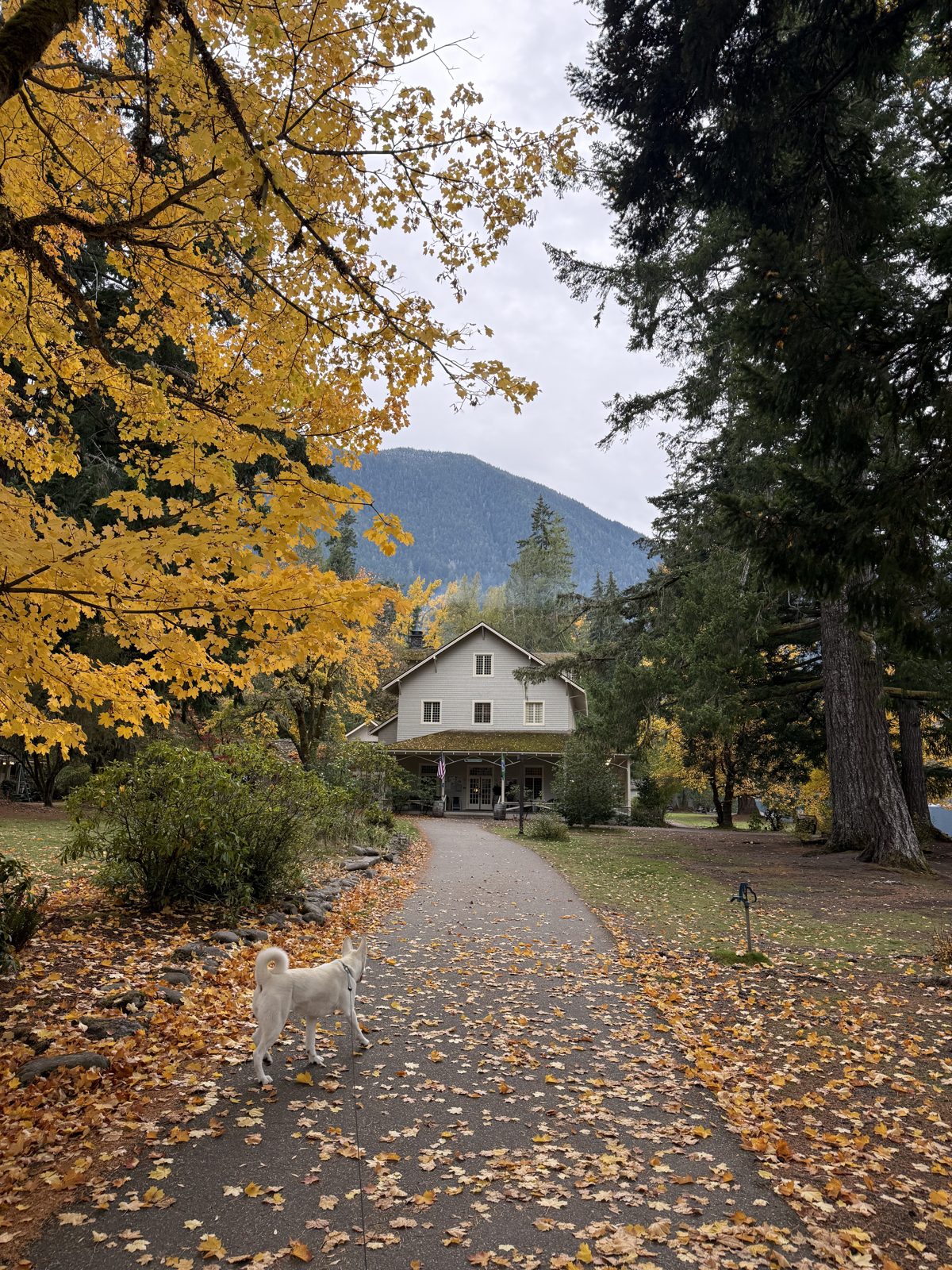
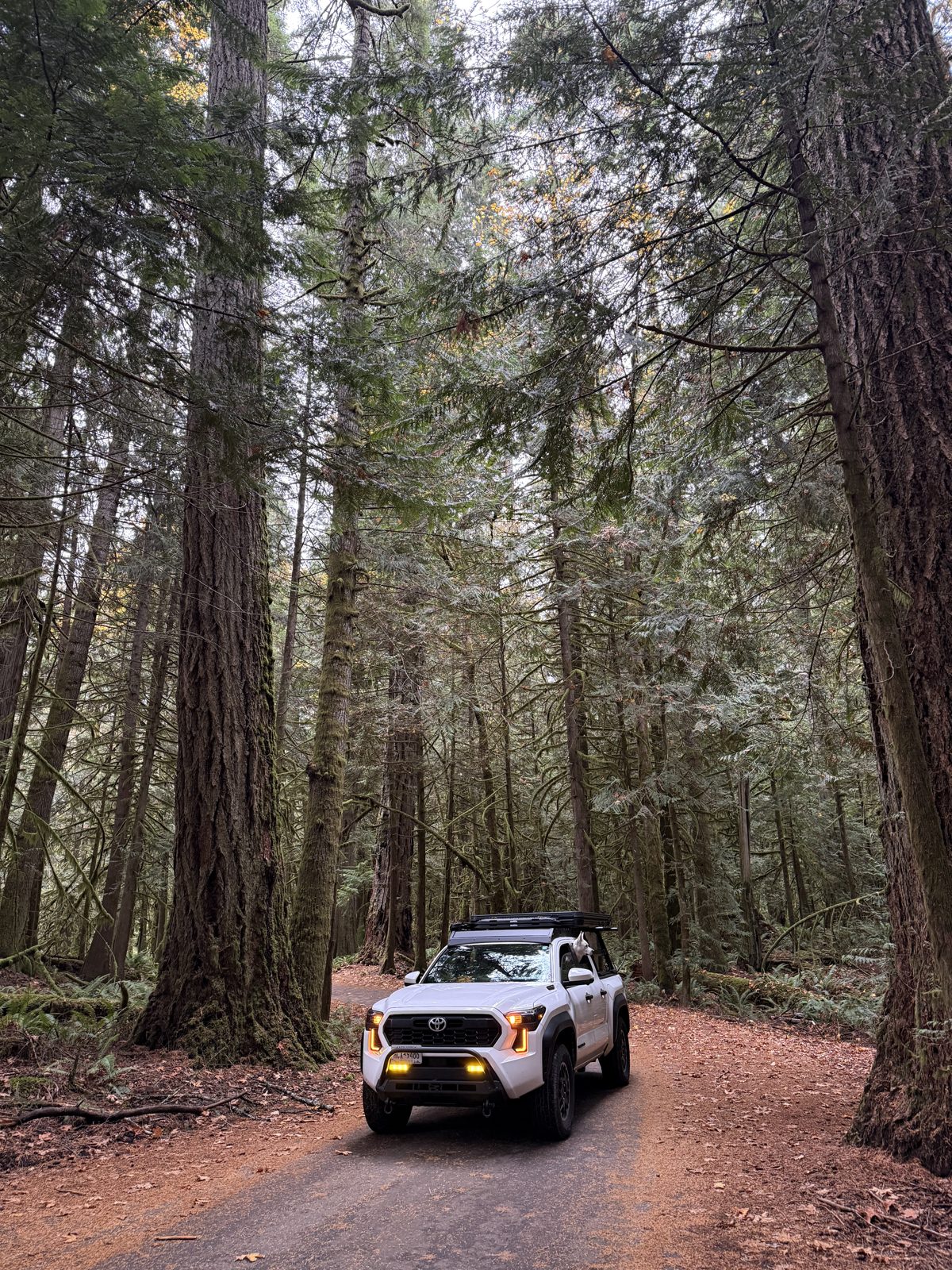
Lake Crescent was our first stop inside Olympic National Park, and everyone who told us it was stunning was right. The road wound through tall, straight forests, with moss hanging off the dead lower branches and pine needles blanketing every part of the road the tires don't touch. Deer were everywhere, of course. It felt like something out of Jurassic Park.
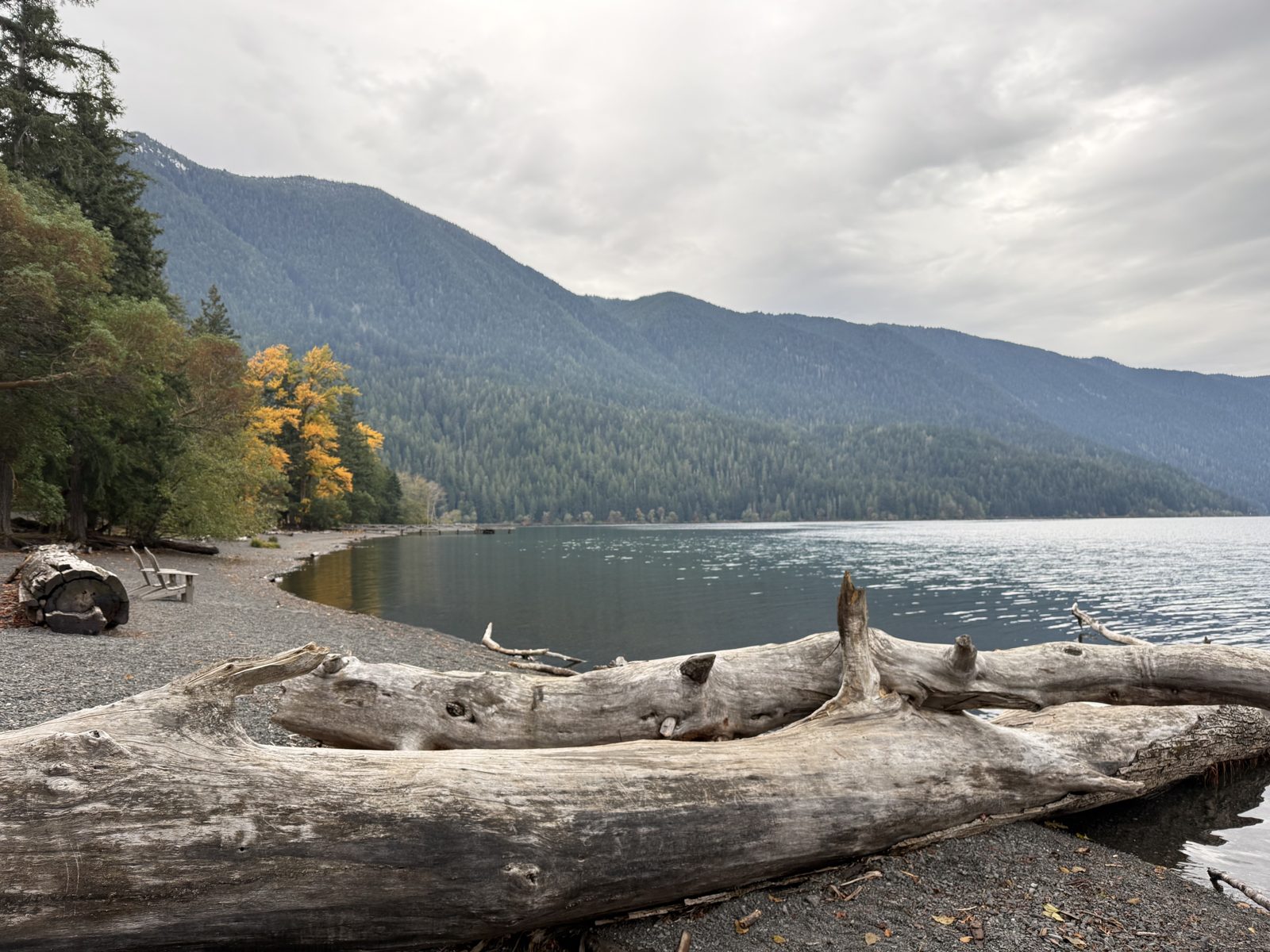
The lake is massive. With this much fresh water around, it's hard to imagine western Washington ever going thirsty. On a gray day, the water was a flat, deep blue, almost like the open ocean, only a little grayer. Lake Crescent is famous for how clear it is, because the water holds so little nitrogen that algae can barely grow.
We walked Rhea along the shore by Lake Crescent Lodge, where some of the trees are six to eight feet across. Smooth blue stones cover the whole lakeshore, and every so often, one of the giants has fallen over and lies stretched out into the water. You can see how the people who lived here carved their canoes from trees like these. In September 1937, President Franklin Roosevelt spent a night at the lodge while touring the land proposed for a national park, and he signed Olympic National Park into law nine months later.
Driving out along the lake, a bald eagle swooped down, skimmed the water, and splashed after a fish. I couldn't tell if it caught one, but what a sight.
The plan was to camp up the Sol Duc River, by the hot springs. When we got there, the hot springs were closed for the season, and so was every campground but one, with no one in it. I'm not a fan of camping alone at the end of a one-way road into the mountains, so we turned back to try Bear Creek. It was closed too, and a private campground down the road felt too sketchy to stay.
The sun sets before 5pm now, so we kept going west on Route 112, doing 45 mph in a 50 on a bumpy, rolling road with a line of cars behind us. I didn't want to spend $200 on an Airbnb in Sekiu, so we pushed on to Neah Bay, at the very tip of the peninsula, in total darkness. The amber lights on my roof rack came in clutch on those narrow, winding turns. They light up the road and every reflector up ahead without blinding oncoming traffic.
Neah Bay is the Makah Tribe's town. After two or three calls, Spring, one of the owners of a little motel in town, called back and gave us a room. We were the only guests. Steinbeck never made it out to this peninsula, but coming down this coast in 1960, he traded camping for motels and found that "Everything was convenient, centrally located, and lonesome." Ours was painted in Seahawks colors, with two little Sasquatch statues out front, so it wasn't all that lonesome.
Rhea
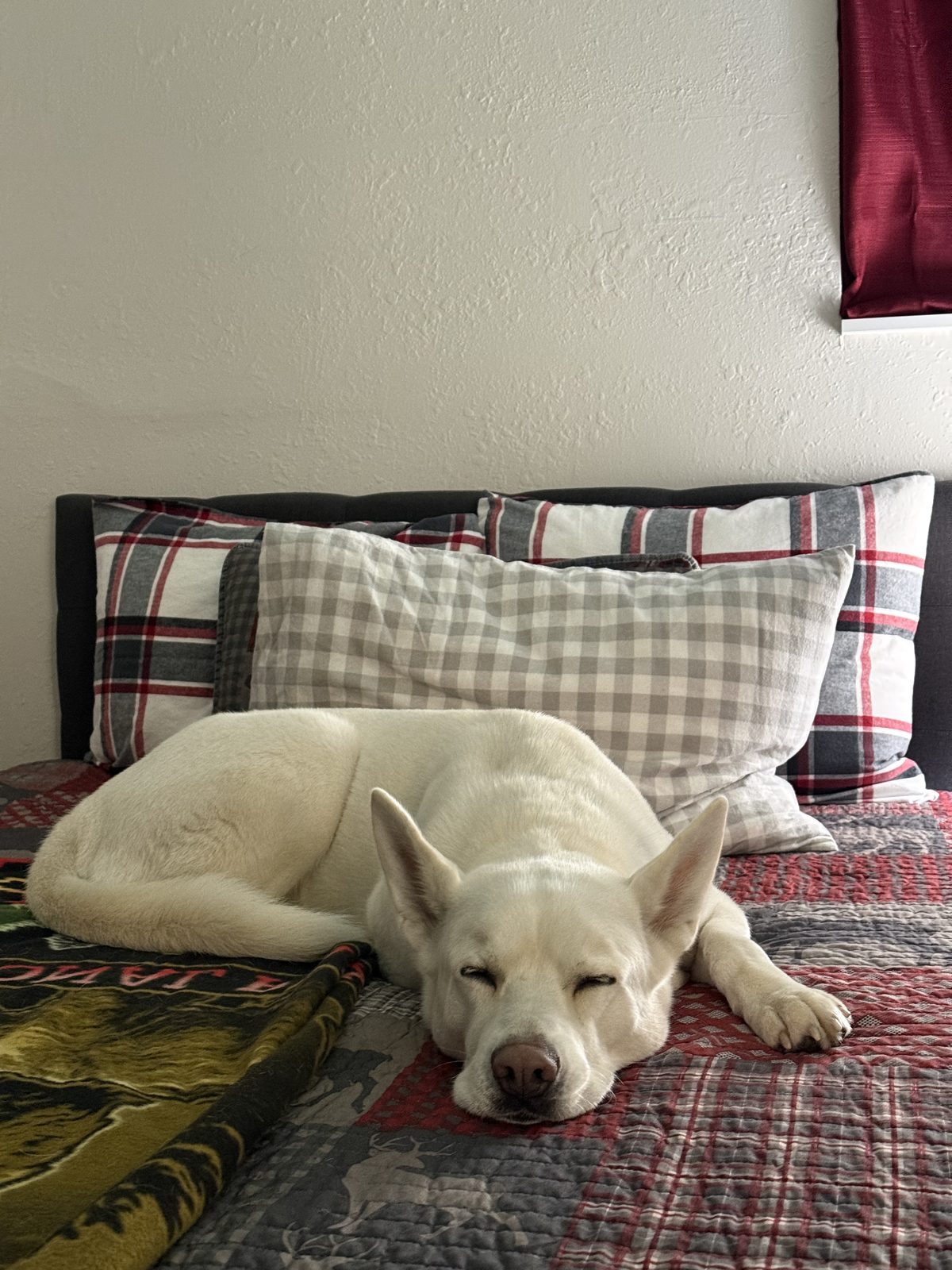
Rhea has her morning routine down. She perks up in the tent with me, stretches, gives a good shake, and then she's chomping at the bit to get down. Once she's on her lead, she does a full loop around the truck, picking up every smell and figuring out how to start her day.
At Lake Crescent, the squirrels tormented her again with that high-pitched chirp of theirs.
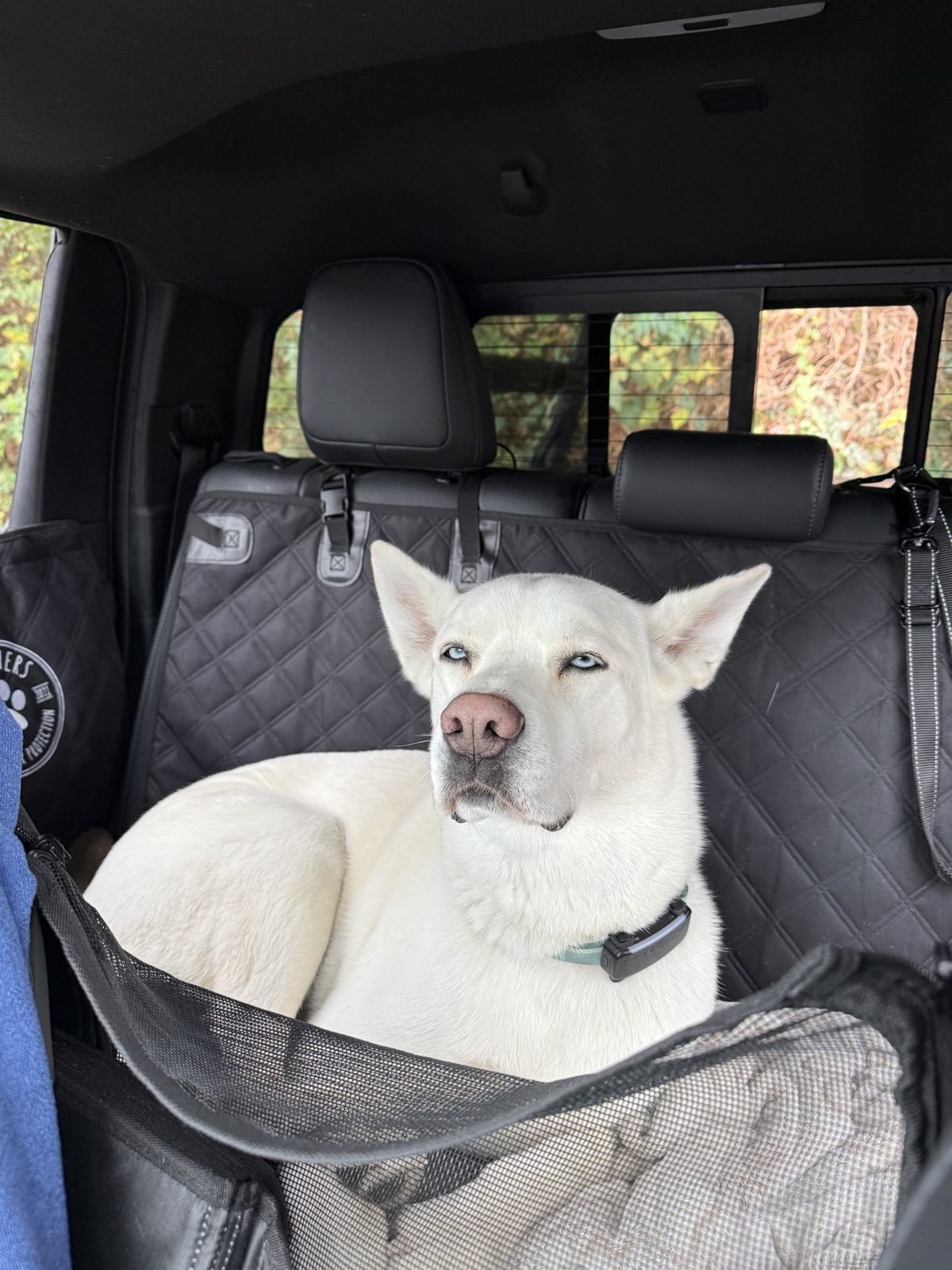
She wasn't planning on an extra hour and 45 minutes in the truck, and she paced in the back seat as the campgrounds kept falling through. A little chamomile settled her down, and she lay down for the last stretch into Neah Bay.
Comments and suggestions
No notes yet. Be the first.