
Island Time and Hidden Forts
Route
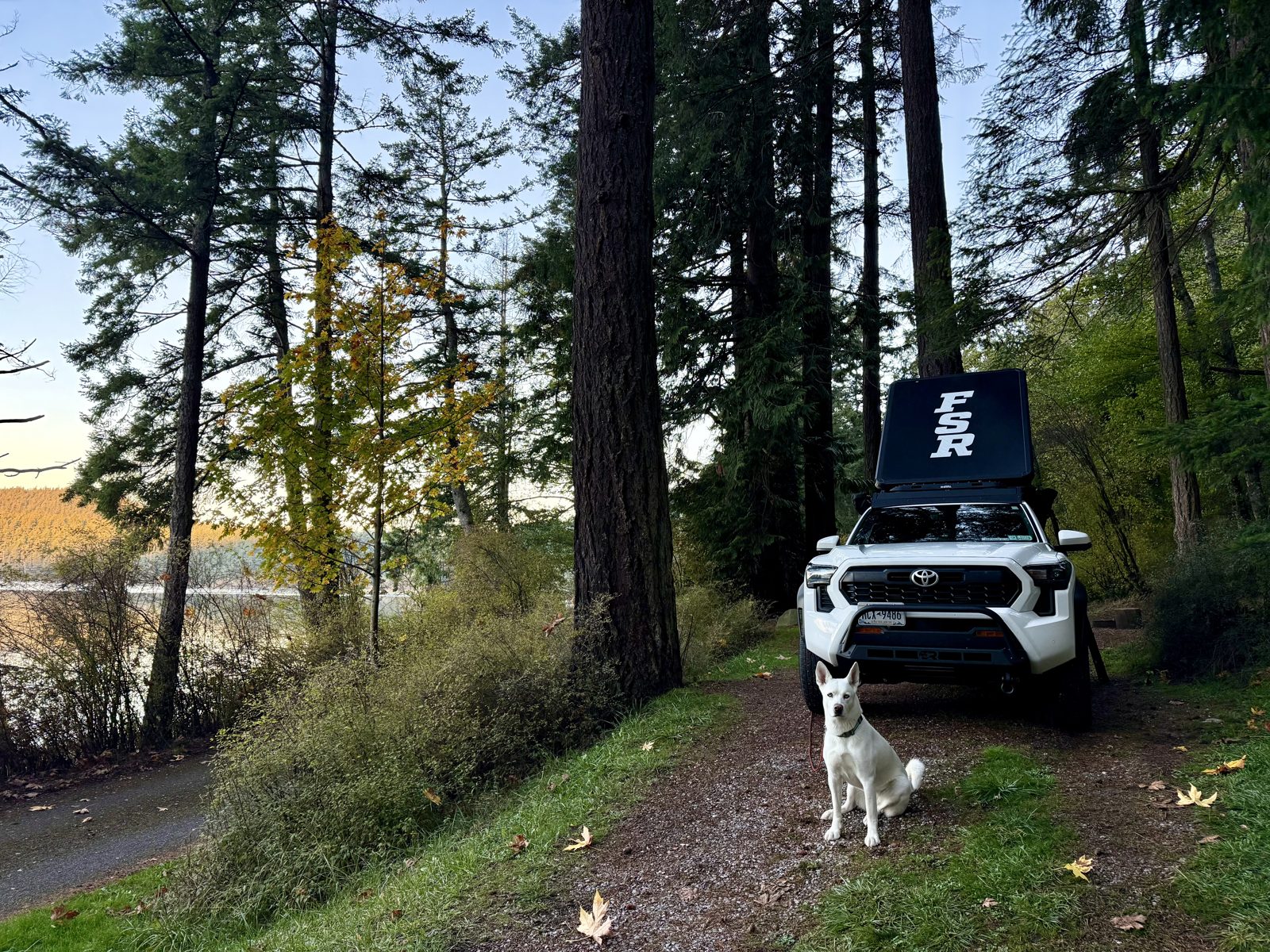
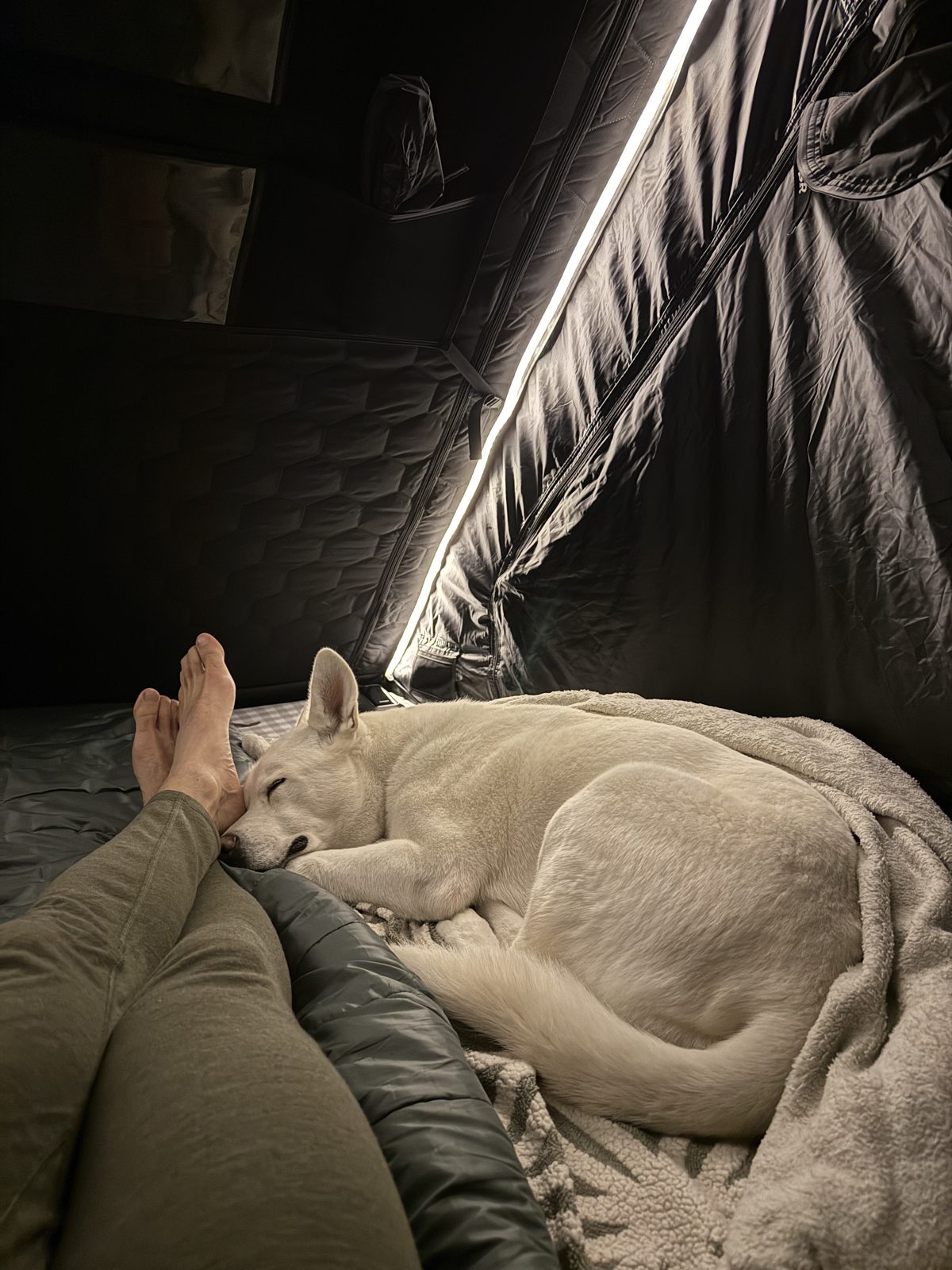
Sunday, November 1st. We woke up to a bluebird day on Orcas Island, without a cloud in the sky, which is rare for this part of the world. After last night's raccoon visit, we stayed snuggled in the tent until 7, then took a slow walk around camp. It was the first morning in a while without a layer of frost on everything.
Rhea spent the walk locked onto a squirrel. The squirrels here are smaller than ours and far chattier, and they chirp right at you, which turns on every instinct she has. They're Douglas squirrels, native to the conifer forests of the Pacific Northwest and known for filling the woods with chatter, rattles, and chirps.
I made coffee and breakfast, we packed up, and I grabbed a shower on the last day the campground had them running for the season. Then we headed into Eastsound for a slow Sunday morning on island time. Almost nothing was open, but Orcas Bakery was, and their blackberry vanilla poppyseed scones are bomb. There's even a food co-op in town. The island is a bit pricey, but hell, I love it.
Down on the beach, I spotted the same sea ducks we get on Long Island in the winter, hooded mergansers and what looked like buffleheads.
Sasquatch statues are everywhere out here, in people's yards, by the side of the road, and tucked away in the woods. On the ferry yesterday, Mark told me, "Oh yeah, Sasquatch is real." I told him people believe in far crazier things, and he laughed. Sheep are scattered all over the island too.
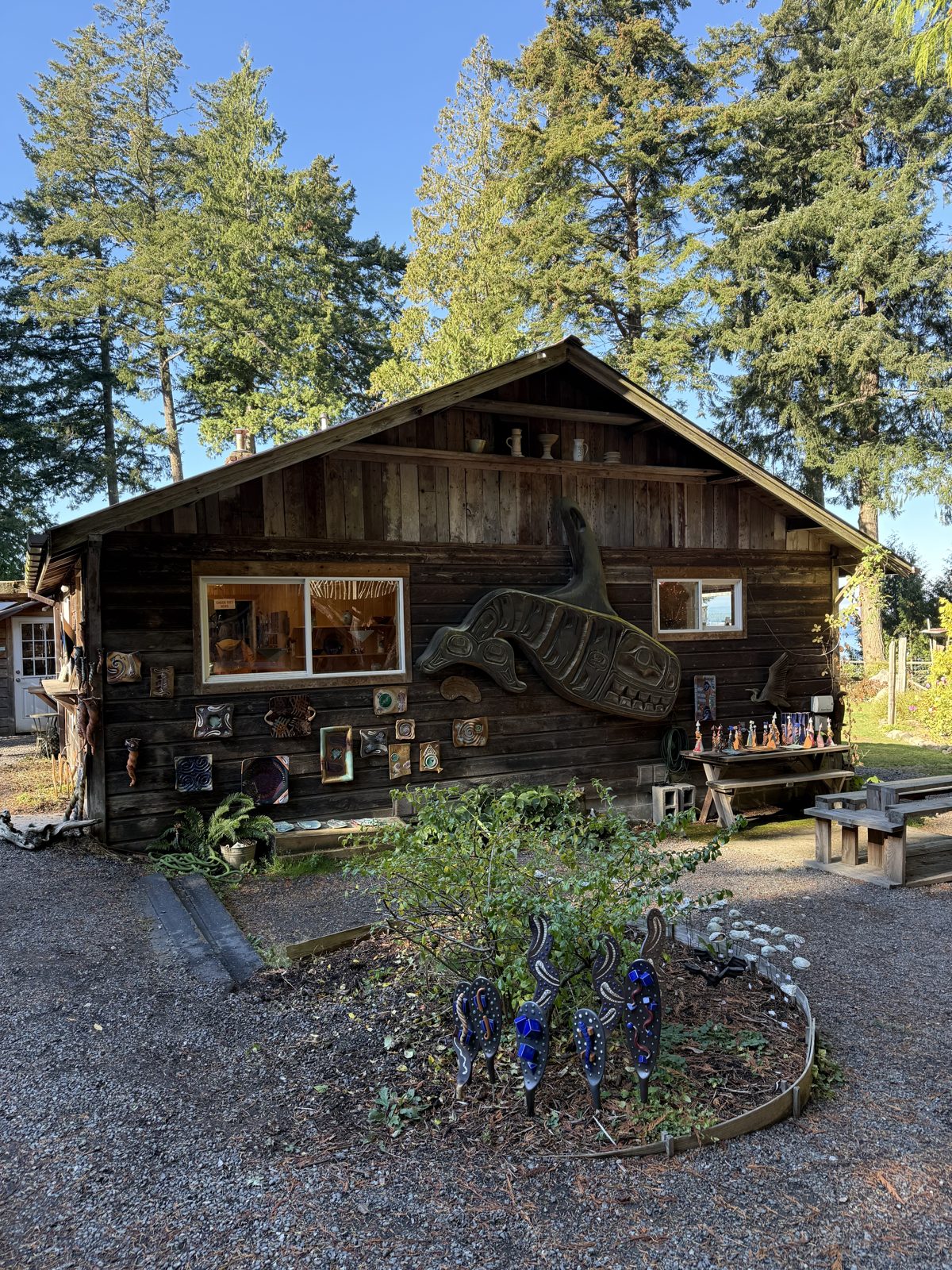
On the way to the ferry, we swung by Orcas Island Pottery on the island's northwest coast. It's part home, part sanctuary, part studio, with a treehouse and a few homes right on the water, and their work is incredible. It bills itself as the oldest studio pottery in the Pacific Northwest, open since 1945. I wanted to buy everything in the place, but I settled on two little ceramic hearts and a small mug with an orca on it, a keepsake from the island. It wasn't cheap, but it was worth it.
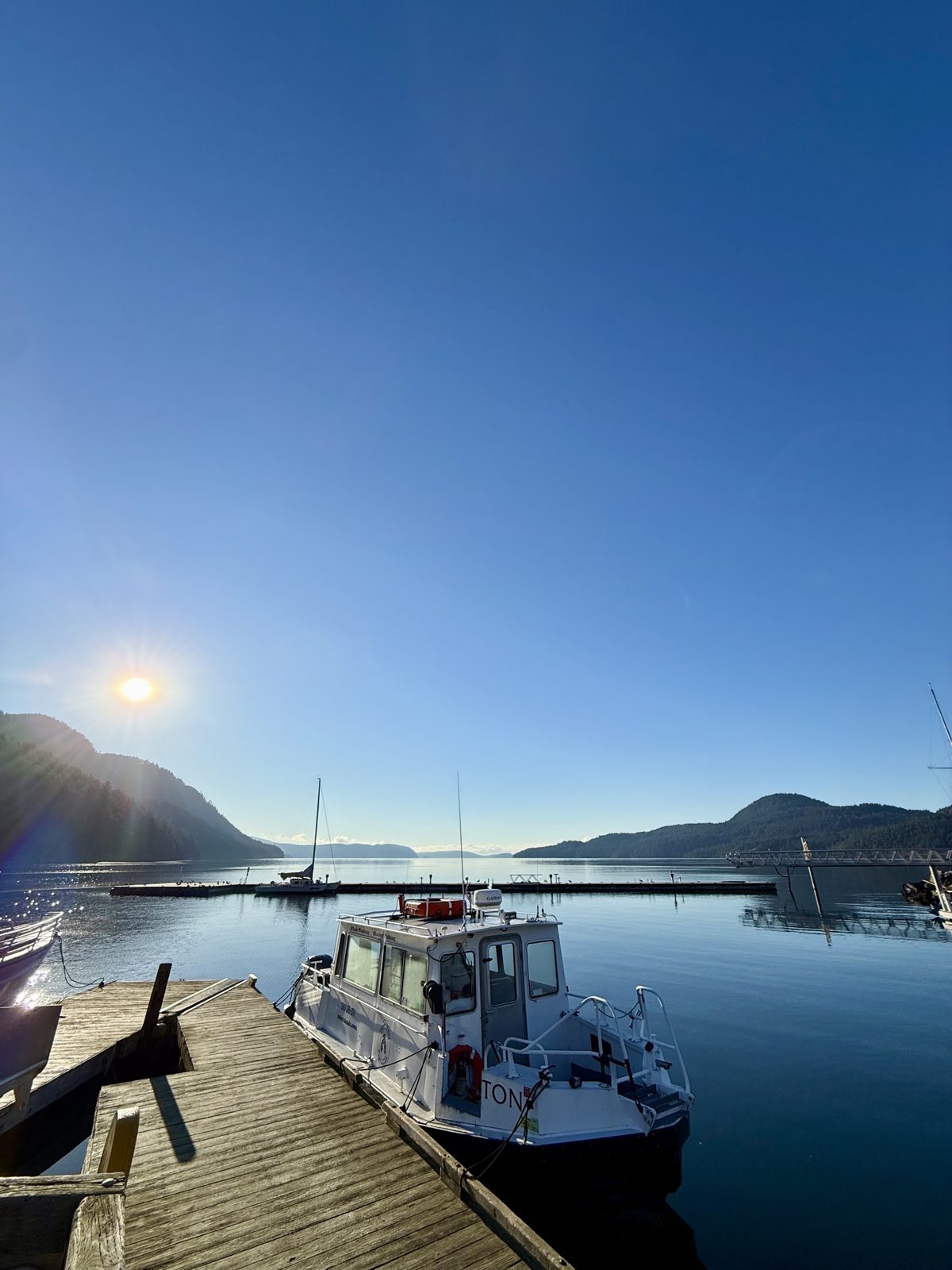
We made the ferry with five minutes to spare. After Rhea's panic on Saturday's crossing, we stayed in the truck this time, and I didn't want to give her anything. They parked us on the outer edge of the upper deck, so we had the whole view without leaving our seats. Rhea slept in the back while I watched for orcas, and a crescent moon hung over Orcas Island as we pulled away.
Little cabins sat tucked away in protected coves on the island that we passed by. I couldn't tell which were full-time homes and which were summer places, a lot like the Hamptons. These islands feel accessible yet remote at the same time. They're right off the mainland, but it's an hour on the ferry, not the quick hop from Sag Harbor to Shelter Island.
These cold waters are teeming with life. Flocks of birds trailed the fishing boats for scraps, and huge tangles of kelp floated by, torn loose from the bottom like whole trees adrift. That's bull kelp, which can grow up to 10 inches a day and stretch past 100 feet before the fall and winter storms rip it loose. With not a cloud in the sky, Mount Baker and the North Cascades towered over the water in the bright sunshine. What a day.
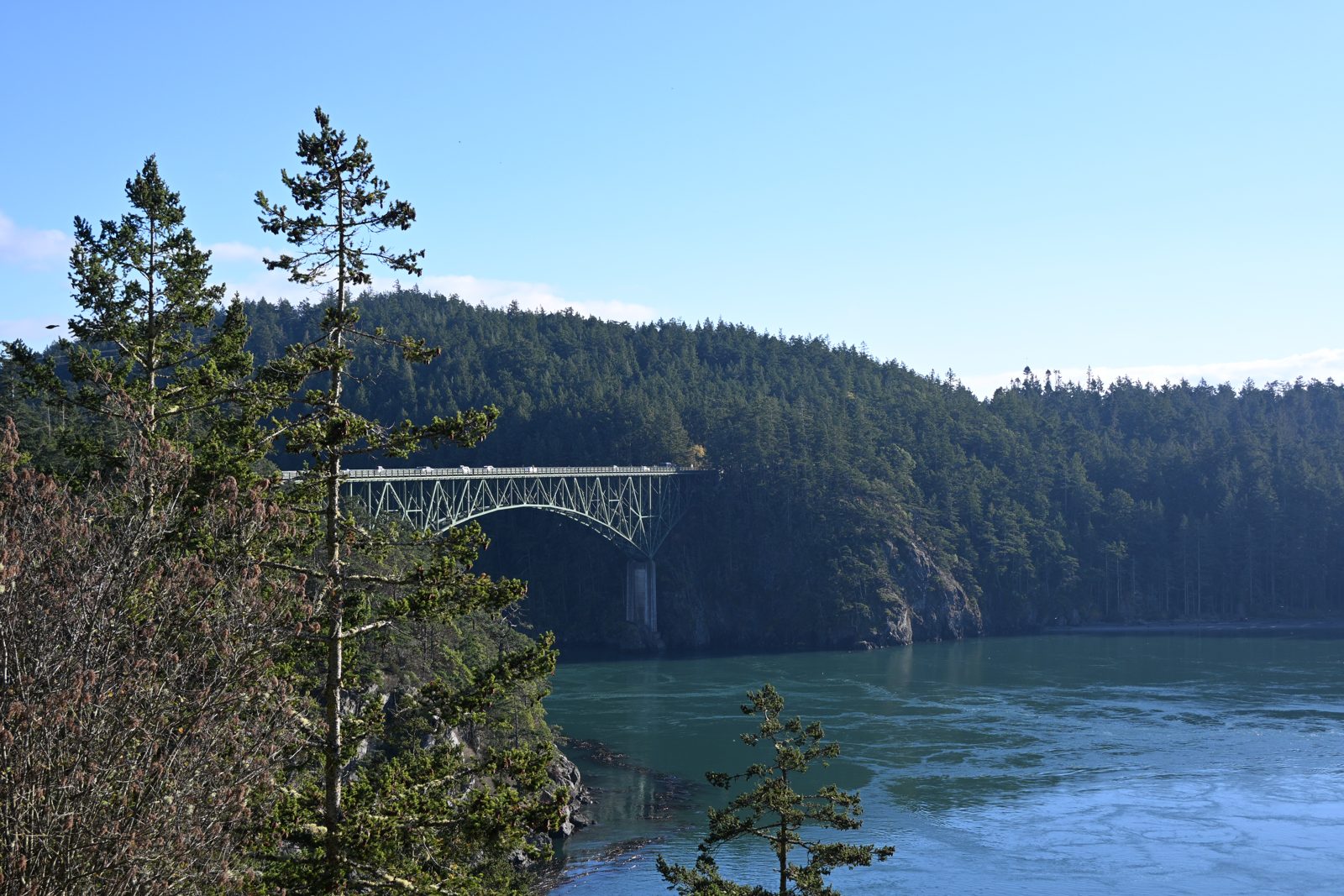
Once we were off the ferry, we headed south over Deception Pass onto Whidbey Island. The moss here encroaches from the forest onto the road, right up to the white line, which tells you how much rain they get. Near Coupeville, the forest opened into big, rolling farm fields with rich, dark soil, full of corn, leafy greens, and cattle, which I never expected among all these conifers. These are the prairies of Ebey's Landing, left behind by the glaciers more than 13,000 years ago, and in 1978 they became the country's first national historical reserve. In one field, two Great Pyrenees were passed out in the grass, getting their nap in before a night of work. A huge flock of starlings swarmed overhead, probably heading south. We've watched them do that in New York, Ohio, Minnesota, and now Washington.
We got to the ferry landing at Fort Casey an hour early. The woman at the checkpoint told us we had a good chance of getting on, then spent the rest of the time fawning over Rhea. We walked down to the shoreline in the state park, where wild blackberry bushes, just like the ones along the ocean back home, were still fruiting. I ate a few delicious berries, then we walked on.
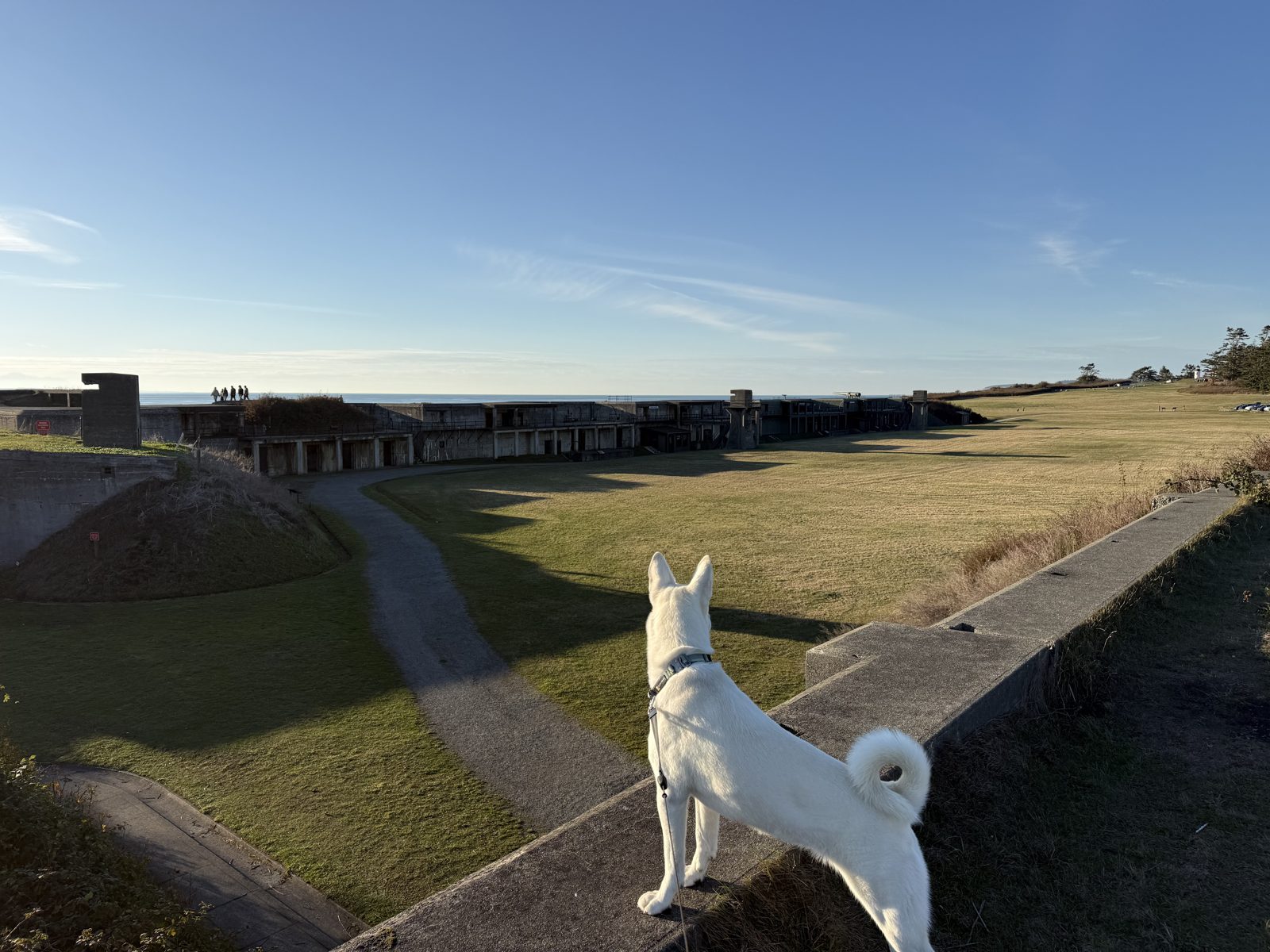
Fort Casey is clever. They built the bunkers right into the bluff, so from the water you can barely see anything but a few pillboxes peeking over the top. Fort Casey went up between 1897 and 1902 as one corner of the "Triangle of Fire," three forts with huge guns guarding the entrance to Puget Sound. Its seven 10-inch disappearing guns were never fired at an enemy. The bunkers are open to explore if you bring a headlamp, but Rhea doesn't do well in close quarters, so we'll save that for another trip.
The ferry over to Port Townsend cost us $15.80 for a 35-minute crossing. The South Ferry from Sag Harbor to Shelter Island costs $18 one way, and it's a stone's throw. Highway robbery, I'm telling you.
I can't get over how friendly everyone is out here. Everyone says hi, everyone waves, and everyone is enamored with Rhea. You feel a sense of community, even as an outsider.
We rolled into Port Townsend in the late afternoon, and when I took Rhea for a walk downtown, three deer were strolling right down the street without a care in the world. One was even mewing. We can't get away from the deer out West, and these are even tamer than the ones in Long Island's East End.
Rhea
Rhea's ferry plan worked on the first crossing. Staying in the truck up top, she lay down in the back and slept most of the way, panting a little but calm, with no calming meds needed.
The second ferry was a different story. They parked us below decks near the engine, and it was loud. She was not having a good time, so I gave her some chamomile, which helped, and she got a quick walk in Port Townsend to settle her nerves before the deer showed up.
From now on, we ride up top in the truck whenever we can.
Comments and suggestions
No notes yet. Be the first.