
Seattle, Then and Now
Route
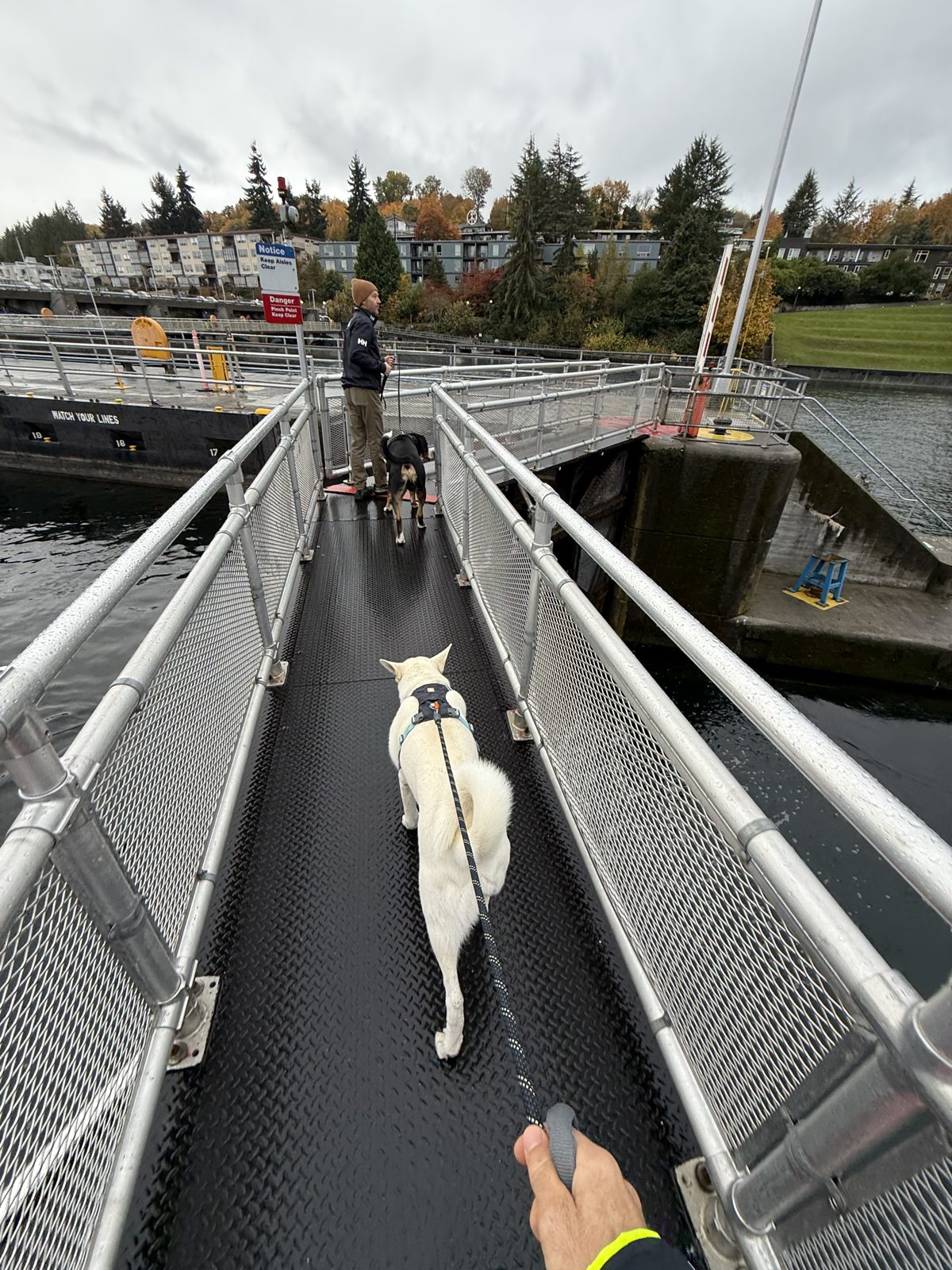
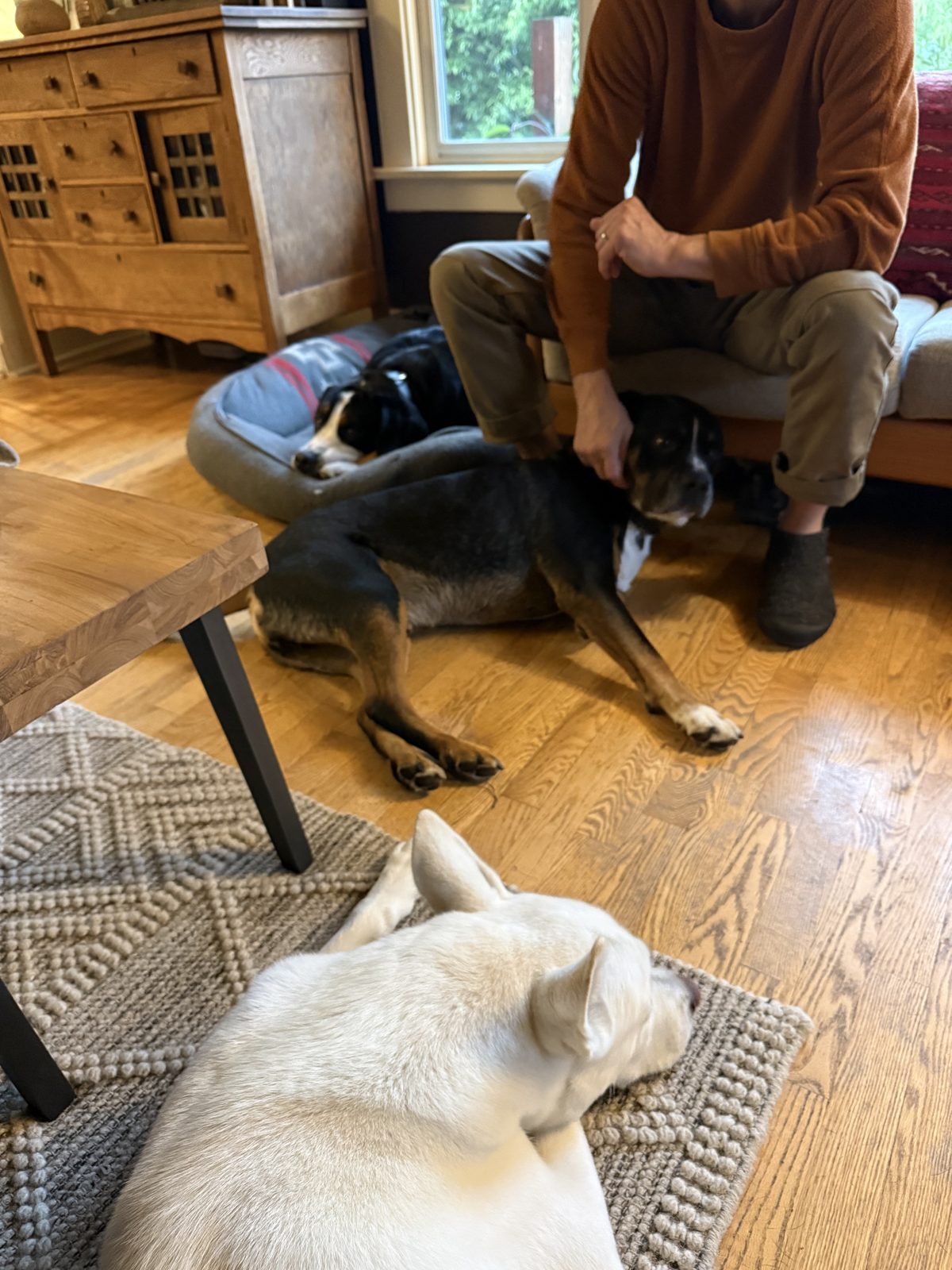
Friday, October 30th. Before we left Steve and Laura's, we took Camper, Gus, and Rhea for one more lap around the neighborhood to burn off some energy. It was a lovely goodbye, but a sad one.
From there, Rhea and I drove across Lake Washington to stay with the Tolands. Jack Toland is one of my good friends from LA, and he grew up here. His parents, Marv and Laurian, kindly offered us a room for the night. The last time I saw them was two springs ago, when we helped move their boat from Sardinia to Sicily to Athens. What a trip that was.
It had rained all day, and right as we drove over the lake, the sun came out, typical Pacific Northwest weather. Their house sits right on the east side of the lake. About 17,000 years ago, Seattle sat under some 3,000 feet of glacial ice, and meltwater running beneath it carved out Lake Washington.
On the drive to dinner, I asked Marv how Seattle has changed in the decades he's lived here. Back in the '70s and '80s, he said, the city ran on Boeing, timber, and fishing. Today it runs on Amazon and Costco, tech and retail. Timber and fishing are still here, but they're nowhere near the lifeblood they once were. A lot of the flower fields and farmland around Seattle and Tacoma have turned into housing developments and strip malls to make room for everyone who moved here.
It reminded me of the South Fork when I was a kid. Driving from Springs to my dad's house, we'd pass potato field after potato field in Bridgehampton. Over time, the farmers realized they could subdivide, sell to developers, and set up their kids and grandkids for life. Eventually, towns got smart and started buying development rights from farmers, giving them a second income to keep farming and keeping the land as farmland for good. Suffolk County started the nation's first program to buy development rights on farmland in 1974. But it took time, and plenty of fields were gone before anyone acted.
Steinbeck spent five nights in Seattle in October 1960 and barely recognized the city he remembered. "The tops of hills are shaved off to make level warrens for the rabbits of the present," he wrote. "I wonder why progress looks so much like destruction." Sixty-six years later, Marv has watched it happen all over again.
Coming into the city over the bridge, we drove through the Washington Park Arboretum, a big stretch of green that Seattle set aside instead of building on. The city set it aside in 1934. It's the same idea as Central Park, and I'm glad someone had the foresight.
Dinner was at How to Cook a Wolf, with Marv, Laurian, and two of their friends. I was the fifth wheel, and happily so. The restaurant takes its name from M.F.K. Fisher's 1942 book, How to Cook a Wolf, written as wartime shortages hit American kitchens. It happened to be Seattle Restaurant Week, so we all did the tasting menu. I started with a scallop crudo, then a big lamb bolognese over tagliatelle that was to die for, and finished with tiramisu.
My cocktail was called Left Turn at Albuquerque, a carrot-infused gin drink named for Bugs Bunny, who was forever saying he should have taken that left turn at Albuquerque. My dad would love that. We watched Bugs Bunny and the Road Runner together all the time when I was a kid, and that drink took me right back.
We were at dinner for three hours. I'd never spent real one-on-one time with Marv and Laurian before. They're sharp and quick-witted, but also just good, genuine people. I'm very thankful for their hospitality. Back at the house, Rhea and I climbed into bed, and we were out cold in minutes.
Rhea
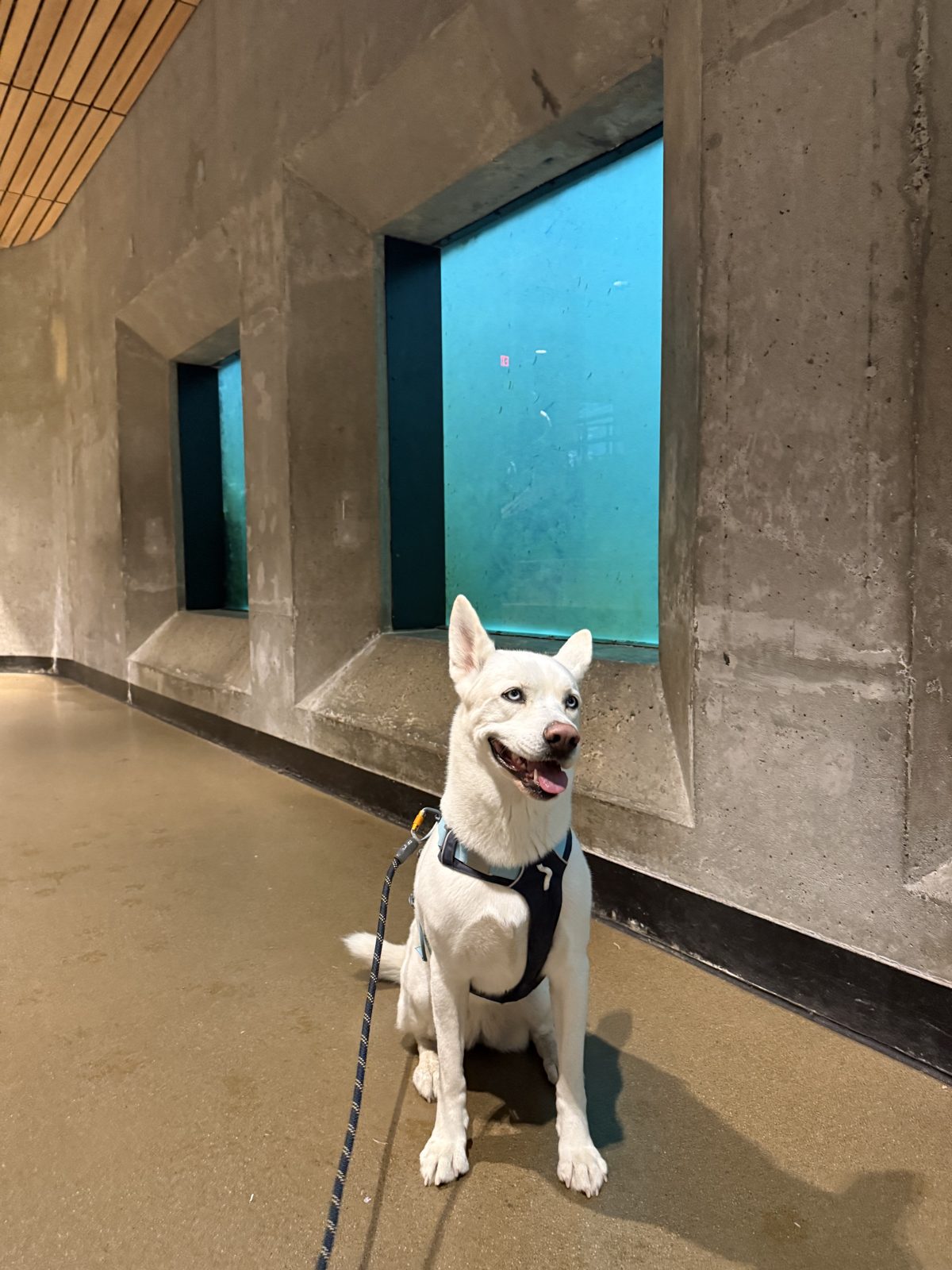
Rhea got a good last romp with Camper and Gus, and we tired her out before she ate, so she spent all three hours of dinner chilling in the back seat with the windows cracked. Halfway through, I went out to check on her, and she was out cold. I shouldn't have woken her, but I did. I gave her some snuggles and kisses, told her I'd be right back, and then disappeared for another hour. When I came back, she was sound asleep again. The rain came and went, so the back seat got a little wet, but she needed the air.
She was a champ.
Comments and suggestions
No notes yet. Be the first.