
Peak Larch Season
Route
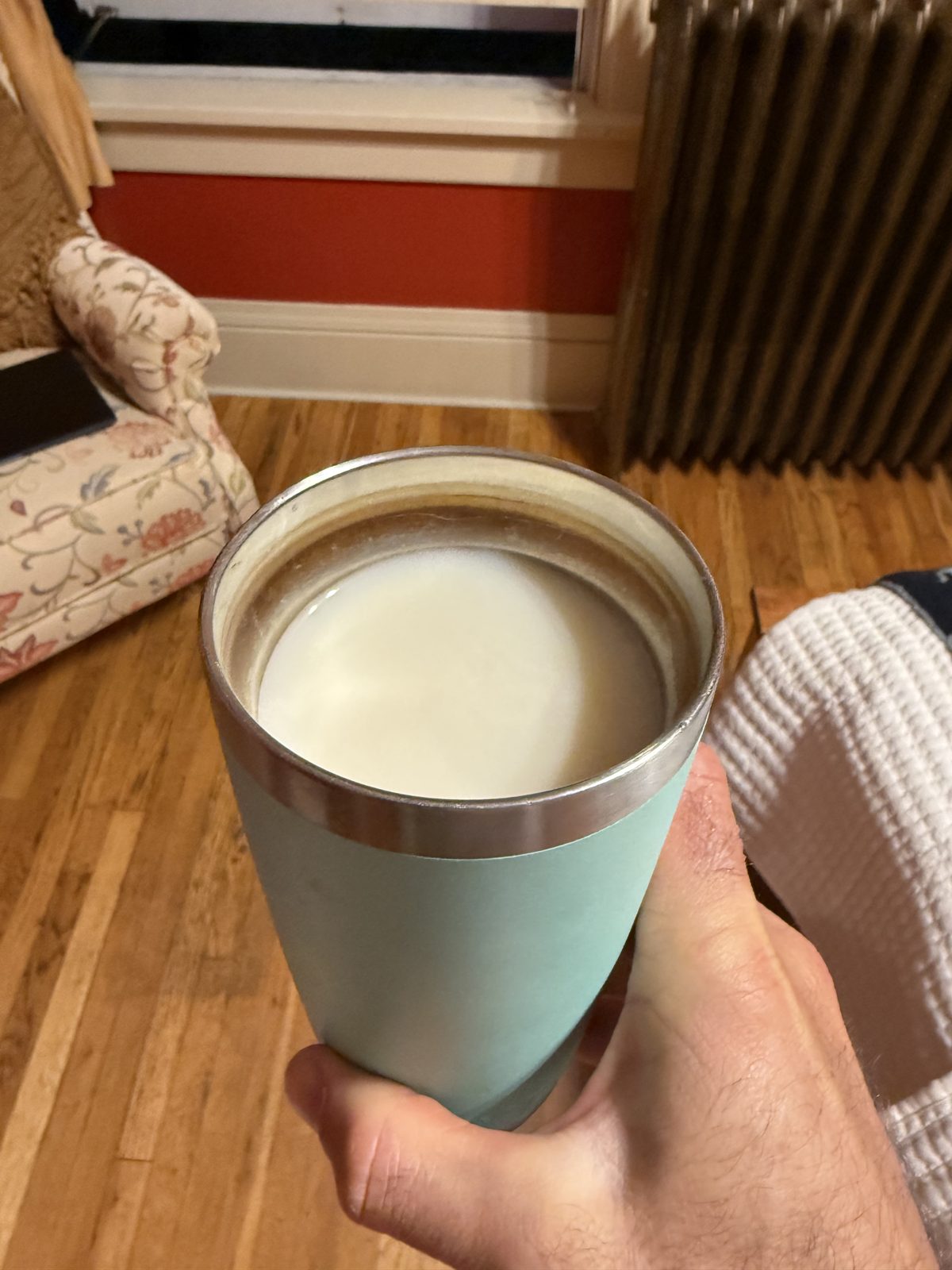
Tuesday, October 27th. We grabbed early morning coffee from Florence Cafe, a little hut in the middle of a parking lot in Missoula. They had white coffee, which I'd never seen before. Lighter beans, a different taste, and the barista said it had more caffeine. Sign me up! White coffee in Missoula it was!
Along my Montana journey, I’ve realized that it has more unique license plates than any state I've been to thus far. Blues, blacks, whites, reds, flags, bears, moose; the list is endless. You'd think they were all different states, but they're all just Montana with style.
West of Missoula, I-90 gently weaves through the Lolo National Forest along the Clark Fork River, with big slow turns. We passed through a dense stretch of fog sitting in the valley, which felt a lot like sailing into a fog bank on the ocean.
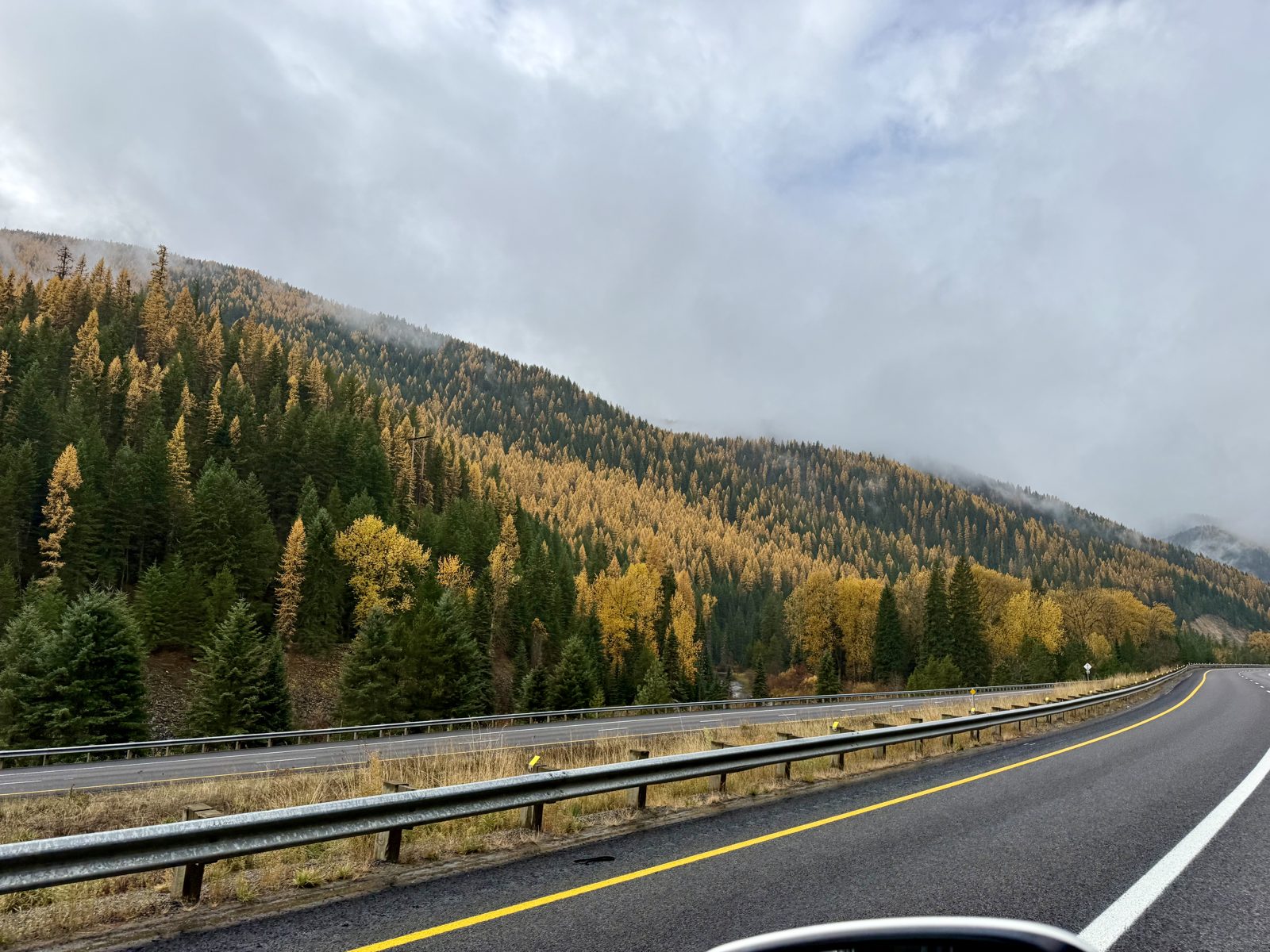
I learned that the yellow trees all over the slopes aren't birches. They're western larches, one of the few conifers that lose their needles. Every fall the needles turn gold and drop, and new ones grow back in the spring. From a distance, it looks like the pine trees are dying, but they're just shedding. The birches and cottonwoods share the larches’ golden shedding, but they like their feet wet, so they’re down in the valleys by the rivers. It's peak larch season right now. If you ever have the chance, drive I-90 through western Montana and the Idaho panhandle in October. You'll thank me.
We stopped in St. Regis, MT, the tiniest of tiny towns, for gas, a work call, and a nap. And even still, there's a casino in St. Regis.
Right near the Idaho state line, we found the end of the rainbow in Idaho's last valley. It was a beautifully wet and dreary day.
Coming down from the valley, we rounded a bend on I-90, and Lake Coeur d'Alene appeared. Dense, pine-covered shores dotted with summer homes. I can imagine how relaxing life on the lake here is in the summertime. Lunch was a healthy salad from a drive-through hut. They're a thing here, apparently. I love 'em. Pull up, grab a coffee or a salad, and don't even get out.
We officially made it to Washington around 3pm. I can't believe we've come this far. It feels like ages ago that we left New York. We've seen so much, but we still have a lot on the horizon.
Spokane loves its roundabouts. Two-lane ones, every couple of miles. More efficient, I'll admit, but foreign to a New Yorker.
West of Spokane, US-2 runs through dry, golden wheat country. Picture North Dakota, with longer grasses and a few pines sprinkled throughout the landscape. The Cascades squeeze the rain out of the air before it could get here. These wheat fields live on about a foot of rain a year, and no irrigation.
Every town on US-2 gets about two minutes of driving time. The speed limit drops from 60 to 35, the main strip slides by, some shops are open, and some closed, a grain silo or two standing over it all, and then you're back up to speed.
Driving with Rhea, we stop every hour or two and split the day into a morning drive and an afternoon one. So each day ends up feeling like two. These are long days, but in the best way.
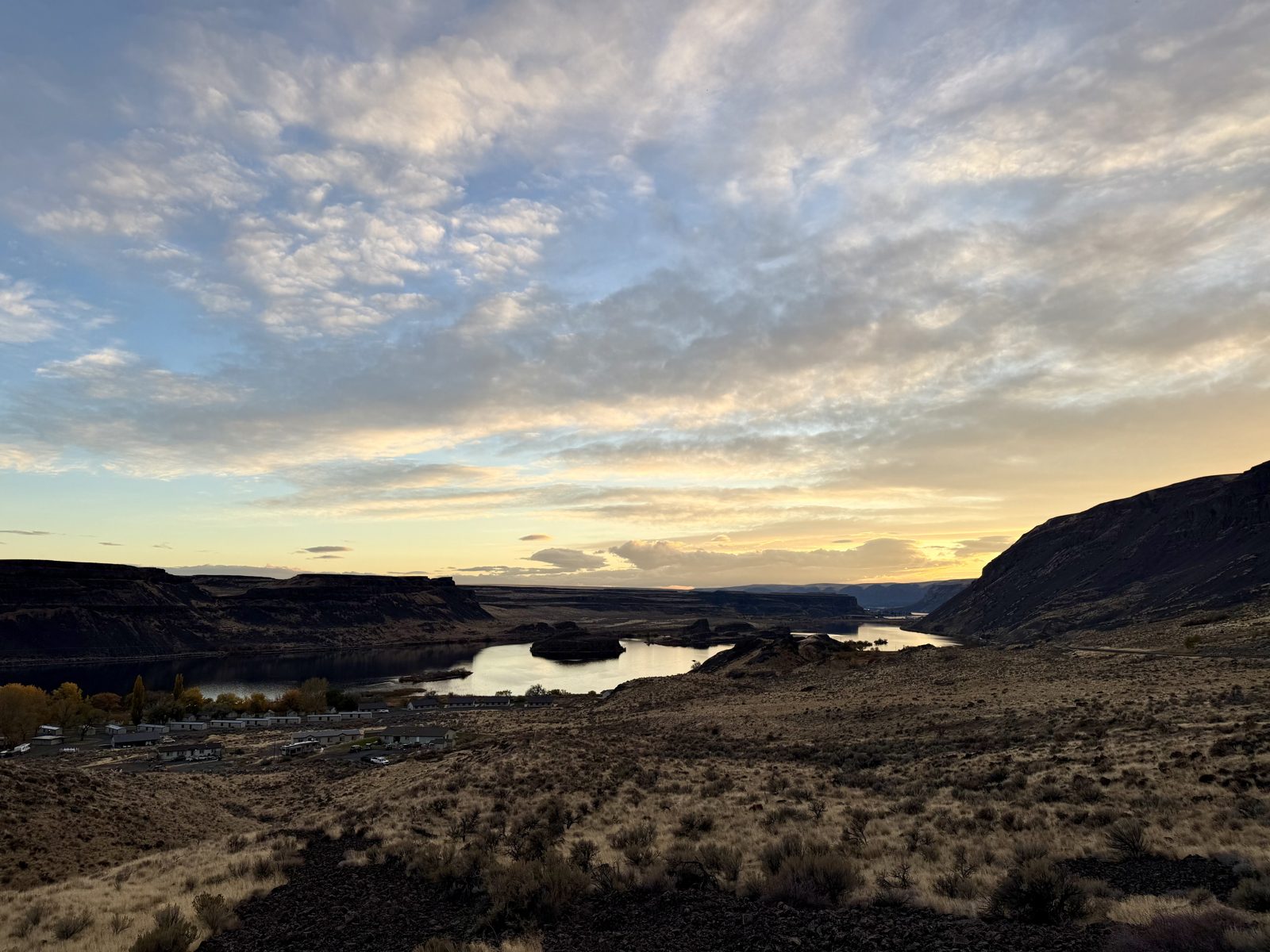
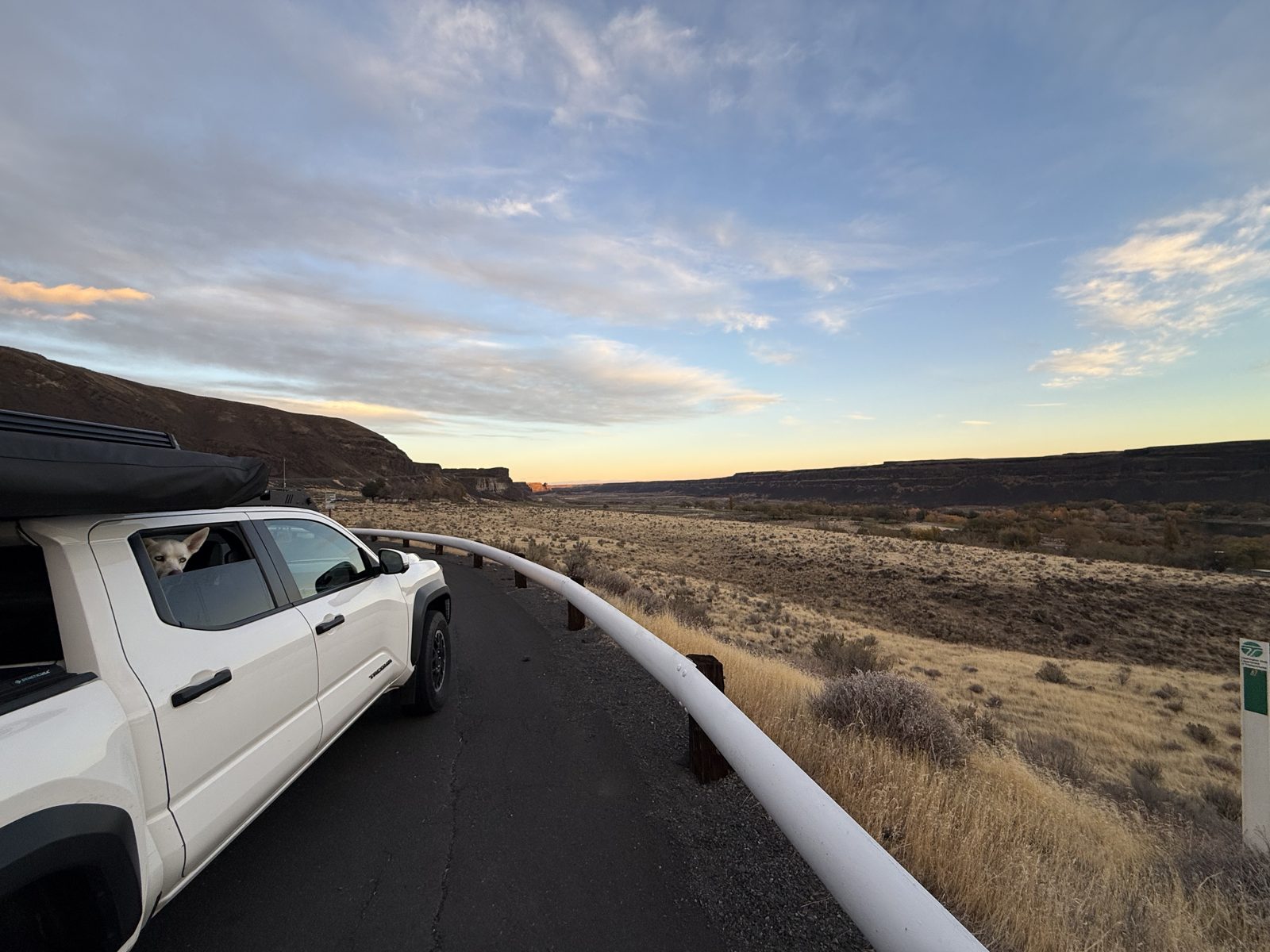
Near Coulee City, the road drops past Dry Falls into the canyon below, carved by ancient Ice Age floods. In 1923, a geologist named J. Harlen Bretz argued that giant floods had carved this whole landscape. Most geologists didn't buy it for decades. He finally got the field's top medal in 1979, at 96. We now know an ice dam in Idaho burst dozens of times, 15,000 to 18,000 years ago.
Sun Lakes-Dry Falls State Park was completely empty. We set up shop and made dinner (ramen with chili oil and the sausages from the Bozeman co-op), but having the whole park to ourselves felt off. So we packed up and moved next door to a small private campground where a few RVs had their lights on.
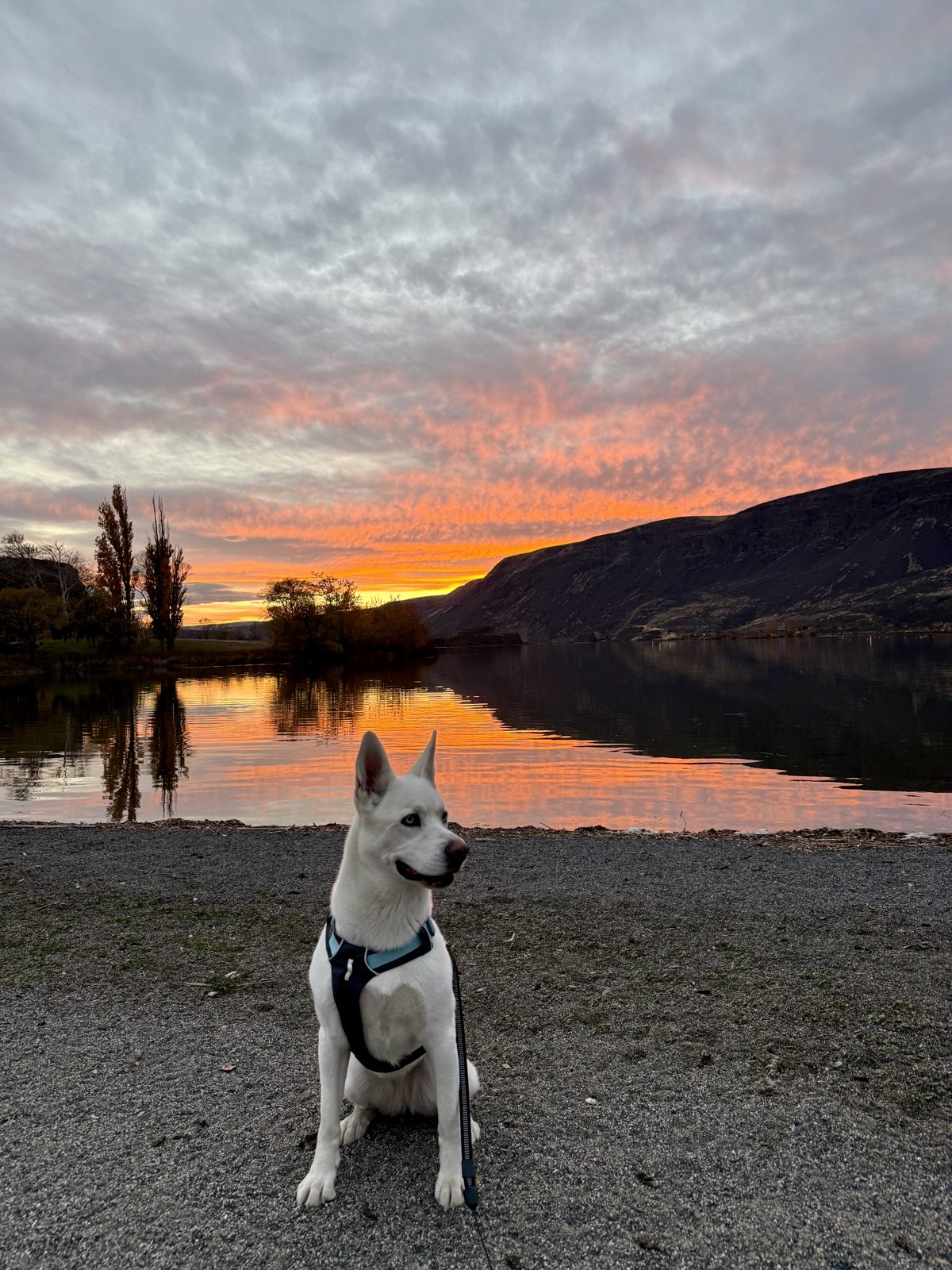
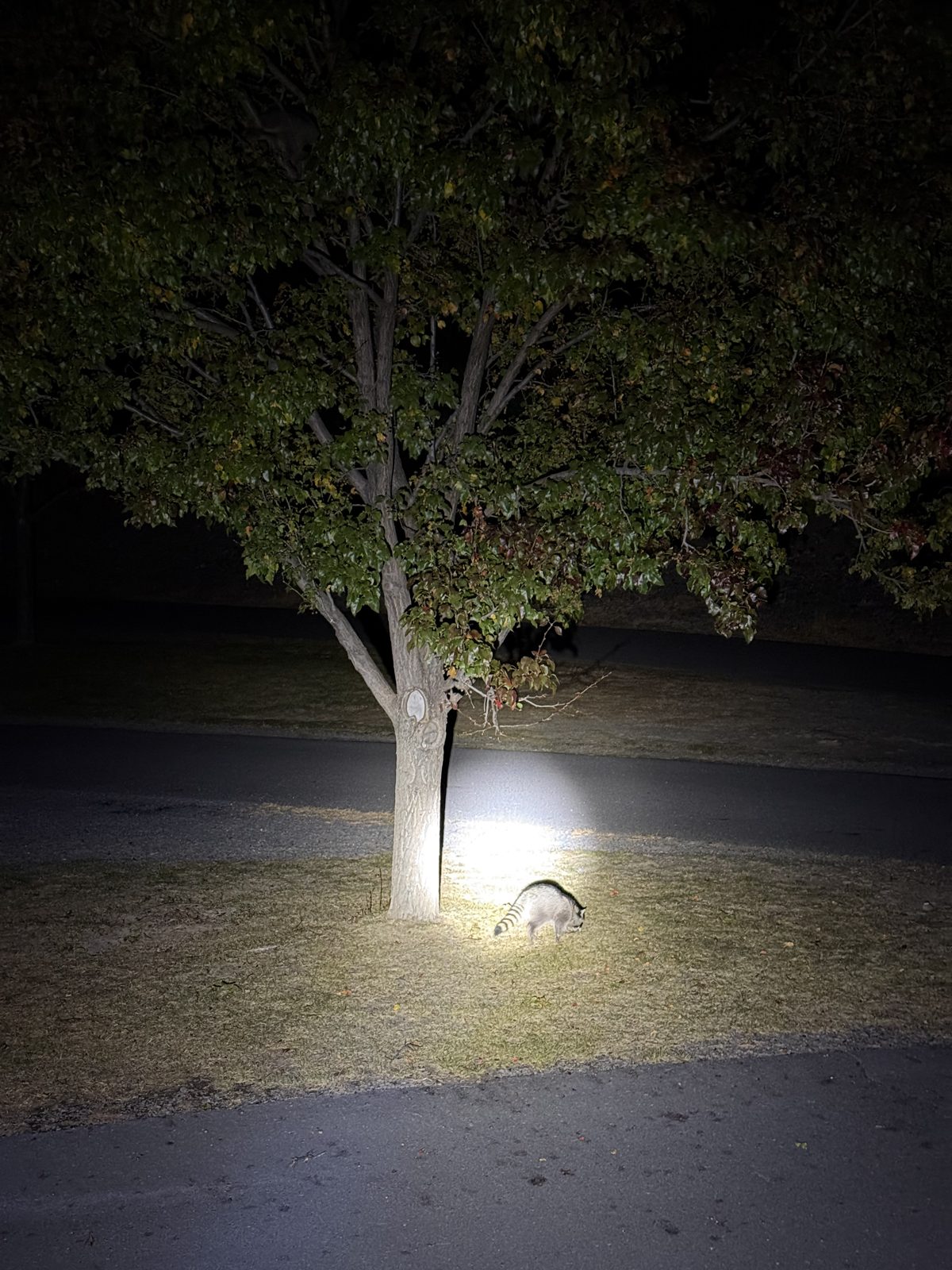
Then came the night. A full moon with four raccoons settling into the tree beside the truck, and every so often a bang on the dumpster. I’m sure it was those raccoons rummaging for midnight snacks. Around midnight, a buck and a couple of does wandered through, close enough that I could hear him tearing the grass out with his teeth. Canada geese flew over all night, heading south, and in a canyon this quiet, you hear every one. The earplugs went in at midnight. No trains to block out this time, just Mother Nature.
Rhea
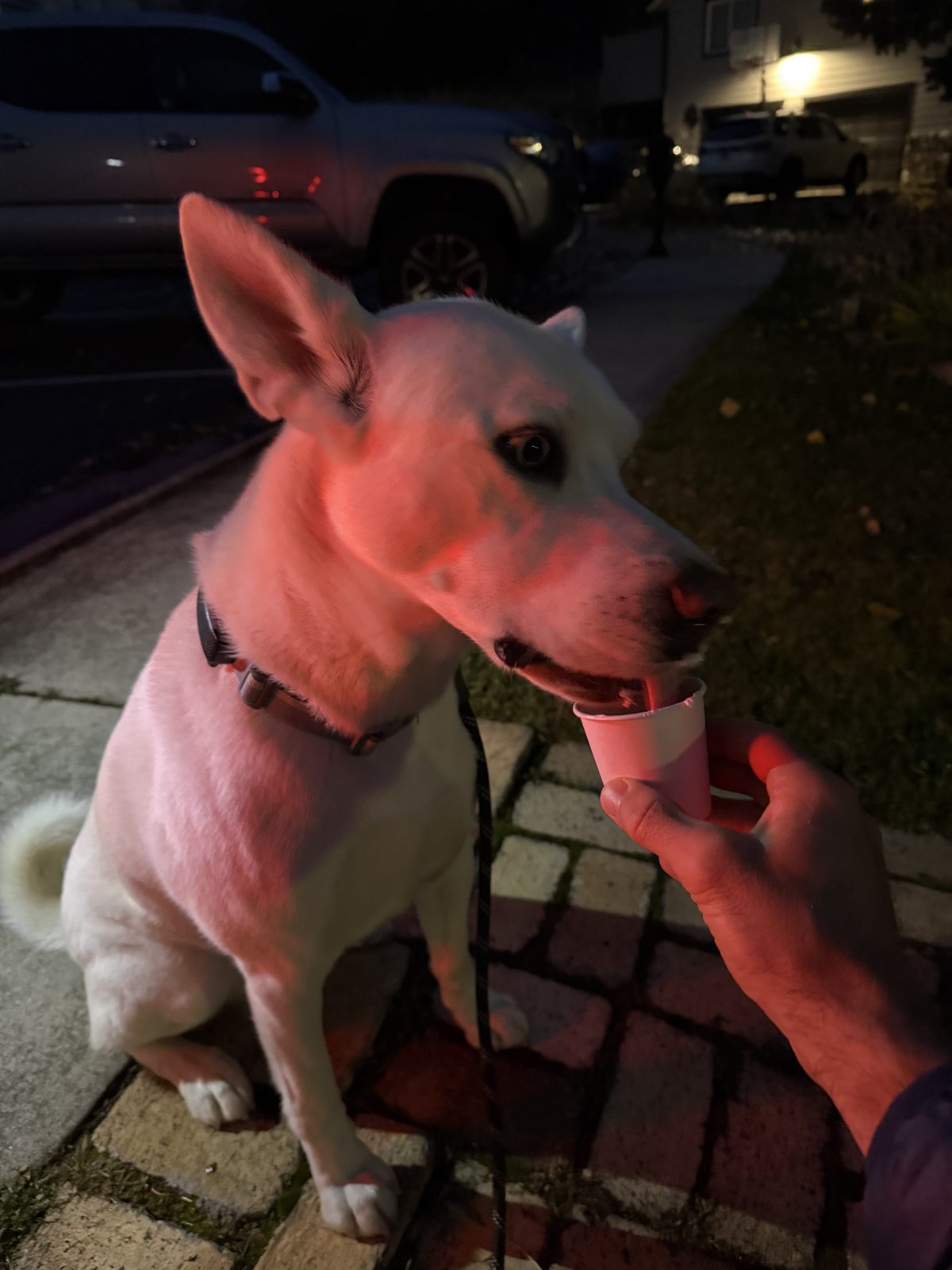
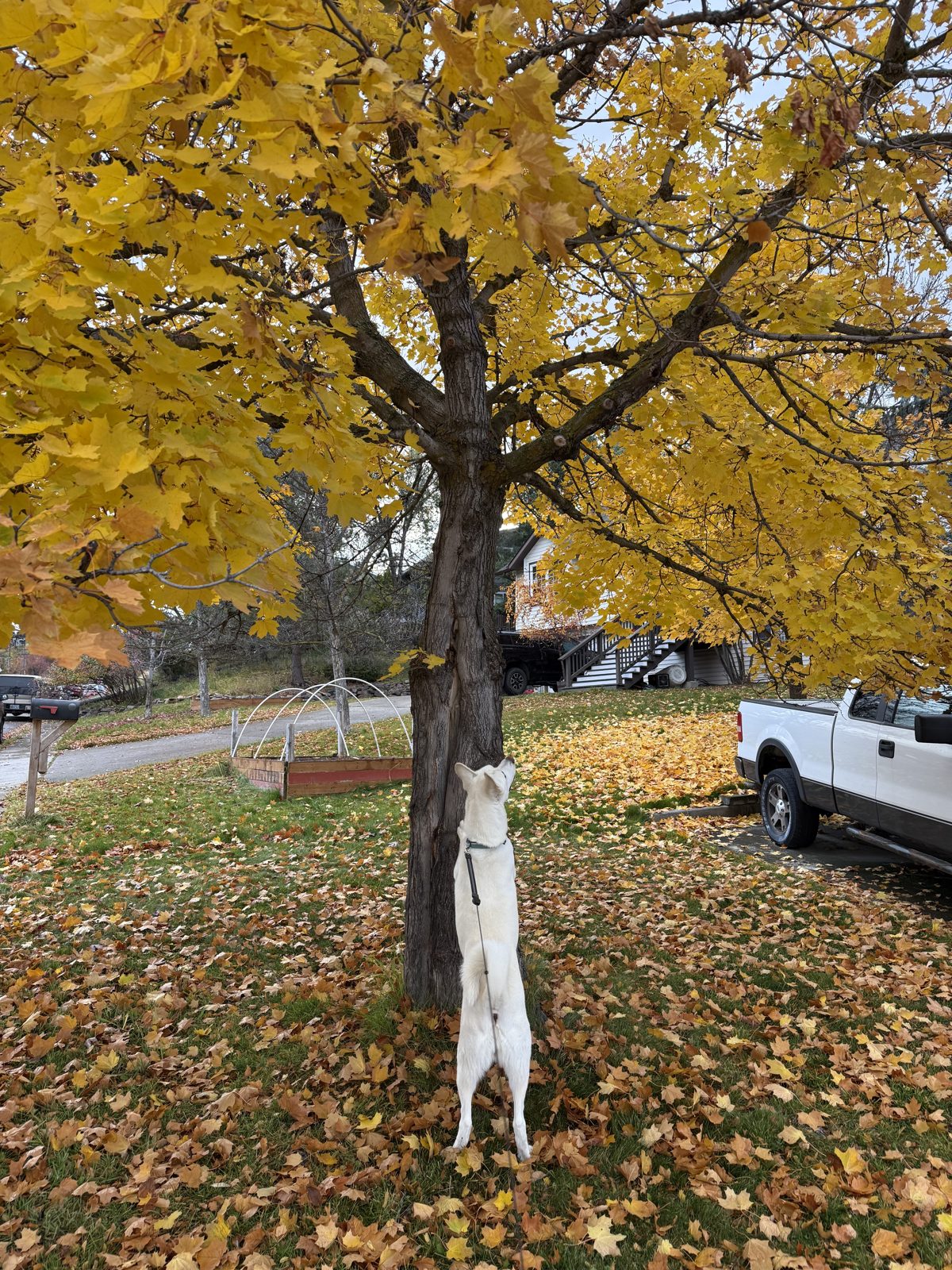
On our morning walk in Missoula, Rhea spotted deer about 20 feet away. Like the deer back on Long Island, they couldn't have cared less about us. Rhea was locked in whining, barking, and chomping at the bit to tear after them. Thankfully, she was firmly secured on the leash.
She settled in on I-90 and got a good romp on a patch of grass in Coeur d'Alene. The highway is still hard on her, and sometimes she starts to shake. Her homeopathic calming meds help a lot, but they wear off after about five hours, so past the Idaho line she got a second dose, and we drove slowly with the windows down.
In the book, Charley fell ill in the Idaho mountains, and Steinbeck rushed him to a vet in Spokane the next morning. Rhea just needed her second dose.
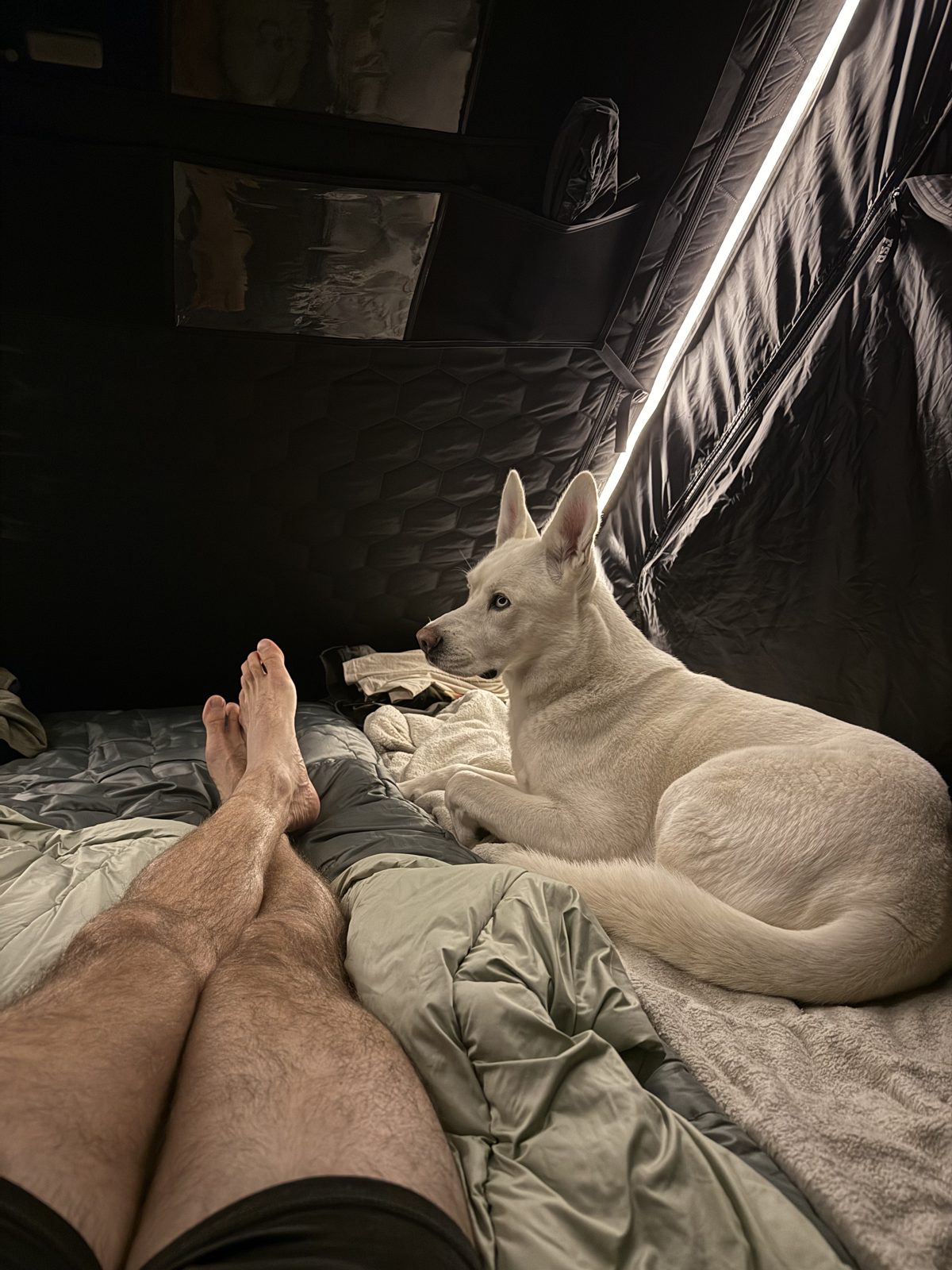
In the tent, she was up more times than I could count, desperate to go after the raccoons. Not happening. Each time, she lay back down, I covered her back up with blankets, and she drifted off to sleep again.
She's my girl. We'll get there, slow and steady.
Comments and suggestions
No notes yet. Be the first.