
Small Town Sunday Time
Route
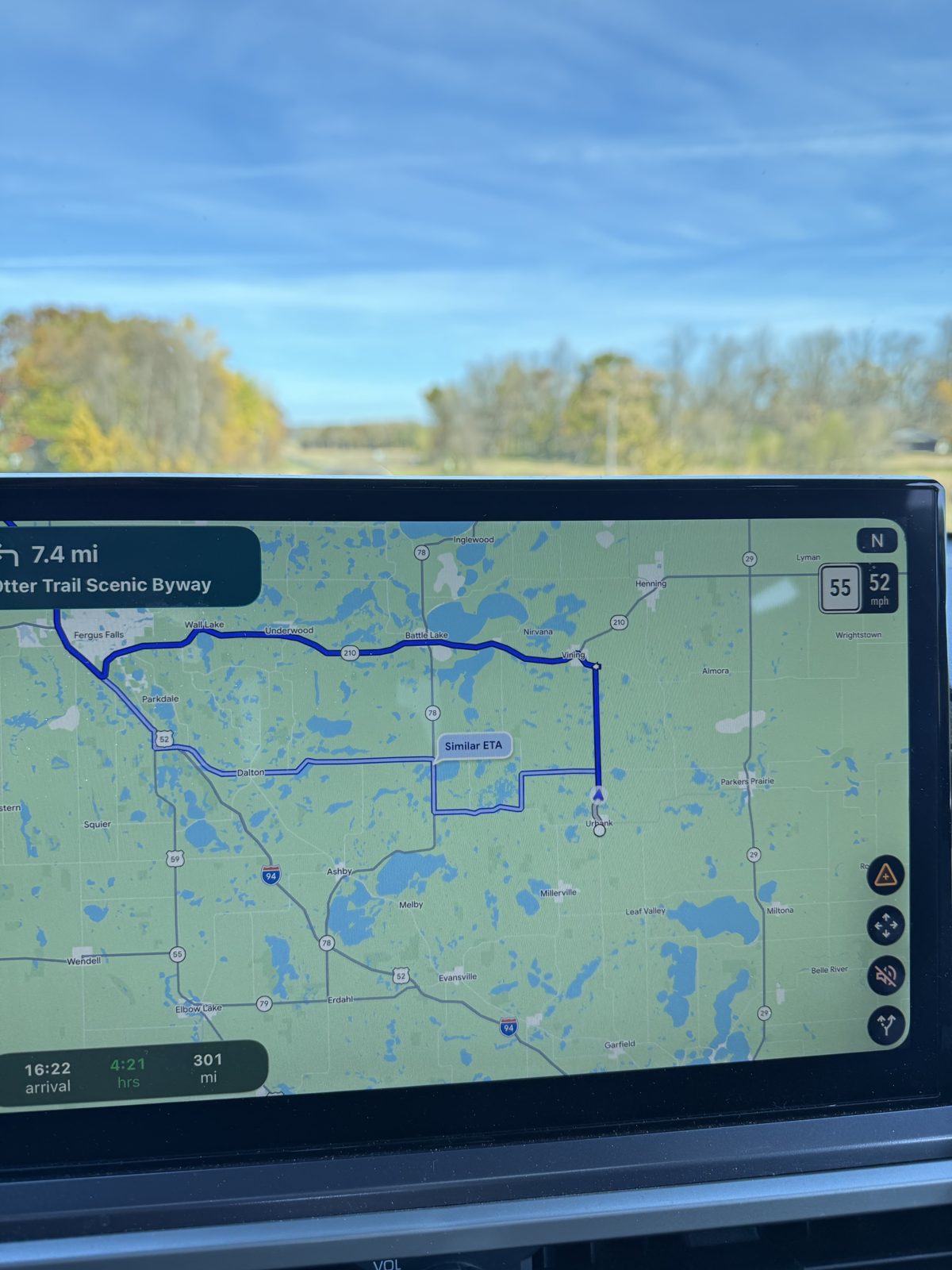
Sunday, October 18th. A crisp fall Minnesota day. We left camp around 11:30am and rolled out onto empty back roads, with shimmering yellow birches dotting the roadside and rolling corn and grass fields. We're in birch and pine country now, so you know it gets cold here.
And holy Minnesota lakes. Cruising the back roads on a Sunday morning, we were truly driving through the land of 10,000 lakes. The glaciers treated this land well 10,000 years ago, blessing it with pockets of blue gold. In Minnesota, if you can get off the highway, by God, do it. And do yourself a favor and throw on some country music. You'll thank me later.
Small-town northern Minnesota is mostly closed on a Sunday. You roll through, and it's luck of the draw on what's open. We struck out in the first two towns, and everything in Battle Lake was closed, so on to Fergus Falls. I was trying to track down a breakfast sandwich a little healthier than the gallon of gravy I had for breakfast yesterday.
I stopped at a little café called Toast in Fergus Falls, MN, expecting a quick breakfast to go. I ordered the Swedish pancakes with berries, and they took about 30 minutes, because we're on small town Sunday time. I was one of the last to get my food and didn't get back on the road until 2pm. But you know what? That's life, and that's part of this trip. Small town speed.
If you thought yesterday's manure was bad, wait until you get a whiff of poultry litter from the freeway. The fans blow it right out of the barns. It's a unique sour kind of smell. So plug your nose if you see them. My God.
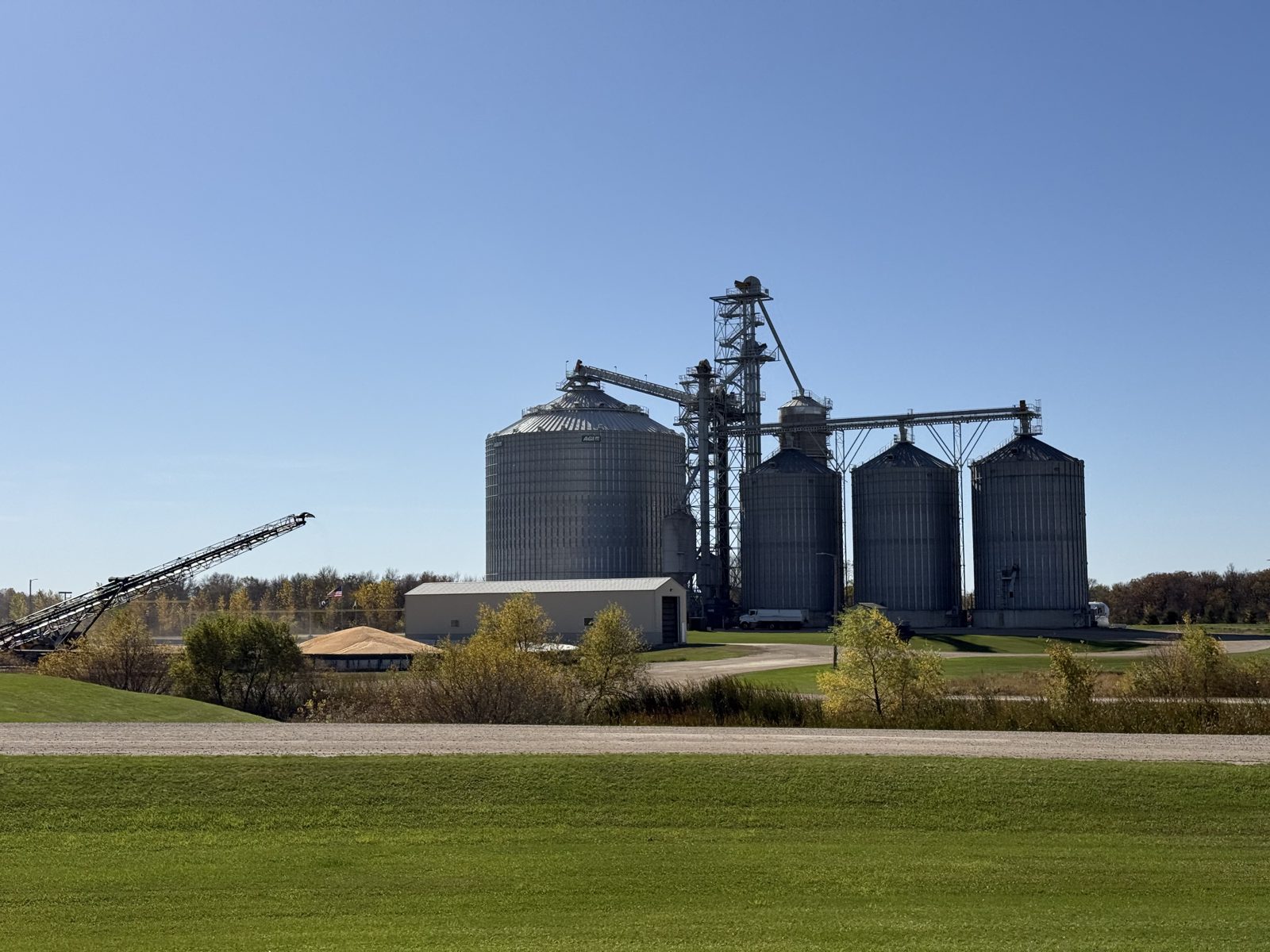
It's corn harvest season up here. The combines have left the fields dry and bare, and the silos are no longer sitting idle. They're being filled with golden corn, most likely feed for cattle, the biggest single use of American corn. We are truly a beef nation. The corn piled outside the silos is astounding. 50 feet? 100 feet? Honestly, it's hard to tell.
Driving through the cornfields, I'm convinced the stalks soak up all the rich golden light from the sun and leave nothing for the dirt below. I'm convinced the term "earthy notes" that people use to describe coffee was born from soil like this.
We passed through Fargo and were officially in North Dakota, the land of flat, forever-straight roads. That flatness is no accident. The Red River Valley is the floor of glacial Lake Agassiz, a meltwater lake from the last ice age that, at its peak, was larger than all of today's Great Lakes combined. The speed limit here is 80 mph because there's truly nothing around. No trees, no homes, nothing. But it was a warm, beautiful, 70F, and sunny.
We're in the true plains now, with hay bales lining the countryside and an unrelenting wind. This time of year, winds blow out of the Northwest, and this headwind has crushed our gas mileage, well below 20 mpg. I tried to hold 70 mph, 10 under the limit, and the truck is still drinking gas. With so few trees, there's nothing to break the wind, so it just builds and builds and builds. I dropped it down to 65 mph to see if that helps.
Around Driscoll, ND, we entered cow country. Huge flocks of blackbirds, starlings I'm guessing, swirled overhead, getting ready to head south for the winter. We've seen them since New York, and now all the way to North Dakota. Nature truly has no borders.
Then we crossed the Missouri River at Bismarck. Another river I didn't know stretched this far north. The city started out in 1872 as Edwinton, after a railroad engineer. A year later, the Northern Pacific Railway renamed it for Germany's chancellor, Otto von Bismarck, hoping to draw German settlers and German money to the struggling railroad. Steinbeck crossed here in October 1960 and came upon the river "in amazement." "Here is where the map should fold. Here is the boundary between east and west."
Camp
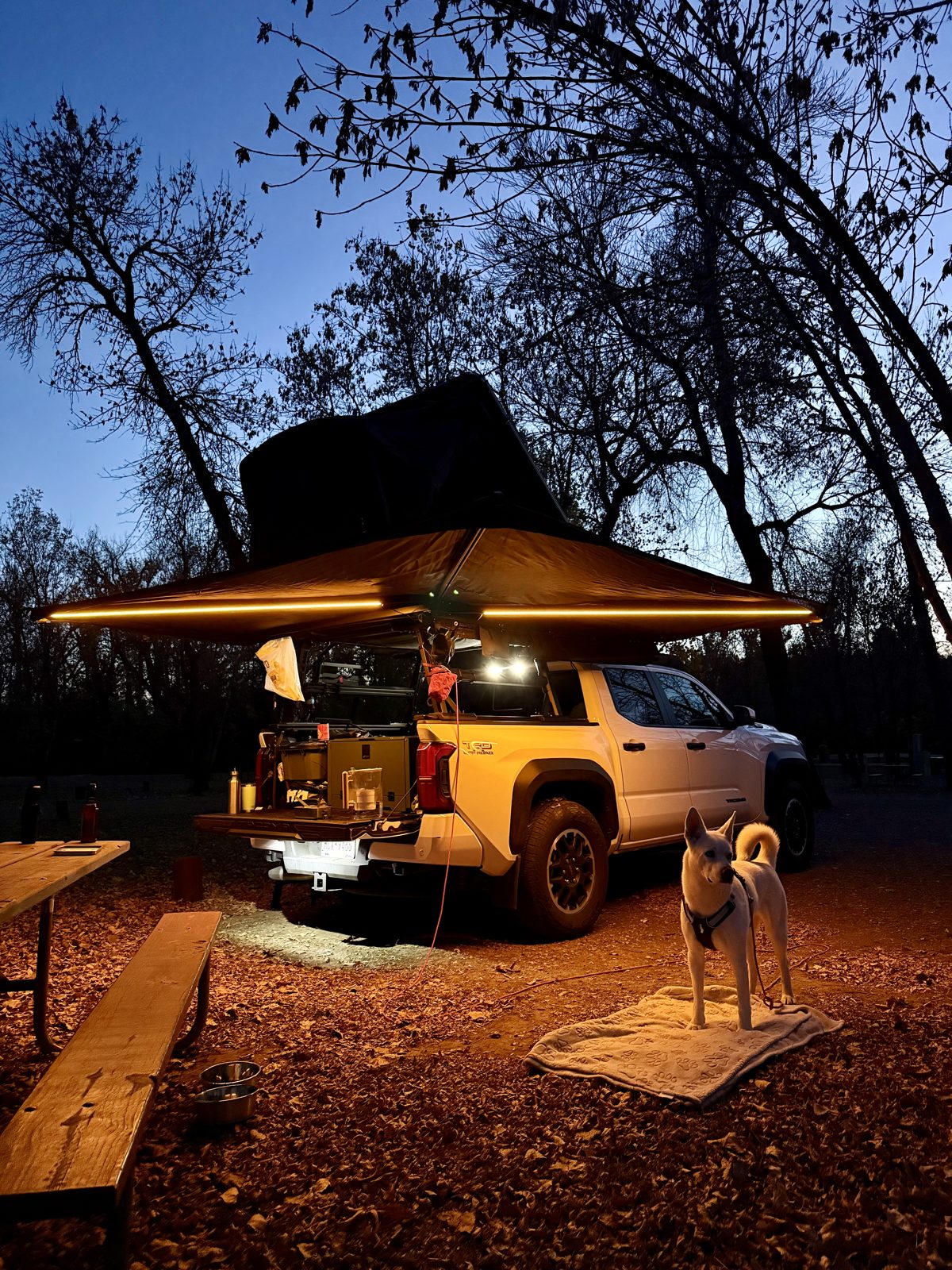
We camped along the Missouri, were one of maybe five or six groups in the park, and found a nice little spot by the river with a beautiful view east. Once the sun went down, Rhea was on guard and pretty quickly alerted to a man walking past our site. Something seemed a bit off with him. We talked about huskies and dogs for a minute, and then he moseyed on, saying, "I'll be over here if you need me." Something didn't sit well with me. With not many around, I didn't want to camp alone next to him.
So Rhea and I packed up the rig and moved farther south, toward the entrance where we saw a big RV with a roaring fire. They seemed like fine people. That's the beauty of the clamshell rooftop tent and the collapsible awning. It takes a couple of minutes to set up or take down camp, so moving is easy. We set up shop again and took a walk around the campground so she could get all her smells in and identify every rabbit to watch from the rig.
Rhea
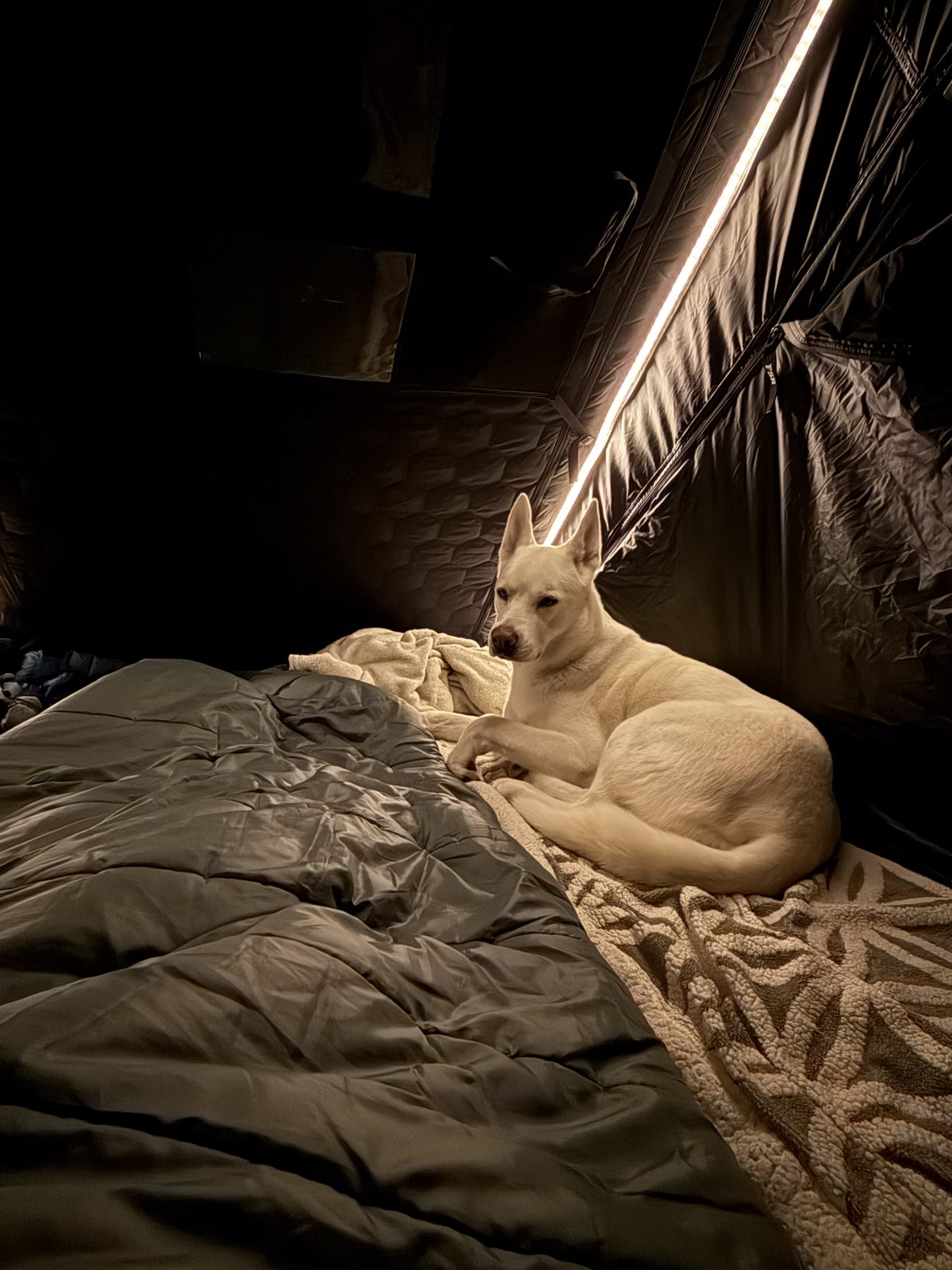
Rhea was on guard duty tonight. Cane Corso nature is to stay on guard and protect her people, and she immediately alerted to the man walking by our site. A good bark from a 70lb white dog in the night is enough to make anyone think twice. After the move, she took her walk, sized up the rabbits, and settled into the tent for the night. I’m lucky to have her with me.
Comments and suggestions
No notes yet. Be the first.